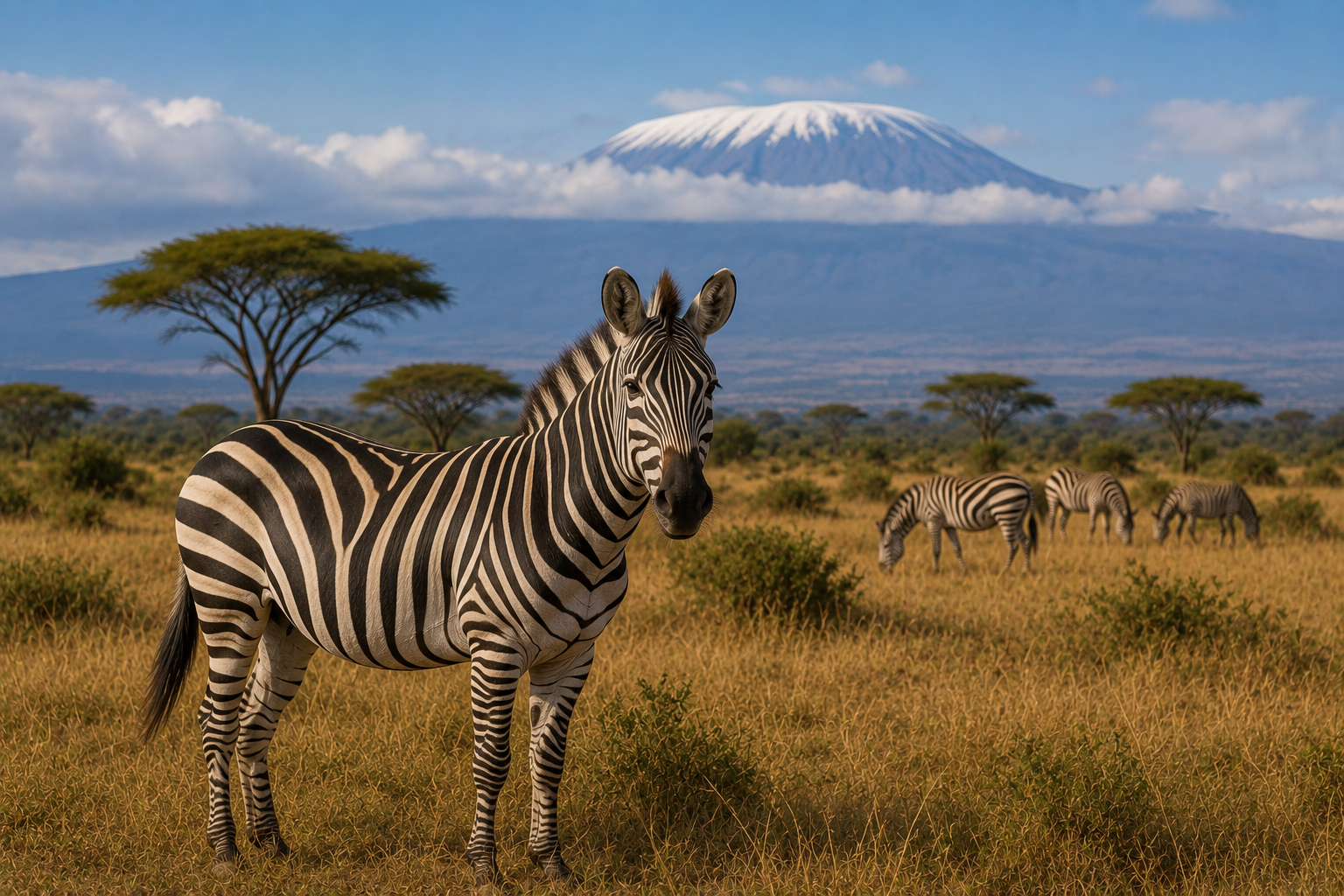
Séance 1 : Words

  • Objectif : Consolider et mémoriser le lexique des paysages, des animaux, de la vie avec la nature et des dangers.
  • Activités : Jouer à la roue du vocabulaire, épeler des mots (Spelling Bee), compléter des phrases sur les animaux et les paysages du Kenya, puis résoudre des mots croisés.
  • À retenir : Savoir nommer les paysages, les animaux et les gestes pour la nature, et exprimer l’admiration : beautiful, spectacular, incredible…

Vocabulary Kit: Protecting Nature

Living with Nature
  • explore nature = explorer la nature
  • go outdoors = sortir dehors
  • go camping = faire du camping
  • plant a tree = planter un arbre
  • clean up litter = ramasser les déchets
  • protect animals = protéger les animaux
  • preserve nature = préserver la nature
  • advocate for nature = défendre la nature
Dangers
  • hunting = la chasse
  • pollution = la pollution
  • climate change = le changement climatique
  • deforestation = la déforestation
  • poaching = le braconnage (chasse illégale)

Speaking Game: Spin the Wheel

The task
In teams, spin the wheel with your teacher. For each category, take up the challenge: name all the words you can, OR make a sentence with a word from that category.
En équipes, faites tourner la roue avec votre professeur. Pour chaque catégorie, relevez le défi : nommez tous les mots que vous pouvez, OU faites une phrase avec un mot de cette catégorie.
Play in teams. Say your words aloud.
Jouez en équipes. Dites vos mots à voix haute.
en équipes
Hints
Categories +
The 5 categories: Landscapes, Animals, Nature, Dangers, Admiration.
Name the words +
Animals → an elephant, a lion, a giraffe, a zebra, a rhino, a flamingo…
Make a sentence +
Nature → We must protect animals.
Admiration +
beautiful, spectacular, amazing, incredible, stunning, wonderful, extraordinary
Grille d'évaluation — la roue du vocabulaire
Marking guide — la roue du vocabulaire
… / 20
Content
Names many correct words in each category.
… / 5Contenu
Language
Makes correct sentences with the target words.
… / 5Langue
Fluency
Takes part actively and speaks clearly.
… / 5Aisance
Accuracy
Correct vocabulary and word stress.
… / 5Correction
Spin the wheel!
Landscapes Animals Nature Dangers Admiration

Speaking Task: Spelling Bee

The task
1
Choose a nature word — for example wildlife, an elephant, a giraffe, the savannah, a national park or a rhino.
Choisis un mot de la nature — par exemple wildlife, an elephant, a giraffe, the savannah, a national park ou a rhino.
2
Spell it out loud in English, letter by letter: S – A – V – A – N – N – A – H.
Épelle-le à voix haute en anglais, lettre par lettre : S – A – V – A – N – N – A – H.
3
Your classmates listen and write the word — or draw the animal.
Tes camarades écoutent et écrivent le mot — ou dessinent l’animal.
4
Check the spelling together, then swap roles and try a new word.
Vérifiez l’orthographe ensemble, puis échangez les rôles et essayez un nouveau mot.
à l’oral
Hints
Say the alphabet +
English letters: A, B, C… S-A-V-A-N-N-A-H.
Words to spell +
wildlife, elephant, giraffe, savannah, national park, rhino, zebra, leopard, flamingo
Double letters +
a buffalo = B-U-F-F-A-L-O (double F).
Classmates draw +
Spell an animal; your classmates draw it and check.
Grille d'évaluation — le Spelling Bee
Marking guide — le Spelling Bee
… / 20
Content
Spells the words correctly, letter by letter.
… / 5Contenu
Language
Pronounces the English letters clearly.
… / 5Langue
Fluency
Takes part actively and listens to spell.
… / 5Aisance
Accuracy
Correct spelling of the nature words.
… / 5Correction
Mes notes de préparation

Complete the text: Kenya’s Wildlife

Complete the text with these words: protect, savannah, litter, wildlife, tree, giraffes.
Complète le texte avec ces mots : protect, savannah, litter, wildlife, tree, giraffes.

Kenya is famous for its amazing a wildlife. In the b savannah, you can see elephants, lions and c giraffes. To help nature, everyone can plant a d tree or clean up e litter. We must all f protect the environment.

Crossword Task: Kenya & Wildlife

→ Across
1.A fast spotted big cat that can climb trees.
2.Mount Kilimanjaro is Africa’s highest one.
3.Cutting down forests — a danger for nature.
4.A large area covered with many trees.
5.Sleeping outdoors in a tent, under the stars.
6.A … park is protected land for wildlife.
↓ Down
1.A tall pink bird you can see at Lake Nakuru.
2.Animals and plants in their natural habitat.
3.The wide grassy plain where lions and zebras live.
4.The fastest land animal, with spots.
5.The illegal hunting of animals.
6.A very big grey animal with a trunk.

Translation Task: Nature & Wildlife

Build the sentence in English
Clique sur une flèche pour lancer la roulette.

Séance 2 : Grammar: CAN / MUST

  • Objectif : Utiliser can/can’t pour la capacité et la permission, et must/mustn’t pour l’obligation et l’interdiction.
  • Activités : Étudier les auxiliaires can et must, dire ce que l’on peut voir et faire, remettre des questions dans l’ordre, retrouver des questions, jouer aux devinettes, et associer des règles à des panneaux.
  • À retenir : Savoir employer can/can’t et must/mustn’t + base verbale, invariables : I can see…, You mustn’t buy ivory.

Grammar Kit: CAN / CAN’T

L’idée générale

On utilise can pour parler de ce qui est possible ou permis, et can’t pour ce qui est impossible ou interdit.

  • can exprime aussi la capacité : ce que l’on est capable de faire (Elephants can drink 200 litres a day.).
  • can + not = cannot = can’t à la forme négative.
  • C’est un auxiliaire modal, suivi d’une base verbale (verbe non conjugué).
La forme
  • Affirmatif: sujet + can + BV
  • Négatif: sujet + can’t + BV
  • Interrogatif: can + sujet + BV ?

You can spot zebras.

Tu peux apercevoir des zèbres.

How fast can cheetahs run?

À quelle vitesse les guépards peuvent-ils courir ?

Un auxiliaire invariable

can ne change jamais, quel que soit le sujet.

  • I can help, we can make a difference…
  • Pas de -s à la 3ᵉ personne : She can swim.

We can’t allow poaching to continue.

Nous ne pouvons pas laisser le braconnage continuer.

Astuce : prononciation
  • Affirmatif : can est réduit — /kən/ (I can spot zebras.).
  • Réponse courte : /kæn/ (Of course you can!). Négatif : /kɑːnt/ (We can’t wait.).

Lake Bogoria: What Can You See?

You are visiting Lake Bogoria in Kenya. Choose can or can’t for each animal.
Tu visites le lac Bogoria au Kenya. Choisis can ou can’t pour chaque animal.
  • In Lake Bogoria, you (can/can’t) see flamingos.
  • You (can’t/can) see zebras.
  • You (can/can’t) see lions.
  • You (can’t/can) see elephants.

Animal Abilities: CAN or CAN’T?

Sort these animal facts. Which things CAN they do, and which things CAN’T they do?
Classe ces informations. Qu’est-ce que ces animaux peuvent faire (CAN), et qu’est-ce qu’ils ne peuvent pas faire (CAN’T) ?
Hint / Indice : Three animals CAN do their action, and three CAN’T. Clue: the heaviest animals often CAN’T jump or swim, and rhinos have very poor eyesight.
Trois animaux PEUVENT faire leur action, et trois ne PEUVENT pas. Indice : les animaux les plus lourds ne peuvent souvent ni sauter ni nager, et les rhinocéros voient très mal.
CAN
CAN’T

Word Order: Make the Questions

Order the words

Match: Alana’s Questions and Answers

Match each question to Alana’s answer.
Associe chaque question à la réponse d’Alana.

    Speaking Task: Guessing Game: Which Animal?
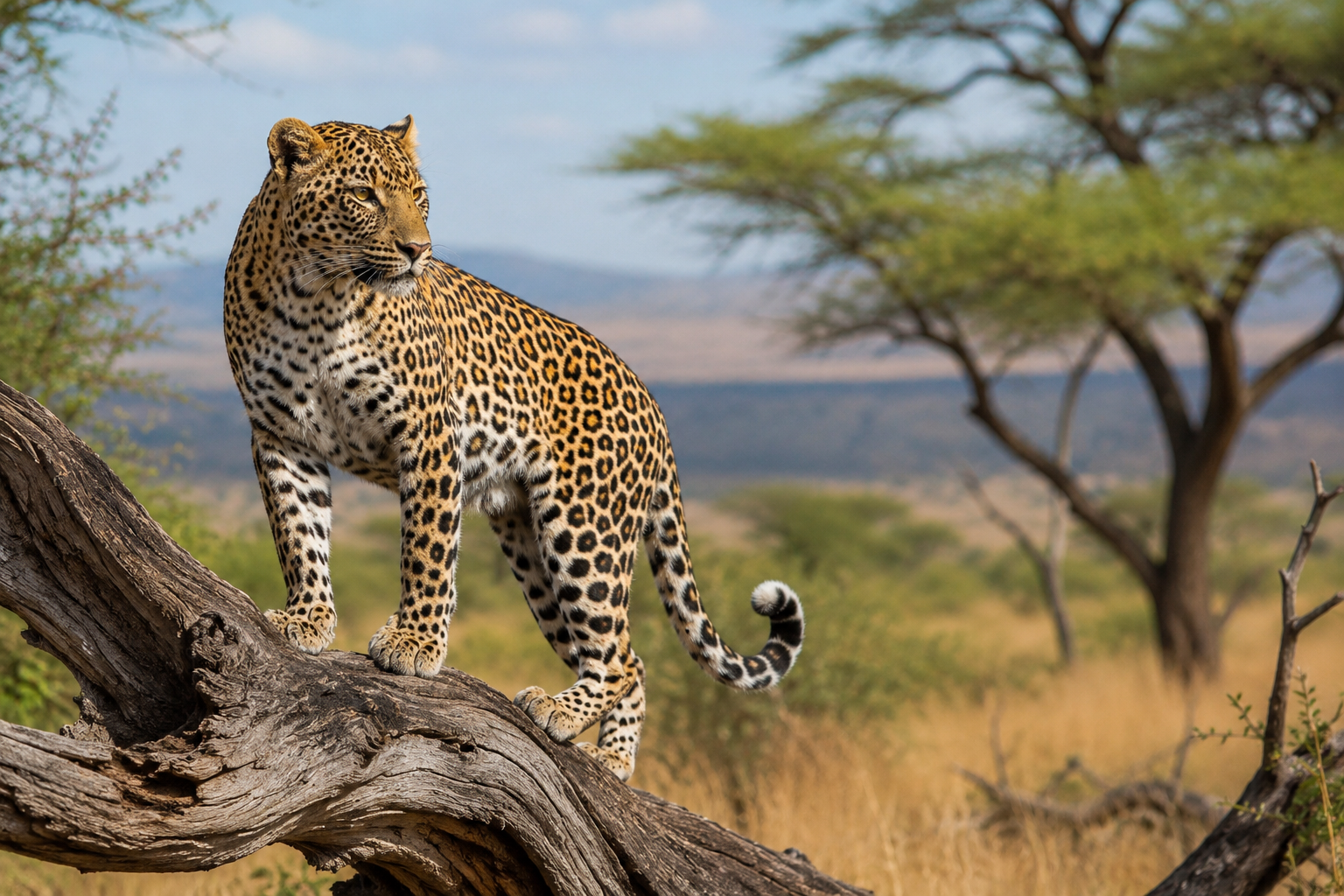
    The task
    Choose a Kenyan animal below — keep it secret! Say three sentences with can and can’t. Your partner listens and guesses your animal. Then swap roles.
    Choisis un animal du Kenya ci-dessous — garde-le secret ! Dis trois phrases avec can et can’t. Ton/ta camarade écoute et devine ton animal. Puis échangez les rôles.
    Example: “It is very big. It can’t fly. It can drink a lot of water.” — Your partner guesses: an elephant!
    Exemple : « It is very big. It can’t fly. It can drink a lot of water. » — Ton/ta camarade devine : un éléphant !
    3 sentences
    Hints
    Can +
    It can run fast. It can swim. It can climb trees.
    Can’t +
    It can’t fly. It can’t climb trees. It can’t run fast.
    Animals +
    a leopard, an elephant, a rhino, a buffalo, a lion, a zebra
    Guess +
    Is it a lion? — Yes, it is! / No, it isn’t.
    Grille d'évaluation — présentation orale
    Marking guide — oral presentation
    … / 20
    Content
    Three clear can / can’t sentences about one animal.
    … / 5Contenu
    Language
    can and can’t + base verb.
    … / 5Langue
    Fluency
    Speaks clearly so a partner can guess.
    … / 5Aisance
    Accuracy
    Correct can / can’t and animal vocabulary.
    … / 5Correction
    Choose your animal
    Leopard a leopard
    Elephant an elephant
    Rhino a rhino
    Buffalo a buffalo
    Lion a lion
    Zebra a zebra
    Your secret sentences

    Grammar Kit: MUST / MUSTN’T

    L’idée générale

    On utilise must pour exprimer une obligation ou une règle, et mustn’t pour une interdiction.

    • We must act responsibly. → une obligation.
    • We mustn’t leave trash in national parks. → une interdiction.
    • must + not = mustn’t ; c’est un auxiliaire modal + base verbale.
    La forme
    • Affirmatif: sujet + must + BV
    • Négatif: sujet + mustn’t + BV
    • Interrogatif: must + sujet + BV ?

    Everyone must stop buying ivory.

    Tout le monde doit arrêter d’acheter de l’ivoire.

    You mustn’t light fires in the forest.

    Tu ne dois pas allumer de feux dans la forêt.

    Un auxiliaire invariable

    Comme can, must ne change jamais, quel que soit le sujet.

    • You must visit, we must protect, they must support…
    • Toujours suivi de la base verbale, sans to et sans -s.

    We must protect wildlife.

    Nous devons protéger la faune.

    Astuce : prononciation
    • À l’affirmative, must n’est pas accentué ; parfois on n’entend pas le « -t » : /məs seɪv/ (You must save…).
    • Dans mustn’t, on ne prononce pas le premier « -t » : /mʌsnt/.

    Document: Signs — Park Rules

    Listen to four rules. Match each rule to the correct sign (parking, no parking, camping, no camping).

    Écoute quatre règles. Associe chaque règle au bon panneau (parking, stationnement interdit, camping, camping interdit).

    Script
    _____ _____
    1
    You must camp in this area.
    _____ _____
    2
    You mustn’t park here.
    _____ _____ _____
    3
    You can park here from 8:30 to 5:30 pm.
    _____ _____
    4
    You mustn’t camp here.

    Listen and Complete: Park Rules

    Listen and write the rules that you hear.
    Écoute et écris les règles que tu entends.
    • a. You must camp in this area.
    • b. You mustn’t park here.
    • c. You can park here from 8:30 to 5:30 pm.
    • d. You mustn’t camp here.

    Choose the Right Rule: must / mustn’t

    Tick the sentences that make sense with must and mustn’t (rules for a national park).
    Coche les phrases qui ont du sens avec must et mustn’t (les règles d’un parc national).

      Make a Rule: must / mustn’t

      You are visiting the Nairobi elephant nursery. Make a rule for each action with must or mustn’t.
      Tu visites la nurserie pour éléphants de Nairobi. Fais une règle pour chaque action avec must ou mustn’t.
      a.
      speak
      parler
      This is not allowed → use mustn’t.
      Ce n’est pas autorisé → utilise mustn’t.
      b.
      turn off your mobile
      éteindre ton portable
      This is necessary → use must.
      C’est obligatoire → utilise must.
      c.
      smoke
      fumer
      This is not allowed → use mustn’t.
      Ce n’est pas autorisé → utilise mustn’t.

      Reformulate the Advice: must / mustn’t

      Reformulate the Wildlife Warriors’ advice with must or mustn’t.
      Reformule les conseils des Wildlife Warriors avec must ou mustn’t.
      a.
      protect wildlife
      protéger la faune
      This is good for nature → use must.
      C’est bon pour la nature → utilise must.
      b.
      stop learning about nature
      arrêter d’apprendre sur la nature
      This is a bad idea → use mustn’t.
      C’est une mauvaise idée → utilise mustn’t.
      c.
      conserve water · fight poaching
      économiser l’eau · lutter contre le braconnage
      Good actions → use must. Make two sentences.
      Bonnes actions → utilise must. Fais deux phrases.

      CAN & MUST: Spot the Correct Sentences

      Recopy the grammatically correct sentences. Remember: can and must never change, and are followed by the base verb (no “to”, no -s).
      Recopie les phrases grammaticalement correctes. Rappel : can et must ne changent jamais et sont suivis de la base verbale (sans « to », sans -s).

        Translation Task: can & must

        Build the sentence in English
        Clique sur une flèche pour lancer la roulette.

        Séance 3 : Weak Forms & List Intonation

        • Objectif : S’entraîner à prononcer les formes faibles et l’intonation des listes.
        • Activités : Étudier la réduction des formes faibles (from, to, and, can, must), écouter et repérer les mots accentués et non accentués, et respecter l’intonation montante puis descendante dans les listes.
        • À retenir : Savoir réduire les mots grammaticaux (schwa /ə/) et faire monter la voix sur chaque élément d’une liste, sauf le dernier.

        Grammar Kit: Weak Forms

        Les formes faibles

        Les petits mots grammaticaux comme and, to, of et for ne sont généralement pas accentués.

        • Leur voyelle est réduite et devient un schwa /ə/.
        • C’est aussi le cas des auxiliaires : à l’affirmative, can /kən/ et must /məs(t)/ sont réduits.
        • Pour bien réduire, insiste sur la syllabe accentuée des mots importants.
        Accentué ou réduit ?
        • Mots accentués (voyelle pleine) : lions, water, protect, nature.
        • Mots réduits : and /ən/, to /tə/, of /əv/, for /fə/.
        • Écoute la chaîne parlée et repère ce qui est accentué… et ce qui ne l’est pas.

        We must protect a lot of animals.

        Nous devons protéger beaucoup d’animaux.

        Le schwa /ə/

        La voyelle des mots faibles devient un schwa /ə/, le son le plus fréquent en anglais.

        • and → /ən/  ·  of → /əv/  ·  to → /tə/
        • for → /fə/  ·  can → /kən/  ·  must → /məs(t)/
        Astuce
        • Accentue les mots importants (noms, verbes) et réduis les petits mots.
        • Les mots faibles sont dits vite et discrètement : ne les prononce pas fort.

        Document: Weak Forms

        Listen to the weak forms of from, to and and. They are reduced to /ə/ when they are not stressed.

        Écoute les formes faibles de from, to et and. Elles se réduisent en /ə/ lorsqu’elles ne sont pas accentuées.

        Script
        _____ _____ _____ _____ _____
        _____ _____ _____ _____
        From your oceans to your mountains, deserts, forests and savannahs, everything!
        You can also see lions, cheetahs, and elephants there.

        Document: Stressed & Unstressed Words

        Listen and repeat. Stress the important words, and reduce the small ones.

        Écoute et répète. Accentue les mots importants et réduis les petits mots.

        Script
        _____ _____ _____ _____ _____
        1
        From deserts to forests, you can see animals everywhere.
        _____ _____ _____ _____
        2
        It’s important to speak for the protection of nature.
        _____ _____ _____ _____
        3
        To protect wildlife, we must stop hunting and poaching.

        Document: Quiet Words

        Read the stressed words, insisting on the syllable in bold. Then read the whole sentence, reducing the unstressed words.

        Lis les mots accentués en insistant sur la syllabe en gras. Puis lis toute la phrase en réduisant les mots non accentués.

        Script
        _____ _____ _____ _____ _____
        From the mountains to the savannahs, the beauty of nature is everywhere.

        Weak Forms: Find the Weak Word

        Which word is said in its weak form (reduced)? Choose.
        Quel mot est prononcé sous sa forme faible (réduite) ? Choisis.
        • lions and elephants (lions/and)
        • a herd of zebras (herd/of)
        • We want to help (want/to)
        • Cheetahs can run fast (run/can)
        • good for the planet (good/for)
        • a lot of water (lot/of)
        • birds and insects (birds/and)
        • You must protect them (protect/must)

        Grammar Kit: List Intonation

        L’intonation des listes

        Dans une liste, la voix monte sur chaque élément… sauf le dernier, où elle descend.

        • Chaque élément de la liste = intonation montante ↗.
        • Le dernier élément (après « and ») = intonation descendante ↘.

        You can see elephants ↗, pink flamingos ↗ and pelicans ↘.

        On peut voir des éléphants, des flamants roses et des pélicans.

        Comment faire
        • Monte la voix ↗ sur chaque élément de la liste.
        • Descends la voix ↘ sur le dernier élément.

        In Kenya there are mountains ↗, forests ↗ and savannahs ↘.

        Au Kenya, il y a des montagnes, des forêts et des savanes.

        Astuce
        • Quand tu sens que la fin de la liste arrive, fais descendre l’intonation.
        • Entraîne-toi à voix haute avec les phrases du chapitre.

        Document: Up and Down

        Listen and repeat the sentences, paying attention to the intonation.

        Écoute et répète les phrases, en faisant attention à l’intonation.

        Script
        _____ _____ _____
        1
        You must observe, be curious and learn.
        _____ _____ _____ _____
        2
        You can write down what you see, smell, feel and hear.
        _____ _____ _____ _____
        3
        You can watch elephants, pink flamingos and pelicans.

        Document: List in Music

        Read this sentence with the right list intonation: the voice rises on each item, and falls on the last one.

        Lis cette phrase avec la bonne intonation de liste : la voix monte sur chaque élément et descend sur le dernier.

        Script
        _____ _____ _____ _____
        You can see elephants, pink flamingos and pelicans.

        Say and Choose: List Intonation

        Copy the lists, say them aloud, then choose ↗ or ↘ for each word.
        Recopie les listes, dis-les à voix haute, puis choisis ↗ ou ↘ pour chaque mot.
        • You can see mountains (/), forests (/) and savannahs (/).
        • In the park there are elephants (/), lions (/), giraffes (/) and zebras (/).

        Évaluation : Grammar & Sounds

        • Type d'évaluation : Grammaire et sons (QCM) — can / must + formes faibles et intonation — 10 questions, /10
        • Axe : Axe 3 — Pays et paysages > Les parcs nationaux du Kenya
        • Compétences : A1 > A1+ — Maîtriser can/must et les formes faibles (grammaire + phonologie)
        • Coefficient : 1
        Nom, Prenom :
        Classe :
        Date :
        Note :
        Axe : Pays et paysages — Les parcs nationaux du Kenya
        CECRL : A1 > A1+
        Activité langagière : Grammaire (can / must) et phonologie
        Compétence : Maîtriser can / must et les formes faibles
        ÉVALUATION — Grammaire & Sons Questions à choix unique
        1.
        CAN and MUST are followed by…
        2.
        Which sentence is correct?
        3.
        “Elephants … drink 200 litres of water a day.” (capacity)
        4.
        To express an obligation or a rule, we use…
        5.
        To express a prohibition (interdiction), we use…
        6.
        “You … light fires in the forest.” (it is forbidden)
        7.
        Do CAN and MUST change with the subject (he, she, they)?
        8.
        In a list, the voice usually…
        9.
        In “from the mountains to the savannahs”, the small words from and to are…
        10.
        Which sentence is grammatically correct?