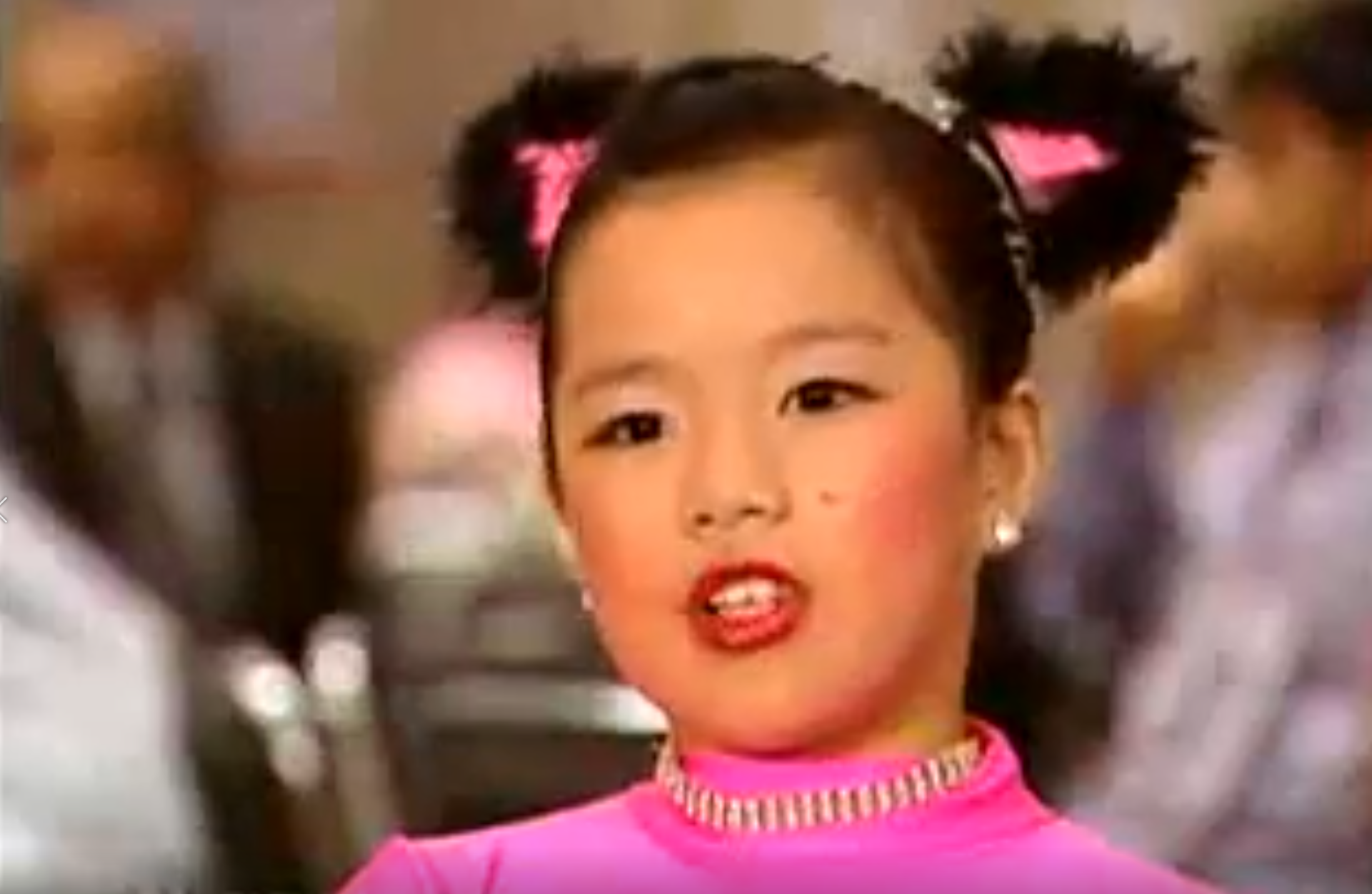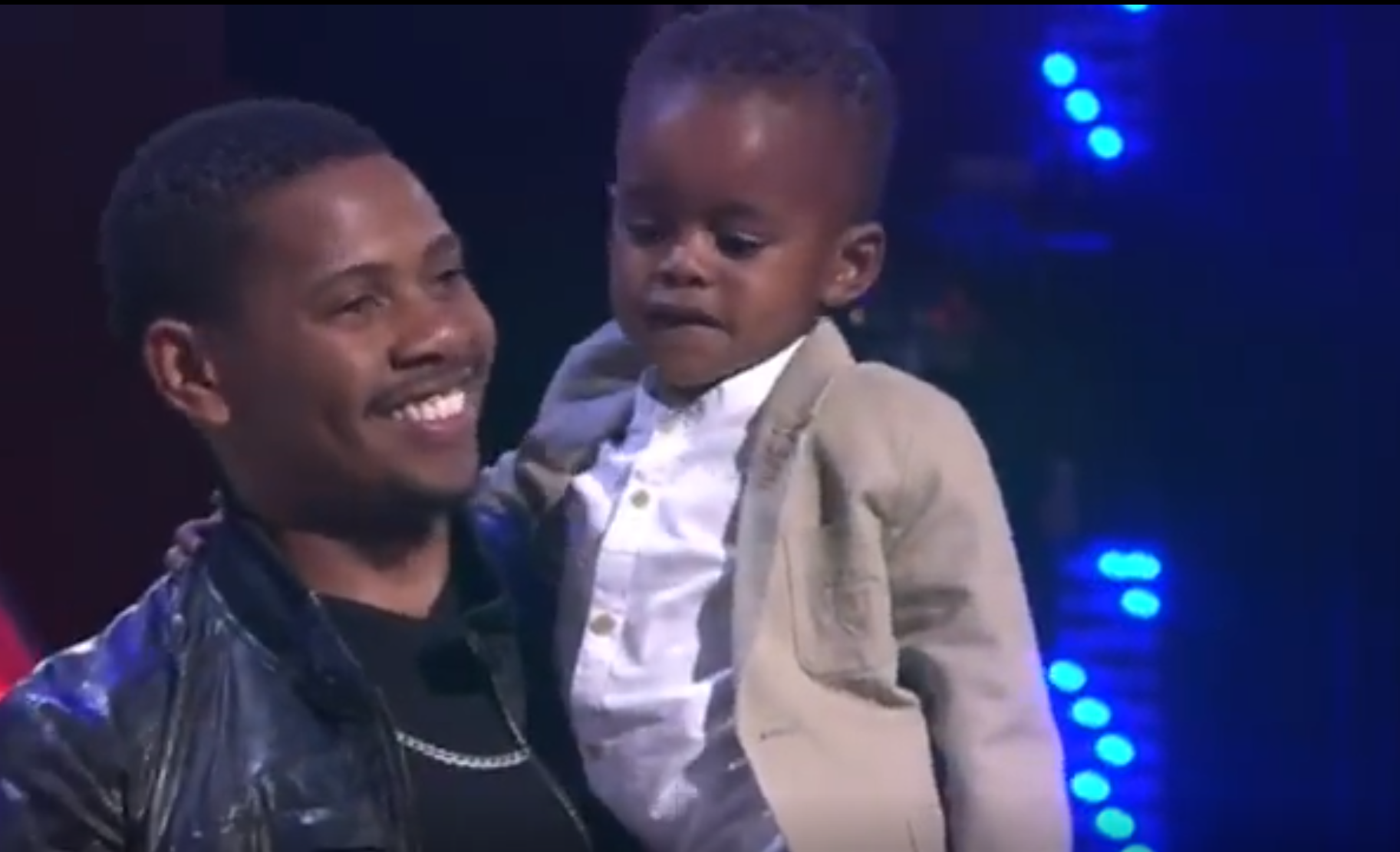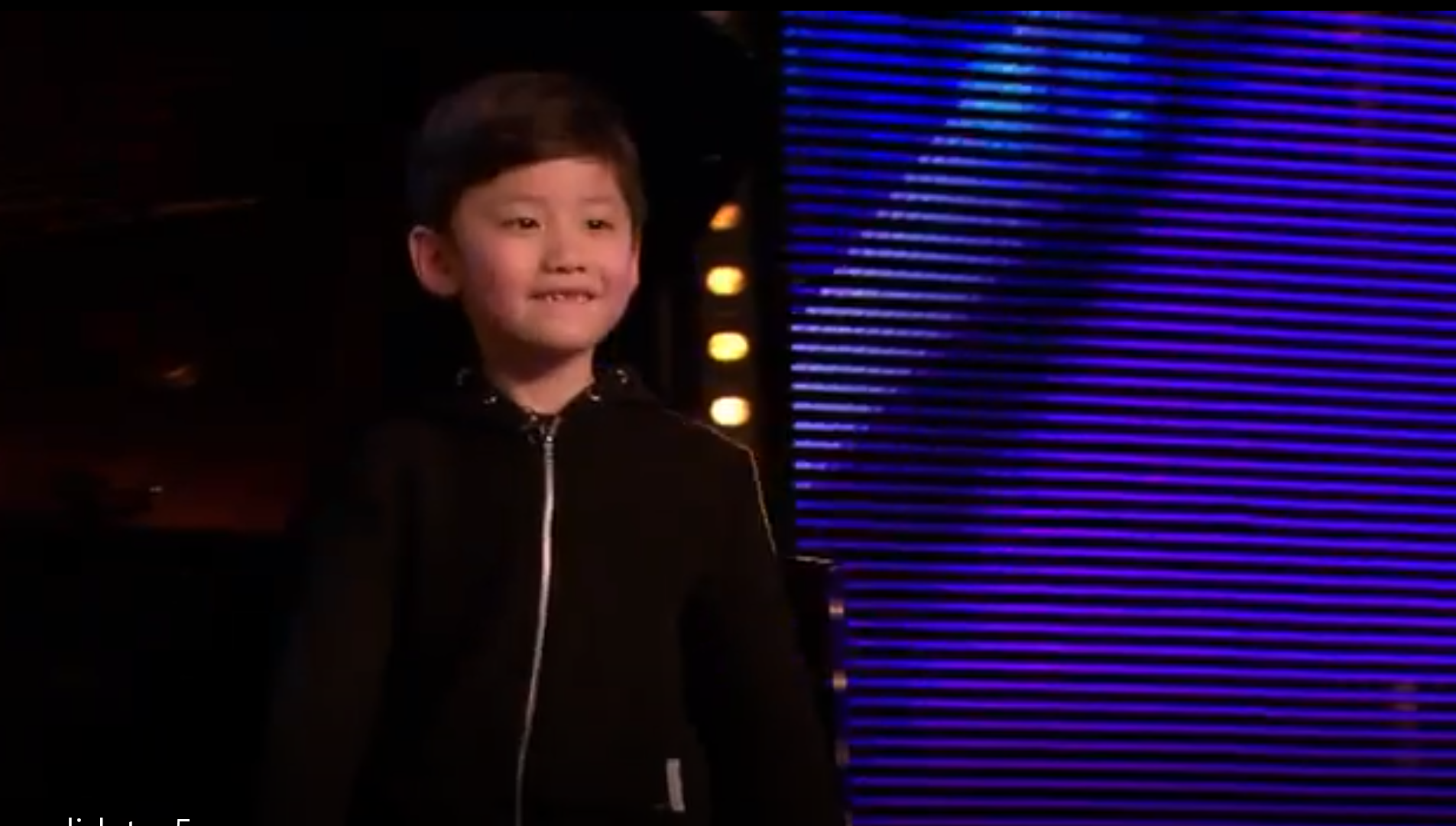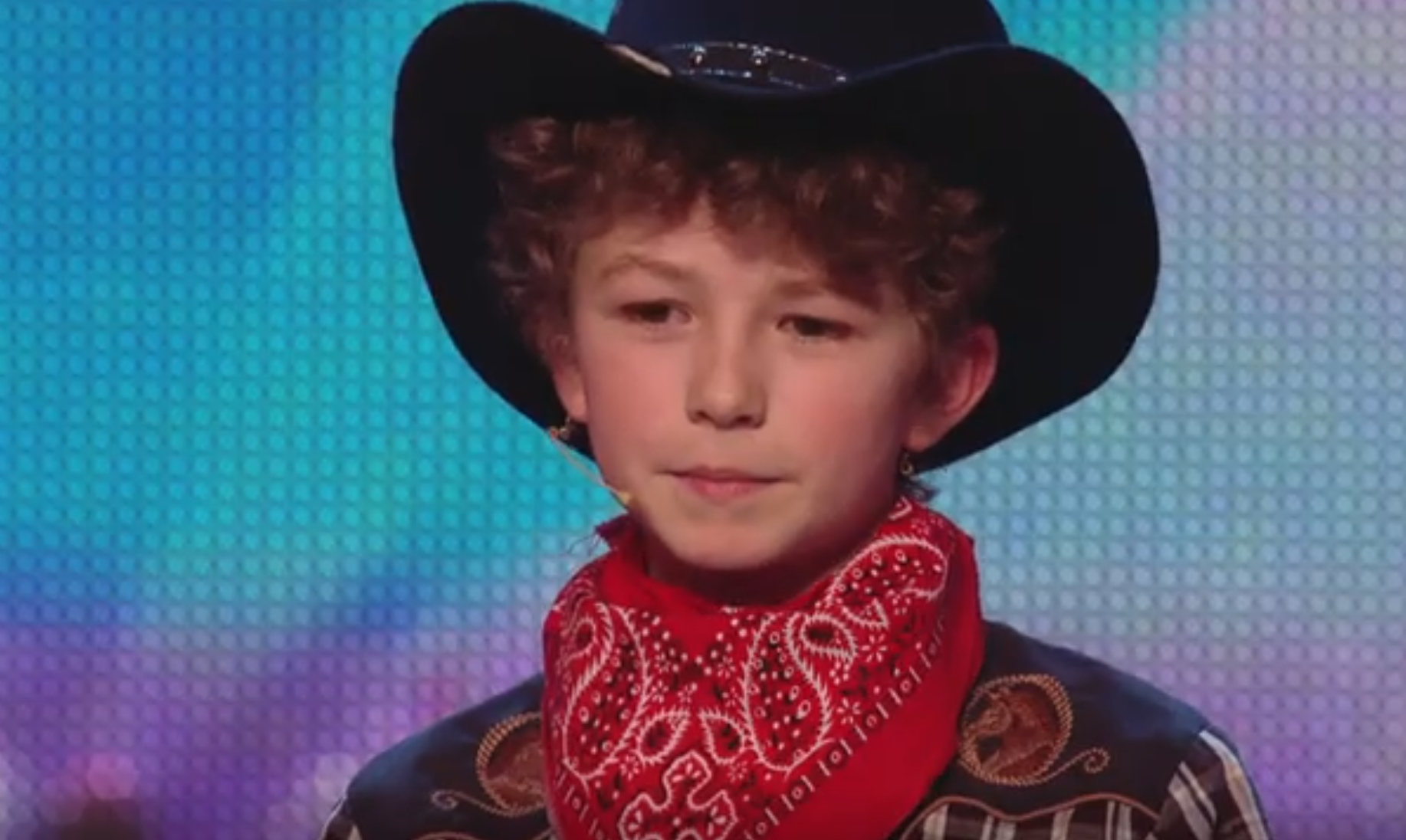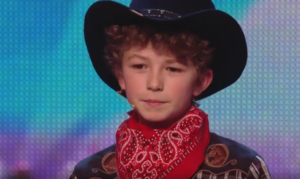
Séance 1 : Britain's Got Talent

  • Objectif : découvrir l'émission Britain's Got Talent et apprendre à exprimer son opinion sur une prestation
  • Activités : vocabulaire des télé-crochets et des adjectifs d'opinion en -ing / -ed, compréhension d'une vidéo d'audition (Olivia Pinfield), description d'une image et défi lexical à l'oral
  • À retenir : le vocabulaire des shows télévisés, les éléments-clés d'une audition, et la nuance entre les adjectifs en -ing (ce qu'on regarde) et en -ed (ce qu'on ressent)
young singer on stage let's find a star

Vocabulary Kit: Talent shows and opinions

At a talent show
  • a talent show = un télé-crochet
  • a contestant = un(e) candidat(e)
  • a winner = un(e) gagnant(e)
  • a viewer = un(e) téléspectateur (-trice)
  • a presenter = un(e) présentateur (-trice)
  • a magician = un(e) magicien(ne)
  • a contortionist = un(e) contorsionniste
  • a knife thrower = un(e) lanceur (-euse) de couteaux
  • martial arts = les arts martiaux
  • a card trick = un tour de cartes
  • a house of cards = un château de cartes
  • a performance = une prestation
Performing & opinions
  • to perform = faire un numéro
  • to participate (in) = participer (à)
  • to dress up = se déguiser
  • I think / I believe / I feel = je pense / je crois / je trouve
  • in my opinion / personally = à mon avis / personnellement
  • I'm not sure that… = je ne suis pas sûr(e) que…
  • amazing = brilliant = unbelievable = impressive = génial / brillant / incroyable / impressionnant
  • awesome = super
  • shocking = choquant
  • boring ≠ interesting = ennuyeux ≠ intéressant
  • terrible = awful = affreux
  • Well done! = Bravo !

Label the photos

Click a word, then a photo to match them.
Clique sur un mot, puis sur une photo pour les associer.

Culture Box: Got Talent worldwide

Got Talent is a TV format that exists in nearly 60 countries — making it the most popular reality talent show in the world.
Got Talent est un format télé diffusé dans près de 60 pays — l'émission de téléréalité la plus populaire au monde.
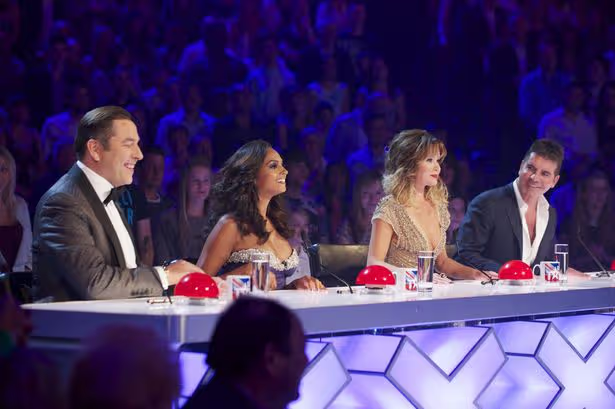
Britain's Got Talent judges
The four judges: Cowell, Holden, Walliams and Dixon.
Born in Britain

The Got Talent format was created in 2005 by Simon Cowell, who is also a judge on the British show. Britain's Got Talent started in 2007 on ITV and quickly became one of the country's biggest TV programmes.

All kinds of talent

Performers of all ages compete: singers, dancers, magicians, acrobats, comedians. The four judges press a buzzer to stop bad acts — but they can also press the golden buzzer to send a great act straight to the live shows.

Around the world

Got Talent has been adapted in nearly 60 countries. According to Guinness World Records, it is the most successful reality TV format ever. Each country produces its own version with local judges, host and contestants.

Different names, same show

In France, it is called La France a un incroyable talent. In Germany, Das Supertalent. In Spain, Got Talent España. In Italy, Italia's Got Talent. The names change but the format — four judges, buzzers, live finals — stays the same.

About Britain's Got Talent

Look at the two pictures and say as much as you can about this TV show. Is there a similar one in your country?
Regarde les deux photos et dis-en autant que tu peux sur cette émission. Y en a-t-il une similaire dans ton pays ?
Sample answer:

Britain's Got Talent is a British TV show. There are four judges and a big audience. People sing, dance, or do funny things. The judges say "yes" or "no". The winner gets a prize. In France, we have a similar show. It is called La France a un incroyable talent.

Britain's Got Talent est une émission de télévision britannique. Il y a quatre juges et un grand public. Les gens chantent, dansent ou font des choses amusantes. Les juges disent « oui » ou « non ». Le gagnant reçoit un prix. En France, nous avons une émission similaire. Elle s'appelle La France a un incroyable talent.

Do you like this sort of TV show? Why?
Aimes-tu ce genre d'émission ? Pourquoi ?
Sample answers:

Yes, I like this TV show. It is fun and the people are talented.

No, I don't really like this TV show. It is sometimes boring and some people are not talented.

Oui, j'aime cette émission. C'est amusant et les gens ont du talent.

Non, je n'aime pas vraiment cette émission. C'est parfois ennuyeux et certaines personnes n'ont pas de talent.

Document: Olivia Binfield

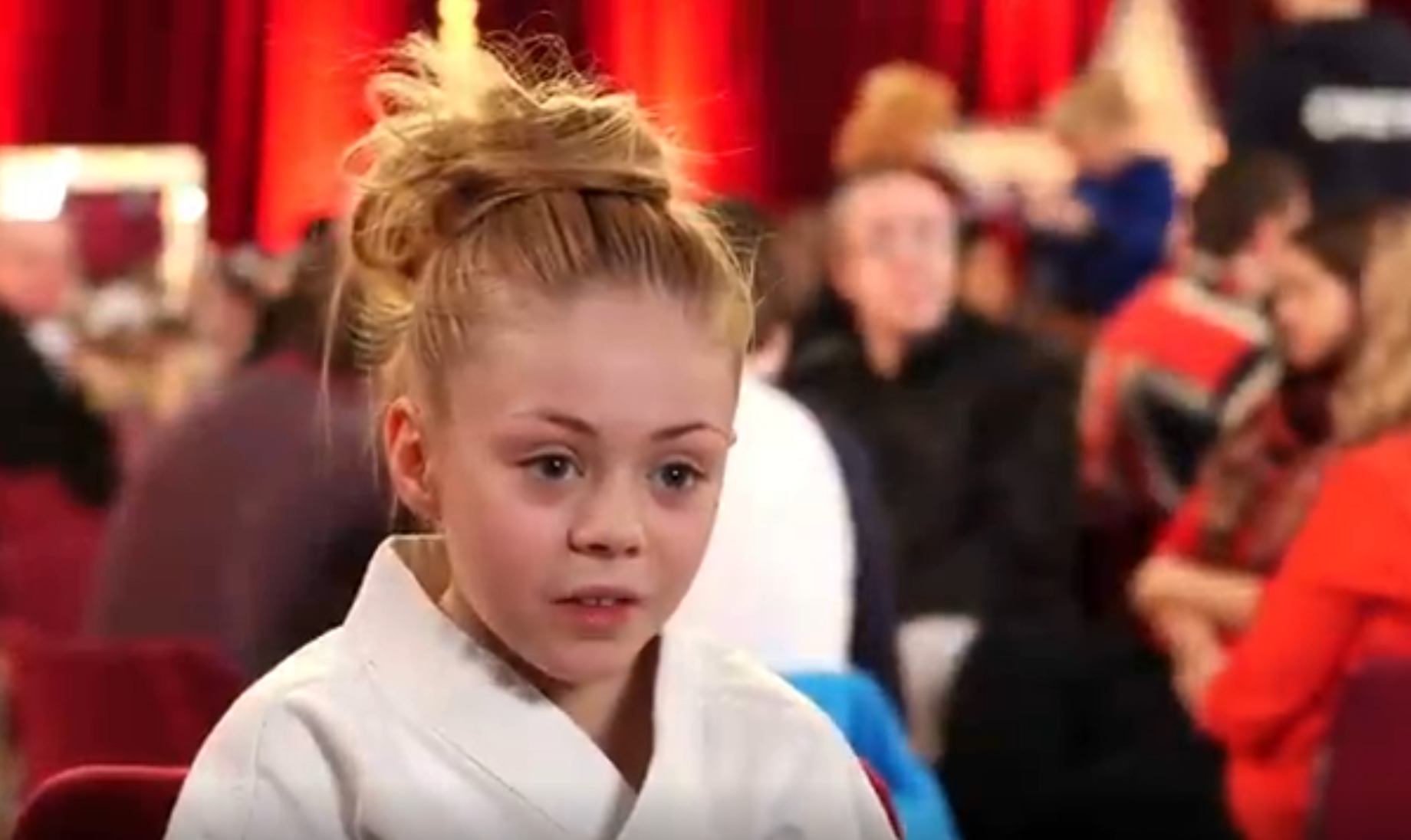
A young girl, Olivia, walks onto the Britain's Got Talent stage. What is she going to do?
Une jeune fille, Olivia, monte sur la scène de Britain's Got Talent. Que va-t-elle faire ?

Olivia Binfield, 7, on Britain's Got Talent (ITV).

Olivia's performance

What is the girl's name and how old is she?
Comment s'appelle la jeune fille et quel âge a-t-elle ?
Answer Her name is Olivia and she is seven (years old).
Elle s'appelle Olivia et elle a sept ans.
What is she going to do on the show?
Que va-t-elle faire dans l'émission ?
Answer She is going to perform a poem.
Elle va réciter un poème.
What does she want to be in the future?
Que veut-elle faire / devenir plus tard ?
Answer She wants to be a zoologist.
Elle veut être zoologiste.
What is in the box, and what does she do with it?
Qu'y a-t-il dans la boîte, et qu'en fait-elle ?
Answer There is a snake in the box. She puts it around her neck / on her shoulders.
Il y a un serpent dans la boîte. Elle le met autour de son cou / sur ses épaules.
What is the jury's reaction? Why?
Quelle est la réaction du jury ? Pourquoi ?
Answer They are surprised and shocked because it is scary and dangerous — the snake is so huge and the girl is so small.
Ils sont surpris et choqués parce que c'est effrayant et dangereux — le serpent est si grand et la fille est si petite.
What words do the judges use to describe her performance?
Quels mots les juges utilisent-ils pour décrire sa prestation ?
Answer They use very positive words: "absolutely brilliant", "absolutely perfect", "well done". They also say she "did so well", and that her performance was "a shock".
Ils utilisent des mots très positifs : « absolutely brilliant » (génial), « absolutely perfect » (parfait), « well done » (bravo). Ils disent aussi qu'elle « did so well » (s'en est très bien sortie) et que sa prestation était « a shock » (un choc).

Grammar Kit - -ing / -ed adjectives

L'idée générale

À partir d'un même verbe, on peut former deux adjectifs différents : un en -ing et un en -ed. Ils n'ont pas le même sens.

  • -ing → décrit la cause (ce qui provoque l'émotion). Sens actif.
  • -ed → décrit la personne qui ressent l'émotion. Sens passif.
-ing : décrit la cause

On utilise un adjectif en -ing pour qualifier la chose, la personne ou la situation qui produit l'effet.

It was shocking.

C'était choquant. (la situation choque)

This show is very interesting.

Cette émission est très intéressante.

-ed : décrit la personne

On utilise un adjectif en -ed pour parler de celui ou celle qui ressent l'émotion.

I was shocked.

J'étais choqué. (je ressens le choc)

I'm interested in magic tricks.

Je m'intéresse aux tours de magie.

Quelques paires utiles
  • boring (ennuyeux) ↔ bored (ennuyé)
  • surprising (surprenant) ↔ surprised (surpris)
  • amazing (étonnant) ↔ amazed (étonné)
  • exciting (excitant) ↔ excited (enthousiaste)
Astuce
  • -ing = la chose qui fait l'effet
  • -ed = la personne qui ressent l'effet

Choose the right adjective

Complete each sentence with the correct adjective.
Complète chaque phrase avec l'adjectif qui convient.
  • This show isn't very (interested/interesting).
  • I'm (interested/interesting) in magic tricks.
  • He is not going to participate in the talent show. That's very (surprised/surprising)!
  • When he started to dance, everybody was (surprised/surprising).

Vocabulary challenge

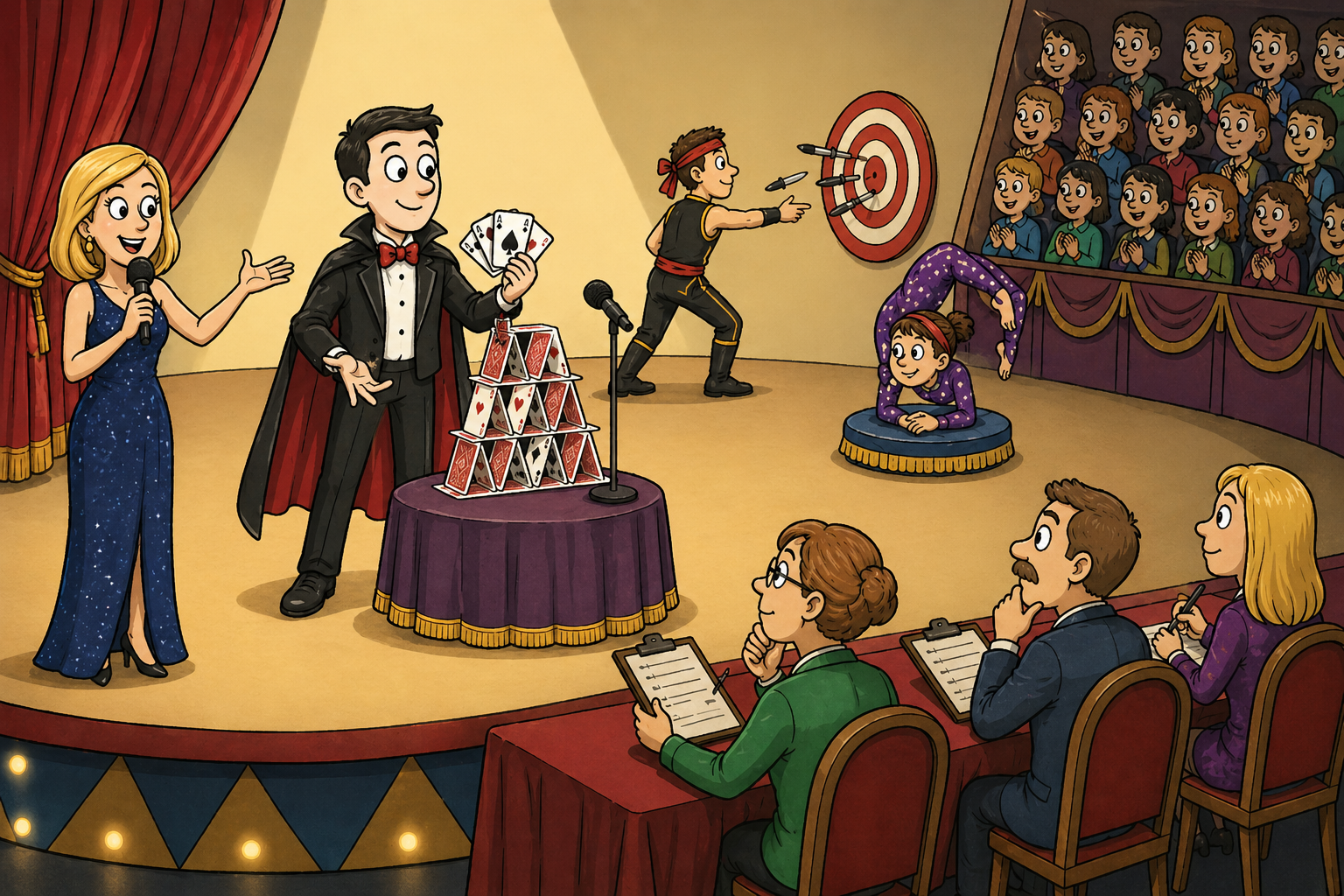
Look at the picture for 30 seconds. With your partner, name as many talent-show items as you can. The pair with the longest list wins!
Regarde l'image pendant 30 secondes. Avec ton/ta camarade, cite le maximum d'éléments que tu vois liés au talent show. La paire avec la plus longue liste gagne !
Talent show scene with a magician on stage, judges, audience and presenter
Click Start to reveal
00:30
30-second challenge

Translate: Talk about the talent show

Build the sentence in English
Clique sur une flèche pour lancer la roulette.

Séance 2 : Predicting performances

  • Objectif : prédire ce qu'un candidat d'un talent show va faire et donner son opinion sur sa performance
  • Activités : observation des photos de six candidats à un talent show, formulation d'hypothèses avec be going to en groupes, présentation à la classe puis vérification par le visionnage des numéros, mini-task : choisir un objet et imaginer un numéro de talent show pour faire deviner ses camarades
  • À retenir : employer be going to pour faire une prédiction, justifier une hypothèse à partir d'indices visuels, exprimer une opinion sur une performance et voter pour le numéro le plus original

Document : Image - The Contestants

Contestant n°1
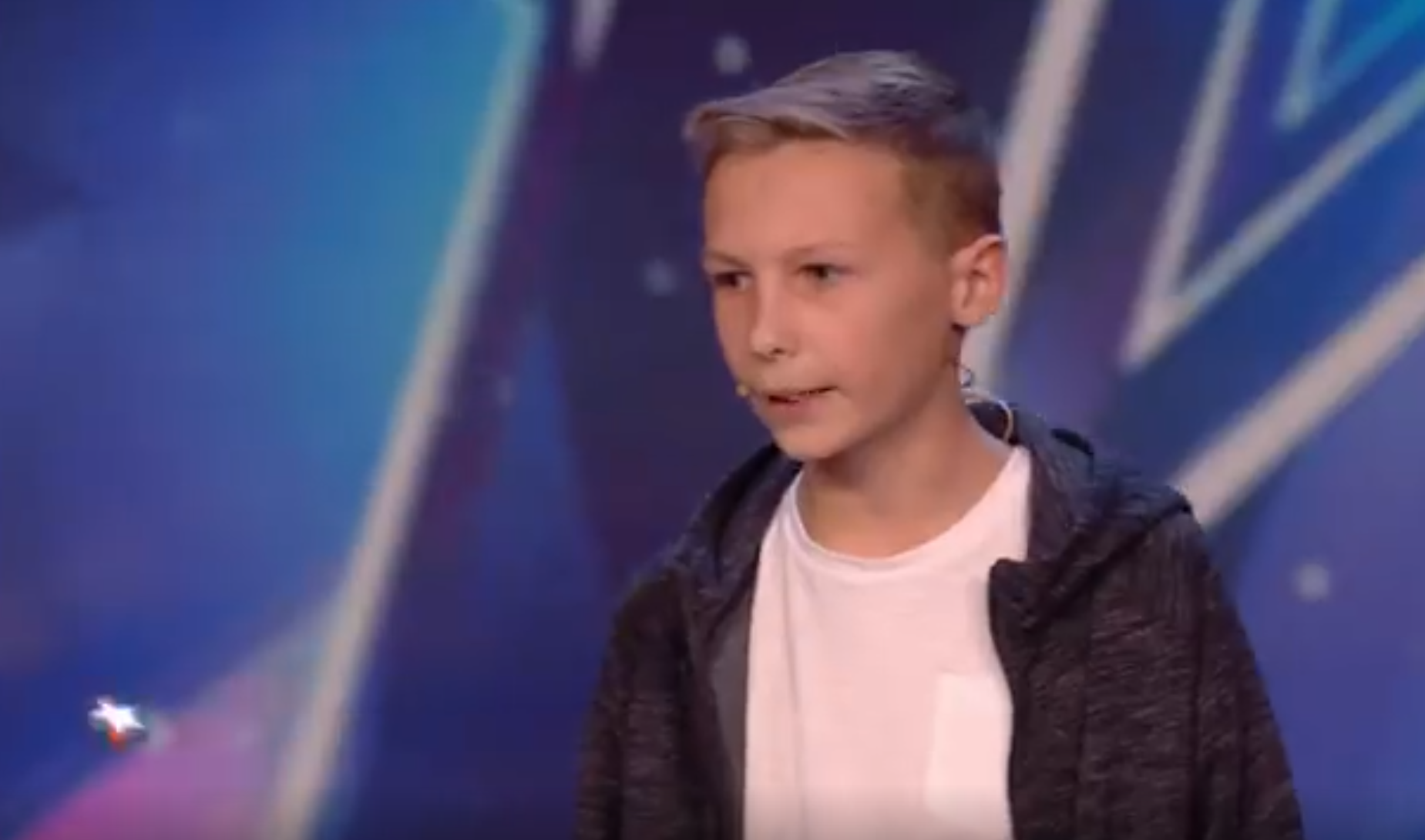
Contestant n°1

Contestant n°2

Contestant n°2

Contestant n°3

Contestant n°3

Contestant n°4

Contestant n°4

Contestant n°5

Contestant n°5

Contestant n°6

Contestant n°6

Britain's Got Talent — candidates 1–6

What is each contestant going to do?

In groups, look at one of the photos and discuss what the contestant is going to do. Justify your hypothesis with details from the photo.
En groupes, observez une des photos et discutez de ce que le candidat va faire. Justifiez votre hypothèse à partir d'indices visuels.
Show your photo to the rest of the class and tell them what the different members of your group think.
Montrez votre photo au reste de la classe et expliquez ce que les différents membres du groupe pensent.
Now, watch the different performances using the video links below and check your hypotheses. Which contestant would you like to vote for? Discuss.
Maintenant, regardez les différents numéros grâce aux vidéos ci-dessous et vérifiez vos hypothèses. Pour quel candidat aimeriez-vous voter ? Discutez.

Document : Video - The Contestants

Contestant 1

Contestant n°1

Contestant 2

Contestant n°2

Contestant 3

Contestant n°3

Contestant 4

Contestant n°4

Contestant 5

Contestant n°5

Contestant 6

Contestant n°6

Mini-task: Vote for the most original performance

  1. Choose an object or an accessory you would like to use in a performance for a talent show.
  2. Bring it to class. Your classmates must guess what you are going to do with it for the talent show — you don't actually have to perform!
  3. Discuss all the different ideas and vote for the most original one.
  1. Choisis un objet ou un accessoire que tu aimerais utiliser pour un numéro dans un talent show.
  2. Apporte-le en classe. Tes camarades devront deviner ce que tu vas en faire — pas besoin de te produire vraiment !
  3. Discutez des différentes idées et votez pour la plus originale.
Predicting I think – Maybe – I'm sure – he/she is going to – they are going to
Reacting What a good idea! – How original! – What a brilliant act! – How creative!
Voting I vote for – my favourite is – I prefer – the most original idea is
Examples

Looking at her microphone, I think she is going to sing a song.

What an original idea! Nobody is going to do that.

My favourite is Marie's act because she is going to do magic with playing cards.

Translate: Predicting performances

Build the sentence in English
Clique sur une flèche pour lancer la roulette.

Séance 3 : Cobb School's Got Talent

  • Objectif : comprendre un dialogue audio, prédire son contenu à partir d'une affiche et repérer les projets et les réactions des personnages
  • Activités : observation d'une affiche de talent show, écoute du dialogue Ruby/Callum, repérage des idées de Ruby (✓/✗ + justifications), analyse des deux réactions de Callum, traduction d'exclamations et travail sur l'intonation descendante
  • À retenir : be going to pour parler de projets futurs, les tournures exclamatives How…! / What (a)…! et l'intonation descendante typique de l'anglais à la fin d'une exclamation

Document: Cobb School's Got Talent (poster)

Affiche du talent show de Cobb School — Hachette Teen Time 5e, Unit 6, p. 93

Before listening

Copy the text and complete the blanks with the words from the box.
Recopie le texte et complète les espaces avec les mots du cadre.
Words poster  –  talent show  –  Cobb School  –  fifth  –  student  –  talent  –  two students

The document is a poster for a school talent show. The school's name is Cobb School. The poster says "5th Annual" so it is the fifth time the show takes place. "All Ages Welcome" means that any student can take part. "The Search Is On!" suggests the school is looking for the next talent. We are probably going to listen to two students talking about the show.

Document: Ruby and Callum

Cobb School is preparing its 5th Annual Talent Show. Ruby is getting ready for it. Her friend Callum drops by and asks her about her plans.

Cobb School prépare la 5e édition de son talent show. Ruby s'y prépare. Son ami Callum passe et l'interroge sur ce qu'elle compte faire.

Script
Callum:
_____ _____
Hey, Ruby.
_____
What are you doing?
Ruby:
_____ _____
Hi, Callum.
_____ _____
I'm getting ready for the school talent show.
Callum:
_____
Great!
_____ _____
And what are you going to do this year?
_____ _____
Are you going to sing, dance or play music?
Ruby:
_____ _____
No, how boring!
_____
Everybody does that.
_____
I need to be more original.
_____ _____
I'm going to use playing cards.
Callum:
_____
What a good idea!
_____ _____ _____
Are you going to dress up as a magician and play a card trick?
_____ _____ _____
I love the idea and I could be your assistant.
Ruby:
_____ _____
Well, I'm not going to perform magic.
_____ _____
I'm not really good at that.
_____ _____
And Hanna is going to do a magic trick.
Callum:
_____
Oh!
Ruby:
_____ _____
I'm going to build a giant house of cards.
Callum:
_____
A house of cards?
_____ _____ _____ _____
Personally, I'm not sure you are going to win with a house of cards.
_____
Anybody can do that.
_____
It's so easy!
Ruby:
_____
I don't think so.
_____ _____ _____
Come here and have a look at MY house of cards.
Callum:
_____
Wow!
_____
How tall!
_____
I can't believe it.
_____
This is awesome!
_____
What a house!
_____ _____
In fact, it is a huge tower.
_____ _____
Ruby, you've got a real talent!
Ruby:
_____
I know.
_____ _____ _____
That's why I am NOT going to lose the talent show.

Hachette Teen Time 5e, Unit 6, p. 93 — Classe 2, piste 43 / MP3 50

Ruby's plans for the talent show

Listen and pick out details about Ruby's plans for this year.
Écoute et relève les détails sur les projets de Ruby pour cette année.
Possible idea
✓ or ✗
Words/phrases to justify
sing dance play music
boring / everybody does that
use playing cards
more original
dress up as a magician play a card trick perform magic
not really good at that / Hanna is going to do a magic trick
build a giant house of cards
huge tower / a real talent / not going to lose

Callum's reactions

At first: how does Callum react when Ruby says she is going to build a giant house of cards? Quote his words.
Au début : comment Callum réagit-il quand Ruby annonce qu'elle va construire un château de cartes géant ? Cite ses mots.
At the end: how does Callum react when he sees Ruby's house of cards? Quote his words.
À la fin : comment Callum réagit-il quand il voit le château de cartes de Ruby ? Cite ses mots.

Translate the exclamations

Translate this exclamation about a performance: "How impressive!"
Traduis cette exclamation à propos d'une performance : « How impressive! »
Translate this exclamation about a contestant: "How talented!"
Traduis cette exclamation à propos d'un(e) candidat(e) : « How talented! »

Trucs & Astuces

L'intonation des phrases exclamatives

En anglais, contrairement au français, la voix descend à la fin d'une phrase exclamative. Quand tu lis ou répètes une exclamation en anglais, fais bien tomber la voix sur le dernier mot pour ne pas sonner « français ».

  • Anglais : intonation descendante à la fin d'une exclamation.
  • Français : intonation souvent montante.

How tall!

What a good idea!

How boring!

This is awesome!

What a house!

Translate: Cobb School's Got Talent

Build the sentence in English
Clique sur une flèche pour lancer la roulette.

Séance 4: Evaluation

  • Type d'évaluation : QCM + Expression écrite (9 questions à choix unique + 2 productions écrites)
  • Axe : École et loisirs — Ancrage culturel : Le Royaume-Uni
  • Compétences : Be going to + tournures exclamatives (What / How) + vocabulaire du talent show + expressions d'opinion
  • Coefficient : à confirmer
Nom, Prénom :
Classe :
Date :
Note :
Axe : École et loisirs — Ancrage culturel : Le Royaume-Uni
CECRL : A2
Activité langagière : Expression écrite
Compétence : Maîtrise de la langue — Grammaire & vocabulaire
ÉVALUATION — Who's going to win the show? QCM + Expression écrite
1.
The people watching a talent show from their homes are called…
2.
"Her performance was absolutely fantastic!" Which word means the SAME as "fantastic"?
3.
The audience was ___ when Olivia pulled out a huge snake. Nobody expected it!
4.
Look at Leo — he's sitting at the piano. He ___ play a piece of music.
5.
Ruby doesn’t want to sing. She ___ sing for the school talent show.
6.
"___ you going to enter the talent show this year?" Choose the correct word.
7.
"___ an incredible performance!" Choose the correct exclamative word.
8.
"___ talented she is!" Choose the correct exclamative word.
9.
Which sentence uses "be going to" to express an INTENTION? / 2
10.
Describe a talent show performance you found impressive. Give your opinion using at least three different expressions from this unit. (4–6 sentences) / 5
Grille d’évaluation (5 pts)
  • Contenu (3 pts) — performance clairement identifiée + au moins 3 expressions d’opinion différentes correctement utilisées (ex. I think / In my opinion / I believe / amazing / brilliant / unbelievable / impressive / Well done! / I’m not sure that…).
  • Langue (2 pts) — syntaxe des phrases, vocabulaire de l’unité, orthographe et conjugaison (présent simple / be going to).
11.
You are going to enter Cobb School’s Got Talent. Describe what you are going to do and explain why you chose this act. Use "be going to" and give your reasons. (5–8 sentences) / 5
Grille d’évaluation (5 pts)
  • Contenu (3 pts) — acte clairement décrit + be going to correctement employé au moins 2 fois (intention + détail) + justification avec au moins une expression d’opinion ou de raison (because / I think / I believe / In my opinion…).
  • Langue (2 pts) — forme correcte de be going to (accord du sujet + base verbale), vocabulaire du spectacle, orthographe et ponctuation.