Séance 1 : Through Young Artists’ Eyes

  • Objectif : Anticiper le contenu d'un texte à partir de ce qui l'entoure, puis comprendre trois notes d'intention et distinguer ce qui décrit de ce qui donne une opinion.
  • Activités : Lexique de la description d'image et des impressions ; stratégie de lecture ; texte d'un jeune auteur sur un plat de famille ; présentation du concours ; les trois œuvres primées ; fiches des trois artistes ; les trois notes d'intention ; tri décrire / donner son avis ; tableau récapitulatif ; rédaction : ce que j'ai appris sur le Canada ; atelier de traduction ; jeu de description.
  • À retenir : Savoir dire ce qu'une image montre (We can see…, There is…, In the middle of this photo…) et ce que l'on en pense (I find…, To me…, This reminds us that…).

Vocabulary Kit: Describing an Image & Impressions

Describing an image
  • to describe = décrire
  • to show = montrer
  • to highlight = mettre en valeur, souligner
  • to portray = représenter, dépeindre
  • to represent = représenter
  • to symbolize = symboliser
  • a signature element = a feature = a symbol = un élément emblématique = une caractéristique = un symbole
  • in the foreground ≠ in the background = au premier plan ≠ à l'arrière-plan
  • in the middle of this photo = au milieu de cette photo
  • on the other side of = de l'autre côté de
Impressions
  • It reminds me of… = Cela me rappelle…
  • It makes me think of… = Cela me fait penser à…
  • It makes me feel… = Cela me donne l'impression d'être…
  • It is amazing, awesome = C'est extraordinaire, génial
  • I'm impressed, amazed = Je suis impressionné(e), émerveillé(e)
  • beautiful, breathtaking = beau, à couper le souffle
  • brilliant, great = formidable, super
  • I find that… / To me… = Je trouve que… / Pour moi…
  • I am proud to be… = Je suis fier / fière d'être…

Tips: Anticipate, Spot and Connect

1. Avant de lire, regarde autour du texte.

Le titre, l'auteur, la date, les images et la première phrase te disent déjà beaucoup. Fais des liens entre ces éléments et formule une hypothèse : de quoi ce texte va-t-il parler ? La première lecture sert à vérifier ton hypothèse ; les suivantes à l'affiner.

2. Repère les majuscules.

Une majuscule au milieu d'une phrase signale presque toujours un nom propre. Demande-toi à quoi il renvoie : un lieu ? une personne ? une nationalité ? un mois ? Dans the first explorers of Canada, seul Canada porte la majuscule — c'est le lieu.

3. Pour un mot inconnu, ne t'arrête pas.

Quatre appuis : le contexte (ce qui entoure le mot) · la formation du mot (south → southern) · les connecteurs logiques (when, then, but) · la ressemblance avec le français (education, observe). Et si rien ne marche, fais abstraction du mot et continue : la phrase suivante t'éclairera souvent.

Document: A Taste of My Family

A student writes about the dish his family brought with them, and what it is like when his mother cooks it.
Un élève raconte le plat que sa famille a emporté avec elle, et ce qui se passe quand sa mère le prépare.
Alex Lundsgaarde, grade 5 — A Whole Lot of Food and Memoir Writing, 2009

A Taste of My Family

_____ _____ _____ _____ _____
_____ _____ _____ _____ _____ _____ _____
_____ _____ _____
_____ _____ _____
_____ _____ _____ _____ _____ _____ _____
_____ _____ _____
_____ _____ _____ _____
Pad thai is a big part of my family's history. From the scorching hot southern parts of Thailand to here, in the Windy City. Life was rough for my grandparents. They didn't have much of anything. When they grew older, they sought out an education, and moved to the United States. Here, they met and got married. Then came my mother, aunt, and uncle.
_____ _____ _____ _____ _____ _____
_____ _____ _____ _____ _____ _____ _____
_____ _____ _____ _____
When my mom was about my age, she would sit by my grandma whenever she cooked. My mom would observe every single spice and ingredient my grandma put into her recipes. Now that my mom's older, I do the same.
_____ _____ _____ _____ _____ _____
_____ _____ _____ _____ _____ _____ _____
_____ _____ _____ _____
_____ _____ _____ _____ _____ _____ _____
When my mom makes pad thai, I can hear chopping fresh tofu in the kitchen. The rice noodles go into the frying pan with some garlic, the sizzling like music to my ears. I know that something delicious is about to be made. As soon as the sweet tamarind aroma fills the air, I am almost falling off my chair.
_____ _____ _____ _____
_____ _____ _____ _____ _____ _____ _____
_____ _____ _____ _____ _____
_____ _____ _____ _____ _____ _____
_____ _____
_____ _____ _____ _____
It's an amazing sensation as I take the first bite. The lime and tamarind mixed together is like a colorful, eye-popping fireworks show. The noodles, fried until they are golden, are bursting with flavor. A steam from the dish rolls up my face, I think of Thailand. I think of my grandparents. The thought of it makes me feel safe and warm.
_____ _____ _____ _____ _____
_____ _____ _____ _____ _____ _____ _____ _____
My mom inspires me to try new things with her cooking. I hope that someday I'll be able to inspire someone somewhere in the world with something I do well.

Comprehension: What Did You Expect, What Did You Find?

Before reading: look at the title, the author and the first sentence. What do you expect this text to be about?
Avant de lire : regarde le titre, l'auteur et la première phrase. De quoi penses-tu que ce texte va parler ?
Now read the text and check. What did you find out about…
Lis maintenant le texte et vérifie. Qu'as-tu appris sur…
…the people?
…les personnes ?
…the places?
…les lieux ?
…the dish?
…le plat ?
The text never says the writer is happy. How do you know he is?
Le texte ne dit jamais que l'auteur est heureux. Comment le sais-tu ?

Document: The Canada Day Challenge

The three young Canadians on this page entered a national contest. This is how the organisers presented it.
Les trois jeunes Canadiens de cette page ont participé à un concours national. Voici comment les organisateurs le présentaient.

The Canada Day Challenge

_____ _____ _____ _____ _____
_____ _____ _____ _____ _____ _____
_____ _____ _____ _____ _____
The young Canadians on these pages took part in the Canada Day Challenge, which invites students to explore Canada's history, culture, and identity and to discover what makes this country a truly special place.

Document: Three Winning Artworks

Canada Day Challenge · The Winners
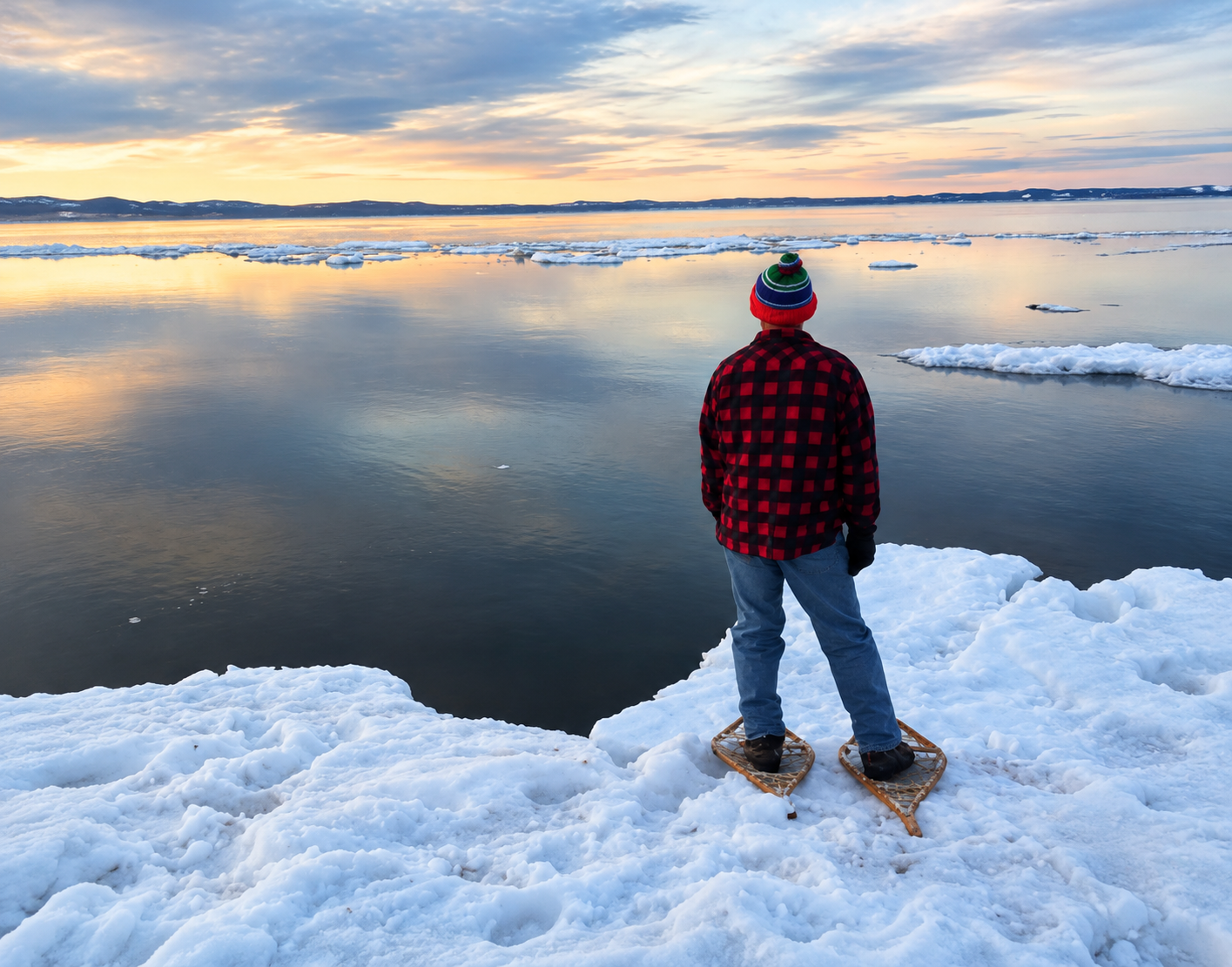
a man in traditional snowshoes crossing a sheet of ice
Winner 1 · Photography

A photograph: a man in traditional snowshoes, walking away from us across a large sheet of ice.
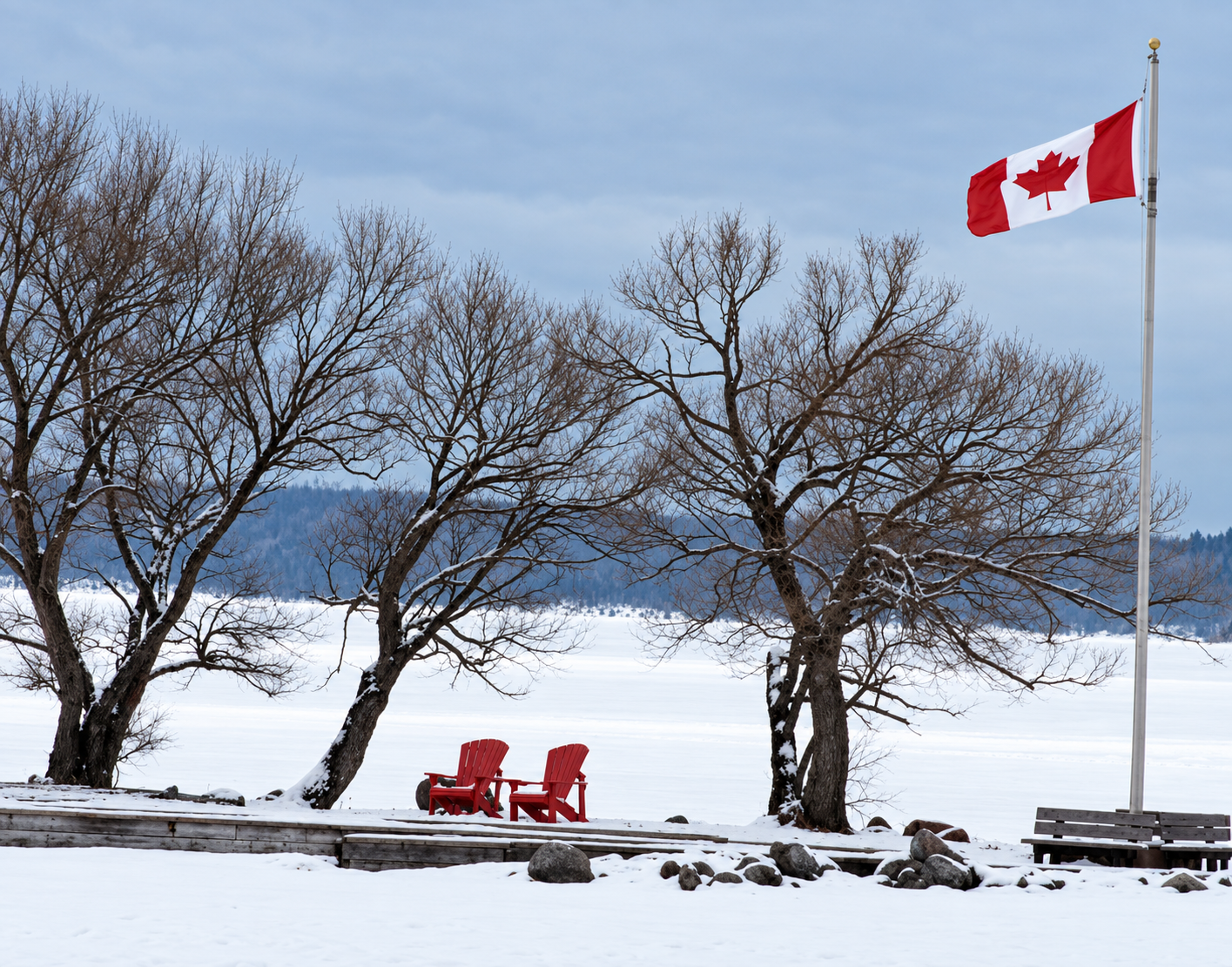
a Canadian flag and two red chairs in a snowy park
Winner 2 · Photography

A photograph: a Canadian flag and two red chairs in a snowy park, with bare trees behind them.
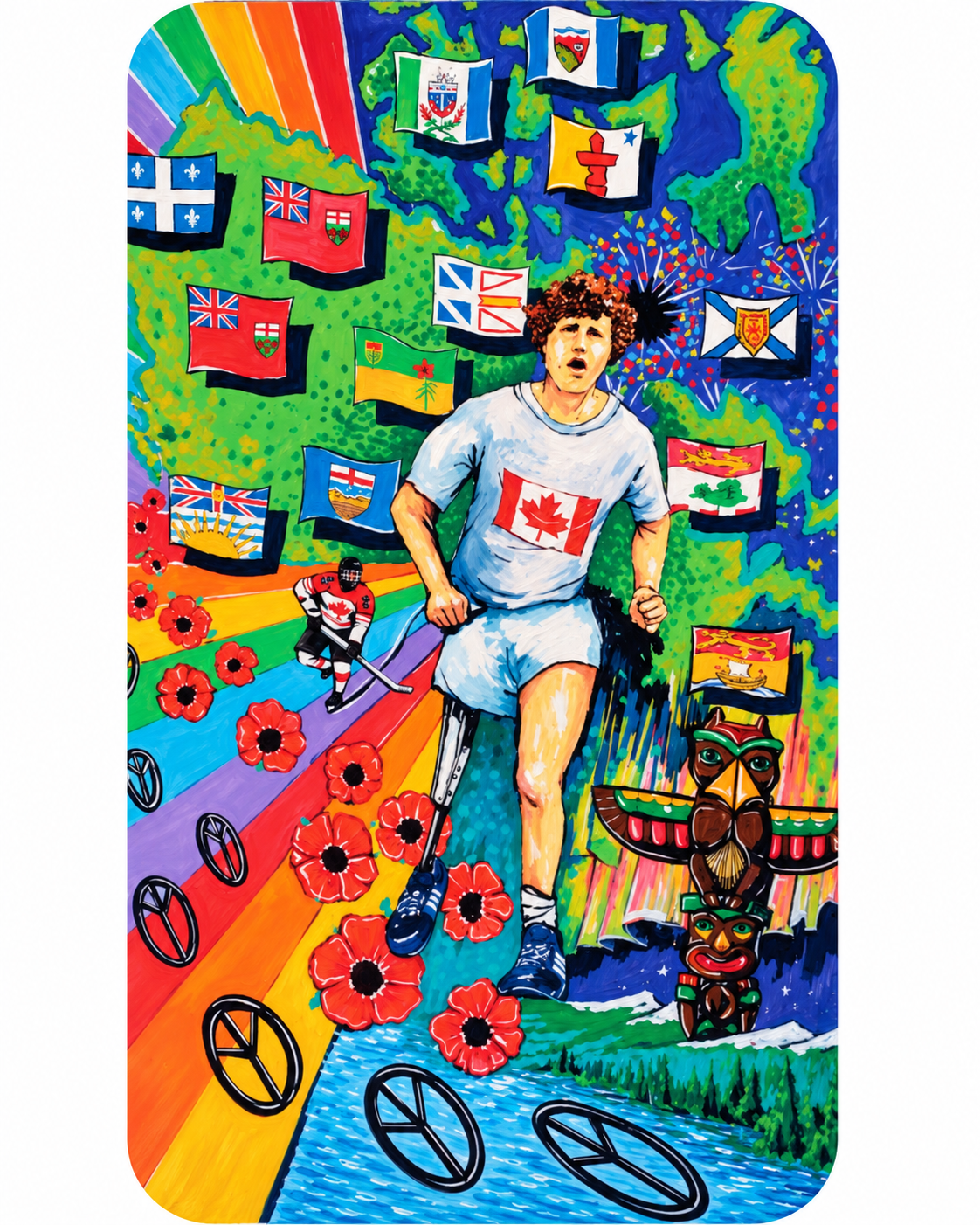
a painted green map of Canada with a runner crossing it
Winner 3 · Painting

A painting: a green map of Canada covered with provincial flags, a rainbow, red poppies and a totem pole, and a runner crossing it.

The runner is Terry Fox, a young Canadian who ran across the country on an artificial leg to raise money for cancer research.

Le coureur est Terry Fox, un jeune Canadien qui a traversé le pays en courant avec une jambe artificielle pour récolter des fonds contre le cancer.

Comprehension: Why Were These Pictures Selected?

Read the contest text again. What is the jury looking for?
Relis le texte du concours. Que cherche le jury ?
Look at the three pictures. Why do you think each one was selected?
Regarde les trois images. Pourquoi penses-tu que chacune a été retenue ?
The snowshoes picture
La photo des raquettes
The flag picture
La photo du drapeau
The painting
Le tableau

Document: Meet the Three Artists

Canada Day Challenge
Entrant
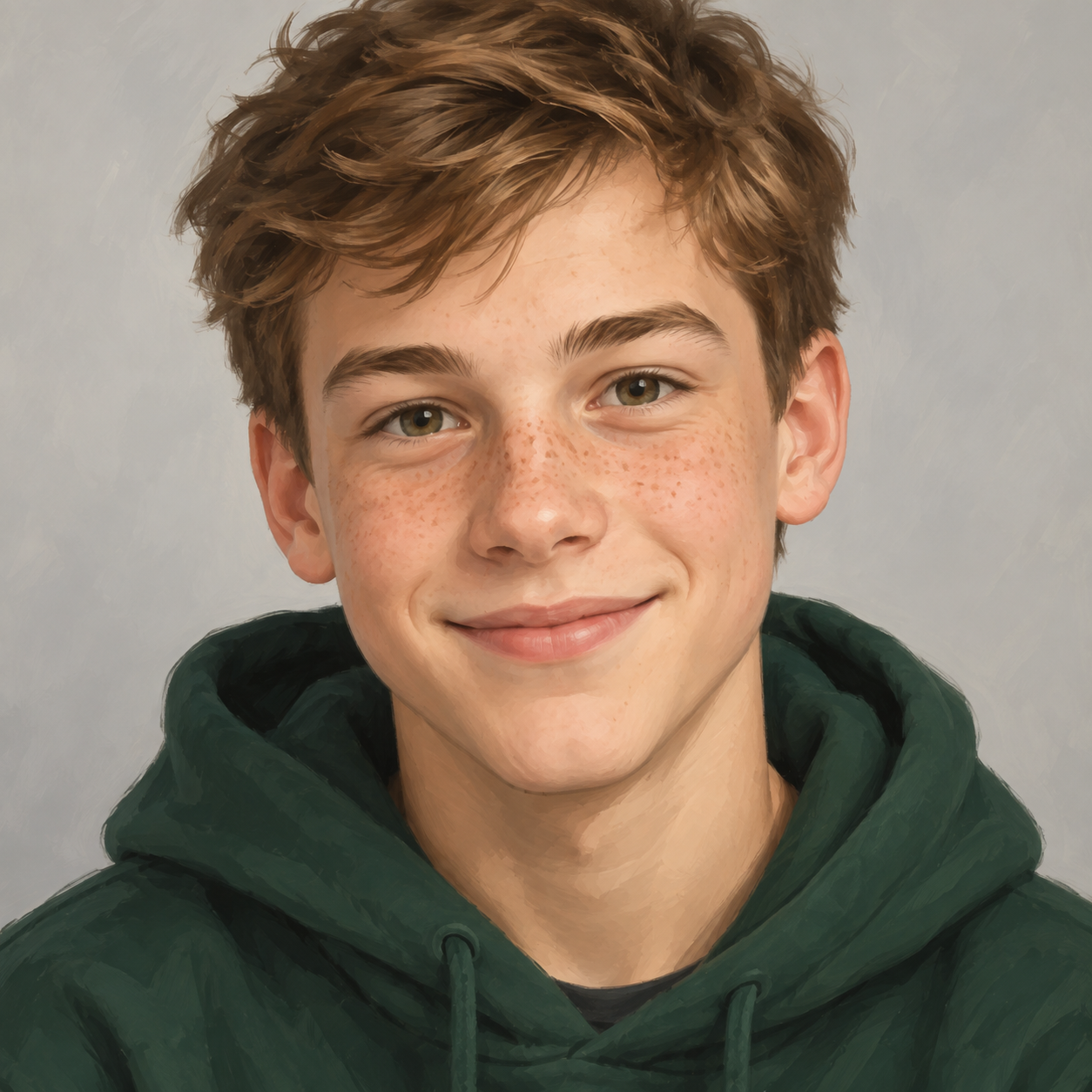
Daniel, the young artist
Daniel VANDERMEER
Photograph
From: Oromocto, New Brunswick
Age: 14 years old
Canada Day Challenge
Entrant
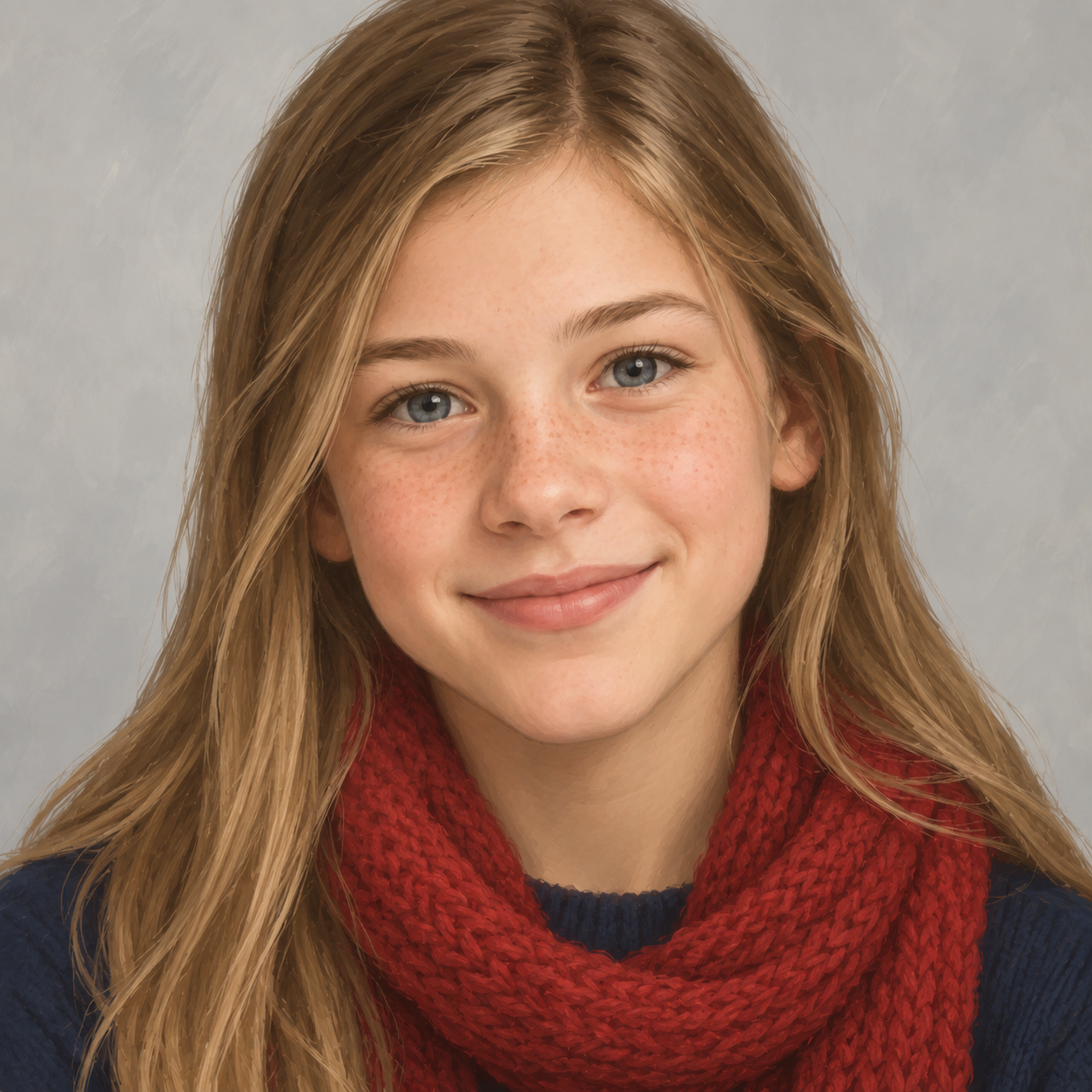
Hannah, the young artist
Hannah FRIESEN
Photograph
From: Brandon, Manitoba
Age: 12 years old
Canada Day Challenge
Entrant
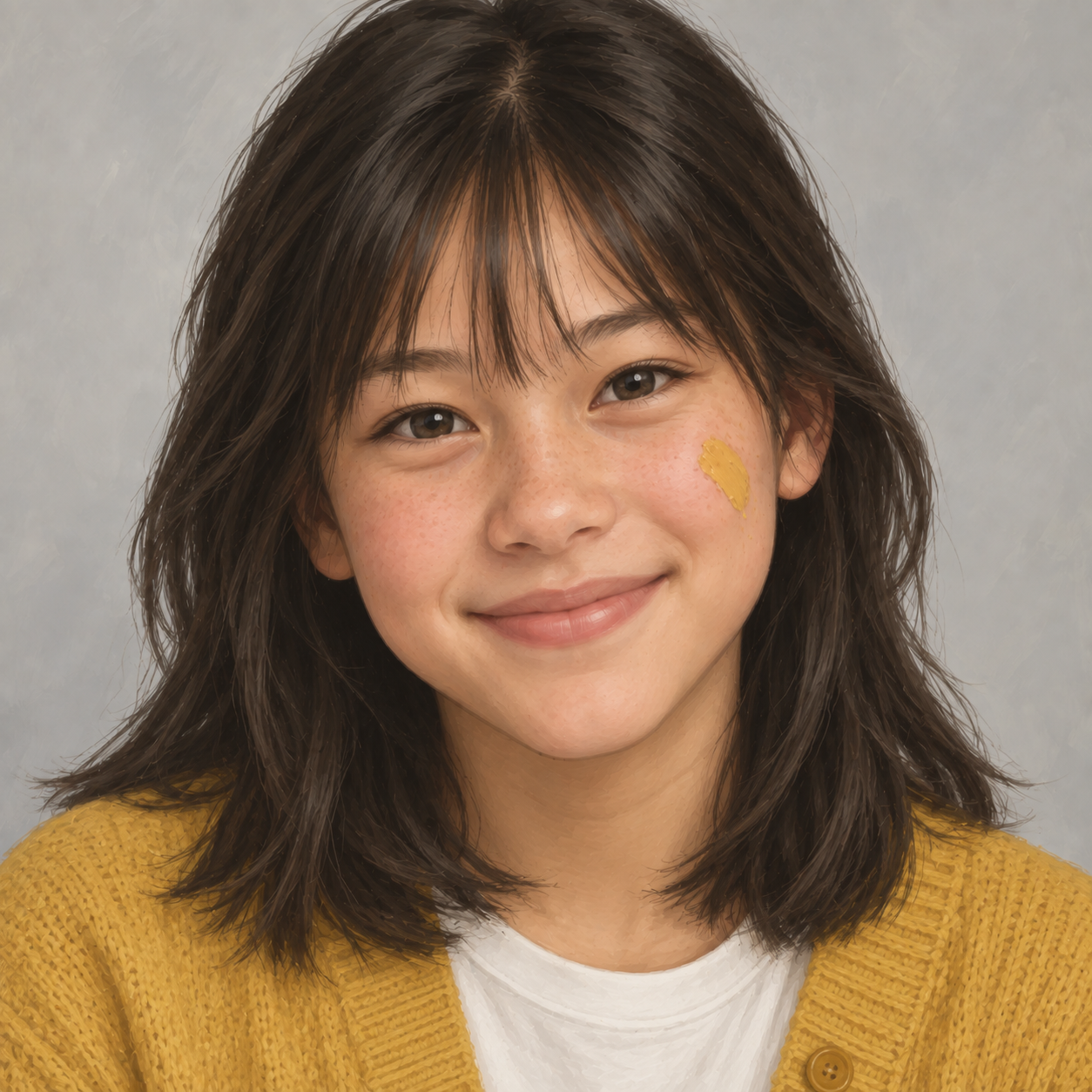
Grace, the young artist
Grace LIU
Painting
From: Red Deer, Alberta
Age: 13 years old

Document: The Three Artist Statements

Each artist wrote a short statement to explain their entry. Here are the three, as the contest published them.
Chaque artiste a rédigé une courte note d'intention pour expliquer son œuvre. Voici les trois, telles que le concours les a publiées.

The Three Artist Statements

Daniel Vandermeer Daniel Vandermeer's photograph
Daniel Vandermeer14 · Oromocto, New Brunswick · Photograph
_____ _____ _____ _____ _____ _____
_____ _____ _____ _____ _____ _____ _____ _____
_____ _____ _____ _____
_____ _____ _____ _____
_____ _____ _____ _____ _____ _____ _____
_____ _____ _____ _____ _____
_____ _____ _____ _____
_____ _____ _____ _____ _____ _____ _____
DANIEL VANDERMEER I find there are many symbols in this photo that truly represent Canada. We can see my father, a second generation Canadian of Dutch descent, wearing traditional Aboriginal snowshoes. I think that this demonstrates the multiculturalism of this country. He is walking on a large ice sheet in Chaleur Bay, the name of which is attributed to Jacques Cartier, one of the first explorers of Canada. On the other side of the Bay, we can see Quebec. This reminds us that our country has two official languages. I find that these are all signature elements of Canada that define this country very well.
Hannah Friesen Hannah Friesen's photograph
Hannah Friesen12 · Brandon, Manitoba · Photograph
_____ _____ _____ _____ _____
_____ _____ _____ _____ _____ _____
_____ _____ _____ _____ _____ _____ _____ _____
_____ _____ _____ _____
_____ _____ _____ _____
_____ _____ _____ _____
_____ _____ _____
_____ _____ _____ _____ _____ _____
_____ _____ _____ _____
_____ _____ _____ _____ _____ _____
_____ _____ _____ _____ _____ _____
HANNAH FRIESEN This picture highlights why I am proud to be Canadian. This photo was taken at Riding Mountain National Park, a special place to me. National parks are important to me because you can see wildlife that you don't usually see in the city. In the middle of this photo is the Canadian flag. To me the Canadian flag represents Canada. I see this flag at my school, sports games, and Canadian landmarks, like national parks. In this photo there is snow and ice surrounding the flag and red chairs. Snow and ice are important parts of Canada. The red chairs have become a feature at National Parks and identify friendship. There are always two red chairs, there is never just one.
Grace Liu Grace Liu's painting
Grace Liu13 · Red Deer, Alberta · Painting
_____ _____ _____
_____ _____ _____ _____ _____ _____ _____
_____ _____ _____ _____ _____
_____ _____ _____ _____ _____
_____ _____ _____ _____
_____ _____ _____ _____ _____ _____
GRACE LIU Strong, beautiful and proud. Three words that perfectly describe Canada, my inspiration for this piece. Canada is a country that shares beauty and happiness with everyone. In this country there are so many people that are making a difference not only here, but everywhere in the world. Canada is a place where everyone can express who they truly are.
Terry Fox in foreground; background is a green map of Canada; provincial flags on the map; rainbow pattern on the left with red poppies and peace signs; a totem pole on the right; mountain-scape on bottom right.

Sort: Describing or Giving an Opinion?

Here are the expressions the three artists used. Sort them: does the artist describe what is there, or say what they think of it?
Voici les expressions employées par les trois artistes. Trie-les : l'artiste décrit-il ce qui est là, ou dit-il ce qu'il en pense ?
Expressions used to describe something
Expressions used to give an opinion

Complete the table: Key Elements, Artist by Artist

Complete the table for each of the three artists.
Complète le tableau pour chacun des trois artistes.
Daniel
Hannah
Grace
Who the artist is: age, home, type of entry
14 · Oromocto, New Brunswick · a photograph
12 · Brandon, Manitoba · a photograph
13 · Red Deer, Alberta · a painting
The key words of the first sentence
many symbols · represent Canada
I am proud to be Canadian
Strong, beautiful and proud
What we can see in the picture
a second-generation Canadian of Dutch descent · traditional Aboriginal snowshoes · a large ice sheet in Chaleur Bay
Canadian landmarks like national parks · wildlife · the Canadian flag · red chairs
a green map of Canada · provincial flags · a runner
What it says about Canada
Jacques Cartier, one of the first explorers · two official languages
the red chairs stand for friendship
a country that shares beauty and happiness with everyone · everyone can express who they truly are

Writing Task: What Have You Learnt about Canada?

NOM, Prénom :
Classe :
Date :
Note :
The task
1. Read your table again.
2. Say what you have learnt about Canada's history, culture and identity from the three artists.
3. Write 40 to 60 words.
1. Relis ton tableau.
2. Dis ce que tu as appris sur l'histoire, la culture et l'identité du Canada grâce aux trois artistes.
3. Écris 40 à 60 mots.
40 – 60 mots
Hints
L'histoire +
un explorateur, un nom de lieu. Regarde la ligne « What it says about Canada » du tableau.
La culture +
les langues, les origines des habitants, un symbole.
L'identité +
ce qui rend le Canada spécial pour les artistes : To me… · I find that…
Les mots pour le dire +
I have learnt that… · Canada is a country where… · This reminds us that…
Example: · Exemple : +
I have learnt that Canada has two official languages and that Jacques Cartier was one of the first explorers of the country. Canadian culture is multicultural: Daniel's father is of Dutch descent. The red chairs in the national parks stand for friendship. To me, Canada is a country where everyone can express who they truly are.
Grille d'évaluation — production écrite
Marking guide — written task
… / 10
Content
Un élément sur l'histoire, un sur la culture, un sur l'identité, tirés des trois textes.
… / 4Contenu
Length
40 à 60 mots.
… / 2Longueur
Vocabulary
Lexique de la séance : symbol, represent, proud, multicultural…
… / 2Lexique
Language
Correction de la langue.
… / 2Langue
What I have learnt

Translation Task: Through Young Artists' Eyes

Build the sentence in English
Construis la phrase en anglais.

Taboo: Describe It Without Saying It

Describe the word on the card so your group can say it. Never say the word itself, and never say any of the four words under it.
Décris le mot de la carte pour que ton groupe le dise. Ne dis jamais le mot lui-même, ni aucun des quatre mots en dessous.
Say where you find it, or what it is for.
Trois pistes quand tu bloques : où on le trouve, à quoi ça sert, quelle couleur ou quelle forme ça a.
Say it like this
  • It is something you can see in…
  • C'est quelque chose qu'on peut voir dans…
  • It is the thing that…
  • C'est la chose qui…
  • It is a place where…
  • C'est un endroit où…
  • People use it to…
  • On s'en sert pour…
Card 0 / 0 All the cards are done!
?
Do not say

Séance 2 : How to Write a Description

  • Objectif : Rédiger une description vivante en cinq étapes, et employer les déterminants a / an, the et Ø pour dire de quel élément on parle.
  • Activités : Retour sur l'œuvre gagnante ; méthode en cinq étapes ; photo de l'Igloofest à décrire ; atelier d'écriture ; kit de grammaire sur les déterminants ; texte à compléter sur l'origine du nom Canada ; exercice Ø ou the ; article sur Toronto ; phrases à compléter avec a, the ou Ø ; notes télégraphiques à remettre en phrases ; nouvelle image et ses trois textes ; illustration d'une note d'intention ; atelier de traduction ; jeu de plateau.
  • À retenir : Savoir écrire une description qui présente, décrit, relie à un fait, donne un avis et conclut ; savoir choisir entre a, the et Ø devant un nom de pays, un nom précis ou un nom pris en général.

Choose the right sentence: Which One Won?

One of the three entries won the contest. Which one? Say why before you check.
L'une des trois œuvres a remporté le concours. Laquelle ? Dis pourquoi avant de vérifier.

    Method: How to Write a Vivid Description

    1. Présente ton sujet.

    Commence par une petite phrase d'introduction qui donne le sujet de ta description.

    I find there are many symbols in this photo that truly represent Canada.

    2. Décris ce que tu vois.

    Situe et décris avec des expressions simples.

    We can see my father… He is walking on a large ice sheet in Chaleur Bay… On the other side of the Bay, we can see Quebec.

    3. Rends ta description intéressante.

    Relie ce que tu vois à un fait historique ou culturel : c'est ce qui donne de l'intérêt à ta description.

    …Chaleur Bay, the name of which is attributed to Jacques Cartier, one of the first explorers of Canada.

    4. Donne ton opinion.

    Une fois l'élément décrit, dis ce qu'il signifie pour toi.

    I think that this demonstrates the multiculturalism of this country. This reminds us that our country has two official languages.

    5. Conclus.

    Termine par une phrase qui rappelle l'introduction.

    I find that these are all signature elements of Canada that define this country very well.

    Document: Igloo Swag

    A night crowd at a winter music festival in Montreal. The people in the picture are taking part in a best-outfit competition.

    La foule, la nuit, à un festival de musique d'hiver à Montréal. Les personnes sur la photo participent à un concours de la plus belle tenue.

    A night crowd at a winter music festival in Montreal. The people in the picture are taking part in a best-outfit competition.

    Igloofest, Montréal, Québec

    Writing Task: Describe This Image, Step by Step

    NOM, Prénom :
    Classe :
    Date :
    Note :
    The task
    1. Look at the picture above and describe it, using the five steps of the method.
    2. Write 60 to 80 words.
    1. Regarde l'image ci-dessus et décris-la en suivant les cinq étapes de la méthode.
    2. Écris 60 à 80 mots.
    60 – 80 mots
    Hints
    Étape 1 +
    une phrase qui annonce ton sujet. Commence par ce que la photo montre, pas par un détail.
    Étape 2 +
    où sont les gens, ce qu'ils portent, ce qu'ils font. Sers-toi de ton kit de vocabulaire.
    Étape 3 +
    un fait culturel. Le festival, son nom, la ville, la saison.
    Étape 4 +
    ton avis. Qu'est-ce que cette image dit des Canadiens ?
    Étape 5 +
    une phrase de conclusion qui reprend ton introduction.
    Example: · Exemple : +
    This picture shows why I love being Canadian. We can see people in crazy ski clothes at night. They are celebrating Igloofest, an outdoor electronic music festival which takes place in Montréal, Québec. There is a competition for best outfit called “Igloo Swag” and this is what we can see in the picture. I think that this demonstrates that we have a lot of fun in Canada. It also represents the fact that we still have a good attitude even when it is really cold! I find that this picture symbolizes the attitude and humour of Canadians very well.
    Grille d'évaluation — production écrite
    Marking guide — written task
    … / 10
    Content
    Les cinq étapes de la méthode : un point par étape réellement présente.
    … / 5Contenu
    Length
    60 à 80 mots.
    … / 1Longueur
    Vocabulary
    Lexique de la description et des impressions.
    … / 2Lexique
    Language
    Correction de la langue.
    … / 2Langue
    Your description

    Grammar Kit: Les déterminants — a / an, the, Ø

    1. L'article indéfini a / an

    Il présente un élément nouveau, non défini.

    Canada is a country that shares beauty and happiness with everyone.

    Le Canada est un pays qui partage sa beauté et son bonheur avec tout le monde.

    He is walking on a large ice sheet in Chaleur Bay.

    Il marche sur une grande plaque de glace dans la baie des Chaleurs.

    2. L'article défini the

    Il désigne un élément précis, ou déjà connu.

    In this photo there is snow and ice surrounding the flag.

    Sur cette photo, il y a de la neige et de la glace autour du drapeau.

    On the other side of the Bay, we can see Quebec.

    De l'autre côté de la baie, on peut voir le Québec.

    3. L'article Ø

    Devant la plupart des noms de pays, et devant un nom pris au sens général.

    Ø Canada is a country that shares Ø beauty and Ø happiness with everyone.

    Le Canada est un pays qui partage sa beauté et son bonheur avec tout le monde.

    In this photo there is Ø snow and Ø ice surrounding the flag and Ø red chairs.

    Sur cette photo, il y a de la neige et de la glace autour du drapeau et des chaises rouges.

    Attention
    • Un nom de pays qui contient un nom commun prend the : The United States of America, The Netherlands.
    • Formes plurielles : au singulier a / an et the ; au pluriel Ø et the.

    Complete the text: Where the Name “Canada” Comes From

    Complete the text with a / an, the or Ø.
    Complète le texte avec a / an, the ou Ø.

    a Ø Canada comes from b a word that c the First Nations used to refer to d a village. It is funny because e the country now is f the second biggest in the world! g Ø Canadians have very diverse origins and speak different languages. Justin Trudeau, h the former Prime Minister, was very proud of i the country's diversity.

    Choose the right option: Ø or the?

    Choose the right determiner in each sentence: Ø or the?
    Choisis le bon déterminant dans chaque phrase : Ø ou the ?
    • (Ø/the) Quebec is (Ø/the) French-speaking part of (Ø/the) Canada.
    • I read (Ø/the) article you sent me yesterday.
    • (Ø/The) winters are very cold in (Ø/the) Canada: (Ø/the) temperatures are polar!
    • I love (Ø/the) Canadian flag! (Ø/The) maple leaf is our national symbol.
    • Do you remember (Ø/the) name of that Canadian actor we met in Ottawa?

    Complete the text: Welcome to Toronto

    Complete this travel-guide extract with the or Ø.
    Complète cet extrait de guide de voyage avec the ou Ø.

    Welcome to a Ø Toronto, b the most multiculturally diverse city on c the planet: over 140 languages are spoken. It's estimated that over half of Toronto's residents were born outside d Ø Canada. When e the weather is fine, f Ø Toronto is a blast: a big-time city abuzz with g Ø activity.

    Complete the Sentences: A, The or Nothing?

    Complete the sentences with a / an, the or Ø.
    Complète les phrases avec a / an, the ou Ø.

    Canada is a a beautiful country with 38 National Parks.
    “Where is b the maple syrup? I'm going to put some on our pancakes.” “It's in c the fridge. But you know I don't like d Ø maple syrup!”
    What do you want to visit? e the CN Tower or f Ø Queen's Park?
    I'm afraid of g Ø heights, so I don't want to go up h the tower.

    Comprehension: Turn the Notes into Sentences

    Rewrite each note from the painting's caption as a full sentence.
    Réécris chaque note de la légende du tableau en phrase complète.
    background is a green map of Canada
    provincial flags on the map
    rainbow pattern on the left with red poppies and peace signs
    a totem pole on the right
    mountain-scape on bottom right

    Document: A New Picture

    Three young players in Canada shirts jumping in the snow, in front of a line of snowy conifers. They are holding lacrosse sticks.

    Trois jeunes joueurs en maillot du Canada sautent dans la neige devant une rangée de conifères enneigés. Ils tiennent des crosses.
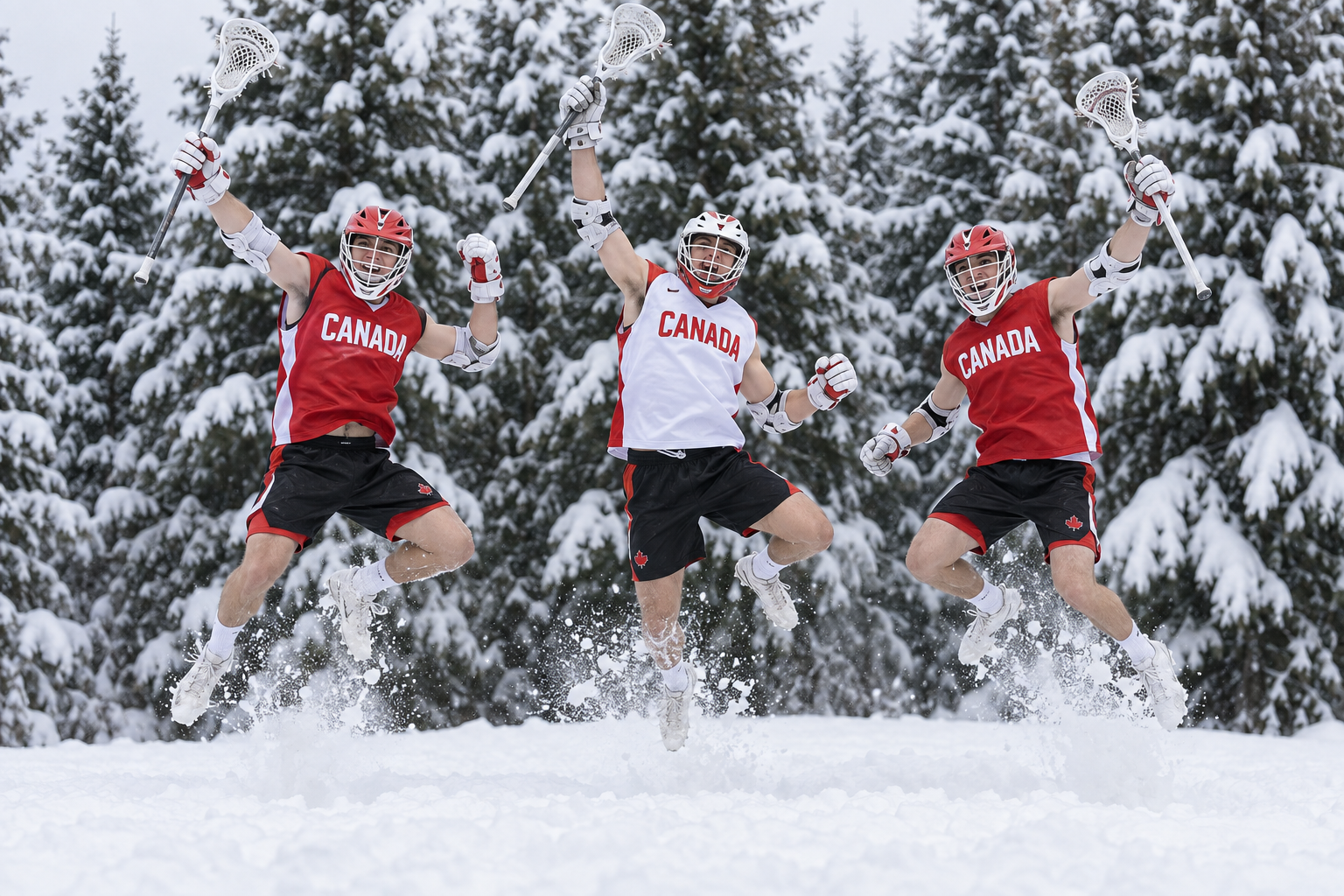
    Three young players in Canada shirts jumping in the snow, in front of a line of snowy conifers. They are holding lacrosse sticks.

    Word Cloud: A New Picture

    Look at the picture. Say the words that come to your mind.
    Regarde l'image. Dis les mots qui te viennent à l'esprit.
    Your words will appear here.

    Document: Three More Young Artists

    Three More Young Artists

    _____ _____ _____ _____
    _____ _____ _____ _____ _____
    Three more entries to the contest, each with its own statement. Only one of them goes with the picture above.
    _____ _____ _____ _____ _____ _____
    _____ _____ _____ _____
    _____ _____ _____ _____ _____ _____ _____
    _____ _____ _____ _____ _____
    _____ _____ _____ _____ _____ _____
    _____ _____ _____ _____ _____ _____ _____
    _____ _____ _____ _____ _____ _____
    _____ _____ _____ _____ _____ _____
    _____ _____ _____
    _____ _____ _____ _____
    _____ _____ _____ _____ _____ _____
    _____ _____ _____ _____ _____ _____ _____
    _____ _____ _____ _____ _____ _____ _____
    1 — I love how in Canada, you can find people with all kinds of backgrounds and everyone can celebrate together without discrimination. […] The train running across a road of flags not only symbolizes our history, but also how all the provinces of Canada are connected. The more realistically drawn animals that fade into the totem poles show how nature is an important theme in culture and art, especially because Canada has so much of it. Canada's natural wonders are amazing from snow-capped mountains, to the famous Canadian rapids and I think it is very important to take care to preserve as much of it as we can for the future. The satellite and the starry sky represent how possibilities are endless as not even the sky is a limit to what we can achieve.
    Rachel Shen, Markham, Ontario, 14 years old
    _____ _____ _____ _____ _____ _____ _____
    _____ _____ _____
    _____ _____ _____
    _____ _____ _____ _____ _____ _____ _____
    _____ _____ _____ _____ _____ _____ _____
    _____ _____
    _____ _____ _____ _____ _____ _____ _____
    2 — Canada is made up of so many different languages, cultures and personalities, you need many colours and artists to paint the big picture of Canada. This photo only gives you a tiny glimpse into what makes up Canada. […] Many provinces and territories are serenely covered by a pure blanket of white snow in the winter months, but yet again that is only a small part of our home we call Canada.
    Regan Wiebe, MacGregor, Manitoba, 16 years old
    _____ _____ _____ _____ _____ _____ _____ _____
    _____ _____ _____ _____ _____
    _____ _____ _____ _____ _____
    _____ _____ _____ _____ _____ _____ _____
    _____ _____ _____ _____ _____
    _____ _____ _____ _____ _____ _____ _____ _____
    _____ _____ _____ _____ _____
    _____ _____ _____ _____
    _____ _____ _____ _____
    3 — Did you know that lacrosse is Canada's true FIRST national sport? The history of the sport goes right back to the history of our country! It no longer is used to solve battles, but sometimes when I walk off the field I feel like I have fought one! My brothers and I are all proud lacrosse players. We play both field and box, and love representing our country when we travel to play. The year of the sport is the year that shows what being part of a team is really about … and I am proud to be part of TEAM CANADA!
    Luke Sprigg, Mount Albert, Ontario, 15 years old

    Choose the right sentence: Which Statement Matches the Picture?

    Read the three statements quickly and find the words you said about the picture. Which statement goes with it?
    Lis rapidement les trois notes d'intention et retrouve les mots que tu as dits sur l'image. Laquelle correspond ?

      Writing Task: Illustrate a Young Artist’s Statement

      NOM, Prénom :
      Classe :
      Date :
      Note :
      The task
      1. Choose one of the two statements that do NOT go with the picture.
      2. Underline the visual elements in it: look for what comes before show, symbolize and represent, and underline the nouns and the adjectives.
      3. Draw the picture the artist is describing in the frame on your sheet.
      4. Then write two sentences under your drawing saying what it shows.
      1. Choisis l'une des deux notes d'intention qui ne correspondent pas à l'image.
      2. Souligne les éléments visuels : regarde ce qui précède show, symbolize et represent, et souligne les noms et les adjectifs.
      3. Dessine dans le cadre de ta fiche l'image que l'artiste décrit.
      4. Écris ensuite deux phrases sous ton dessin pour dire ce qu'il montre.
      2 phrases
      Hints
      Example: · Exemple : +
      My drawing shows a train crossing a road of flags. There are animals that fade into the totem poles, and a starry sky above them.
      Grille d'évaluation — production écrite
      Marking guide — written task
      … / 5
      Drawing
      Le dessin reprend au moins trois éléments du texte.
      … / 3Dessin
      Sentences
      Les deux phrases disent ce que le dessin montre.
      … / 2Phrases
      Your drawing and your two sentences

      Translation Task: Describing Canada

      Build the sentence in English
      Construis la phrase en anglais.

      Board Game: A, The or Nothing?

      Two to eight teams. Give your team a name, then roll the dice and your piece moves. Look at the symbol on the square you land on, take a card from that deck and do what it says. If your answer is right, you stay where you are. If it is wrong, you go back to the square you came from. A ladder takes you up, a snake takes you down. The first team to land exactly on 30 wins.
      De deux à huit équipes. Donne un nom à ton équipe, puis lance le dé et ton pion avance. Regarde le symbole de la case où tu arrives, prends une carte dans cette pile et fais ce qu'elle demande. Si ta réponse est juste, tu restes sur ta case. Si elle est fausse, tu retournes à ta case de départ. Une échelle te fait monter, un serpent te fait descendre. La première équipe à tomber pile sur la case 30 gagne.
      Ask what kind of noun it is before you choose the determiner.
      Trois questions : est-ce un nom de pays ? un élément déjà connu ? ou un nom pris au sens général ?

      Évaluation : Compréhension de l'écrit

      • Type d'évaluation : Compréhension de l'écrit — deux niveaux au choix (A2 ou B1)
      • Axe : Axe 2 — Voyages et explorations
      • Compétences : CE — A2 / A2+ / B1 (niveau visé : A2+) — comprendre une note d'intention et la relier à son image
      • Coefficient : 1
      NOM, Prénom :
      Classe :
      Date :
      Note :
      Axe : Axe 2 — Voyages et explorations
      CECRL : A2
      Activité langagière : Compréhension de l'écrit
      Compétence : Comprendre une note d’intention et la relier à son image
      ÉVALUATION — A Young Artist's Statement — A2 Compréhension de l'écrit
      FINALIST – DRAW IT!
      Peinture de Laura Lima Nishida
      LAURA LIMA NISHIDA
      Bedford, Nova Scotia · 15 years old
      ARTIST STATEMENT:

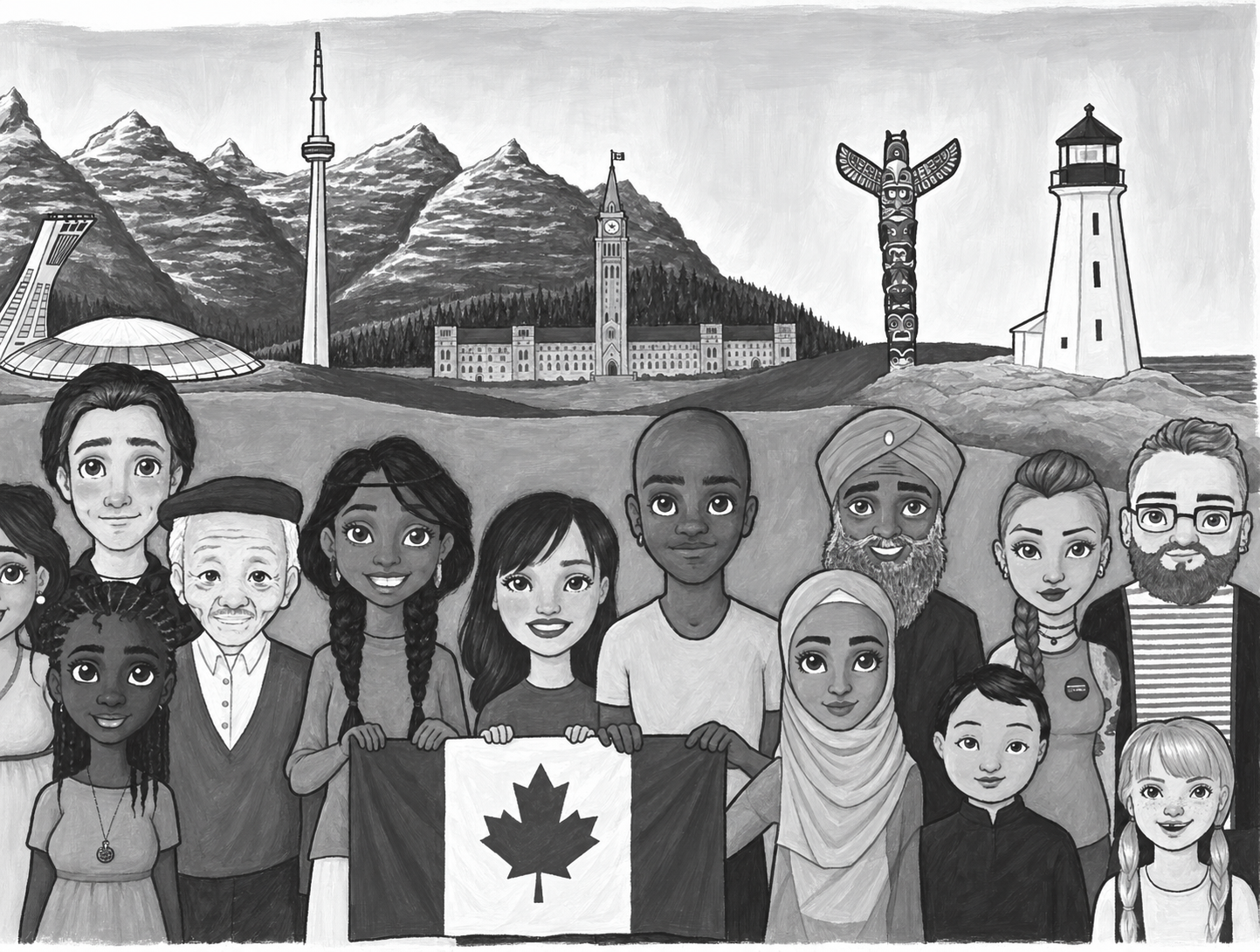
      There are many things about Canada that I love and that inspired me, but my biggest inspiration for this artwork was the people. Canada is a place where everyone is welcome, no matter their race, culture, belief, gender or physical appearance. Our differences make us stronger and better as a country, every individual has something good to contribute to Canada's success. The people make the future, and with a great population like Canada's my vision for the future could not be better.

      Regarde bien l’image, puis lis le reste du document et réponds aux questions en français.
      1.
      Qui est l’auteur du texte ? 1 pt
      Correction :
      • Laura Lima Nishida (1 pt)
      2.
      De quel type de texte s’agit-il ? 1 pt
      Correction :
      • Il s’agit d’une note d’intention. (1 pt)
      3 a.
      Fais des liens entre le texte et l’image. En quoi l’image correspond-elle au texte ? 3 pts
      Correction :
      • Elle parle de la diversité de la population canadienne
      • C’est ce que nous voyons dans la peinture, car elle représente des gens d’origines diverses
      3 pts pour la réponse complète ; le guide n’en détaille pas la répartition.
      3 b.
      Qu’est-ce qui a inspiré l’artiste pour créer cette œuvre ? 1 pt
      Correction :
      • Beaucoup de choses, mais surtout le peuple canadien. (1 pt)
      3 c.
      Selon l’artiste, quel est le message de son œuvre ? 6 pts
      Correction :
      • Le message de son œuvre est que la diversité du peuple canadien rend le pays plus fort et meilleur car tout le monde a quelque chose de bien à apporter à son pays. (2 pts)
      • D’ailleurs, on voit dans sa peinture que les gens tiennent le drapeau ensemble. (2 pts)
      • Elle a une vision optimiste du futur : ceci est dû à la population canadienne. (2 pts)
      2 pts par élément.
      4.
      Choisis une phrase du texte qui pourrait être le titre de la peinture. Explique ton choix. 4 pts
      Correction :
      • Titres possibles : “Everyone is welcome” · “Our differences make us stronger” · “The people make the future”.
      4 pts : 1 pt pour le titre et 3 pts pour l’explication.
      5.
      Choisis un élément de l’arrière-plan de la peinture, et explique en quoi il est caractéristique du Canada. 4 pts
      Correction :
      • Les montagnes : ceci nous fait penser à la diversité des paysages que nous retrouvons au Canada.
      • Le parlement : ceci nous fait penser au gouvernement du Canada.
      • Le totem : ceci nous fait penser à la population aborigène canadienne et à son importance dans l’identité du pays.
      4 pts. On acceptera tout élément du moment que ce choix est correctement expliqué ; les trois réponses ci-dessus sont des productions possibles.
      NOM, Prénom :
      Classe :
      Date :
      Note :
      Axe : Axe 2 — Voyages et explorations
      CECRL : B1
      Activité langagière : Compréhension de l'écrit
      Compétence : Comprendre une note d’intention et la relier à son image
      ÉVALUATION — A Young Artist's Statement — B1 Compréhension de l'écrit
      FINALIST – SNAP IT!
      Photographie de Santana Schmidt
      SANTANA SCHMIDT
      Carbon (Alberta) · 15 years old
      ARTIST STATEMENT:

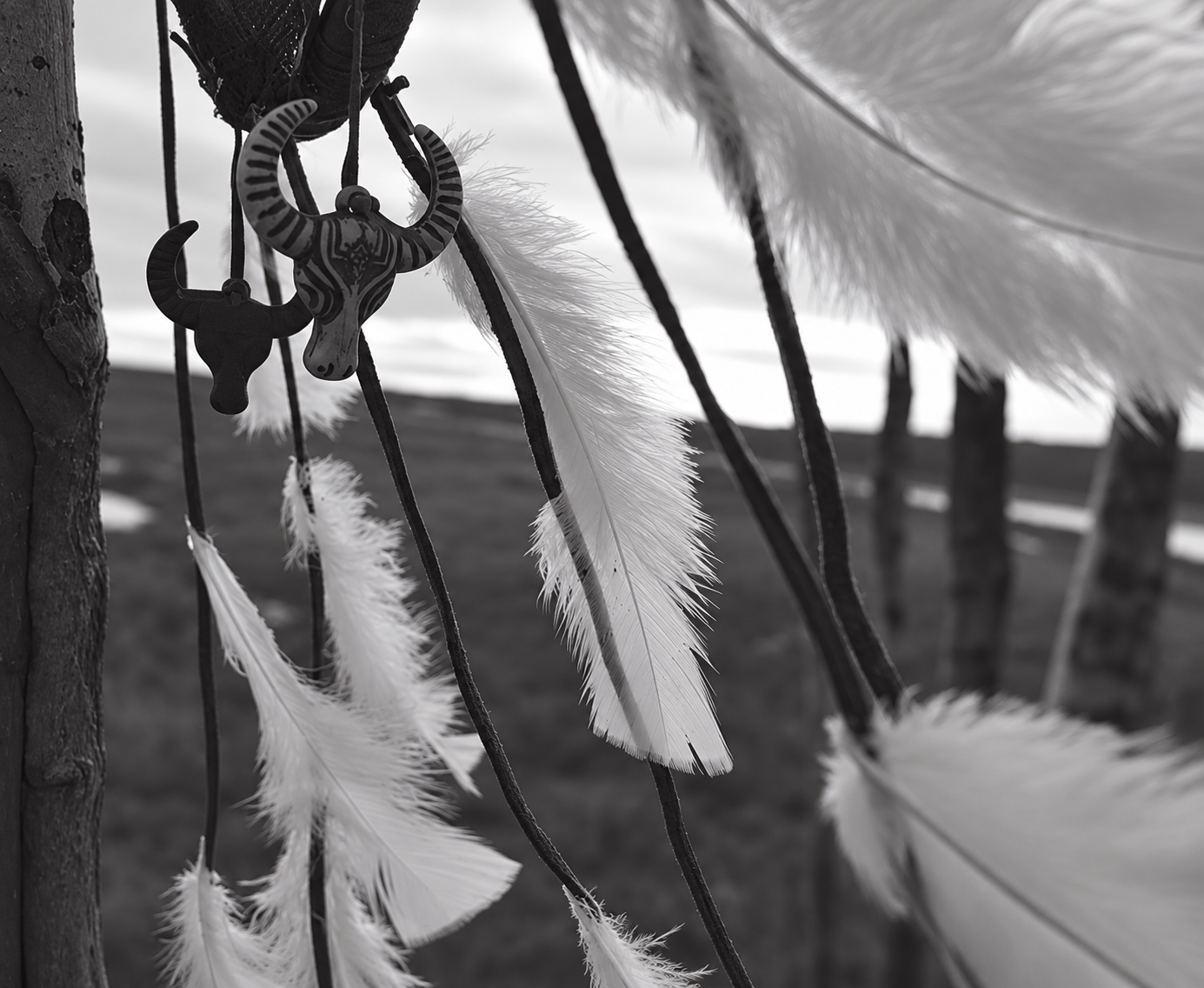
      What makes me proud to be Canadian? I´m proud to have the freedom of choice, speech and expression, and to be a part of our rich history. I took this photo because I think that the dream catcher represents our First Nations, a group of people who have had a lot of involvement in our country's history. This photo was taken on my family farm that is over 100 years old. Our farm is one of the many locations on the Prairie Provinces where the First Nations people used to roam, hunt and live. Luckily, we have found artifacts on our land that were left for us as evidence of their presence in earlier years. The dream catcher represents strength and unity. What does it mean to have strength and unity? It means coming together as one and being stronger than ever, being united as one as our country does. Working together to make sure that our history, that defines who we are, never gets forgotten.

      Lis le document ci-dessous puis réponds aux questions en français.
      1.
      Qui est l’auteur du texte ? 1 pt
      Correction :
      • Santana Schmidt (1 pt)
      2.
      De quel type de texte s’agit-il ? 1 pt
      Correction :
      • Il s’agit d’une note d’intention. (1 pt)
      3 a.
      Concentre-toi sur la grande photographie. Que représente-t-elle ? Tu peux nommer cet objet en anglais, il est mentionné dans le texte. 1 pt
      Correction :
      • Un attrape-rêve : a dream catcher. (1 pt)
      3 b.
      Pourquoi l’auteur a-t-il choisi cette photo ? Souligne en rouge dans le texte tout ce qui répond à cette question puis explique-le ici en français. 2 pts
      Correction :
      • Le passage à souligner : The dream catcher represents our First Nations, a group of people who have had a lot of involvement in our country's history.
      • Elle a choisi l’attrape-rêve parce que cet objet représente la population aborigène.
      • Ce peuple a joué un rôle important dans l’histoire canadienne.
      2 pts pour la réponse complète ; le guide n’en détaille pas la répartition.
      4 a.
      D’où vient la photographie ? 2 pts
      Correction :
      • Cette photo a été prise à la ferme qui appartient à la famille de Santana. (2 pts)
      4 b.
      Pourquoi est-ce important ? Relis la phrase suivante. Cette phrase est longue, nous te proposons donc de faire abstraction de certains éléments. Que comprends-tu alors ? 1 pt
      Our farm is [one of the many locations on the Prairie Provinces] where the First Nations people used to [roam, hunt and] live.
      Correction :
      • On attendra des élèves qu’ils comprennent que la population aborigène vivait sur cette propriété. (1 pt)
      4 c.
      Qu’apprends-tu d’autre sur ce lieu ? 6 pts
      Correction :
      • La ferme existe depuis plus de cent ans. (2 pts)
      • La ferme est située sur les Prairie Provinces. (2 pts)
      • On a trouvé des artefacts / des objets sur cette ferme. (2 pts)
      5.
      Relis le passage du texte de “The dream catcher represents…” à “…never gets forgotten”. Que représente l’objet de la photographie pour l’auteur ? 6 pts
      Correction :
      • Cet objet représente la force et l’unité. (2 pts)
      • C’est pareil pour le Canada : la population canadienne rassemblée est plus forte ; le pays représente cette unité. (2 pts)
      • Ces valeurs sont importantes pour elle car elle croit que tout le monde devrait travailler ensemble pour s’assurer que l’on n’oublie pas l’histoire de ce pays. (2 pts)