Séance 1 : Imagine a New Adventure for Finn McCool!

  • Objectif : Découvrir le Lough Neagh et imaginer une légende qui explique la naissance du lac.
  • Activités : Lecture d'un texte sur le Lough Neagh, invention collective d'une légende expliquant le lac, stratégies pour écrire une histoire, organiseur de légende à compléter, mots croisés sur les verbes d'action, tâche de traduction.
  • À retenir : Savoir qu'une légende explique un lieu réel par une histoire extraordinaire, et savoir préparer son récit avec un organiseur.

Vocabulary Kit: Actions and Time

Actions
  • run = courir
  • go to… = aller à…
  • go back to… = retourner à…
  • walk = marcher
  • help = aider
  • ask for help = demander de l'aide
  • cry = pleurer, crier
  • smile = sourire
  • fight = combattre, se battre
  • shout = crier
  • roar = rugir
  • break = casser
  • destroy = détruire
  • have an idea = avoir une idée
Time
  • once upon a time = il était une fois
  • a long time ago = il y a très longtemps
  • now = maintenant
  • then = alors, ensuite
  • first = d'abord
  • so = alors, donc
  • finally = enfin, finalement

Document: Discover Lough Neagh

Discover · Northern Ireland

Lough Neagh

A field guide to Ireland's great lake
_____ _____ _____
_____ _____ _____
_____ _____ _____
_____ _____ _____
_____ _____ _____
_____ _____ _____ _____
_____ _____ _____
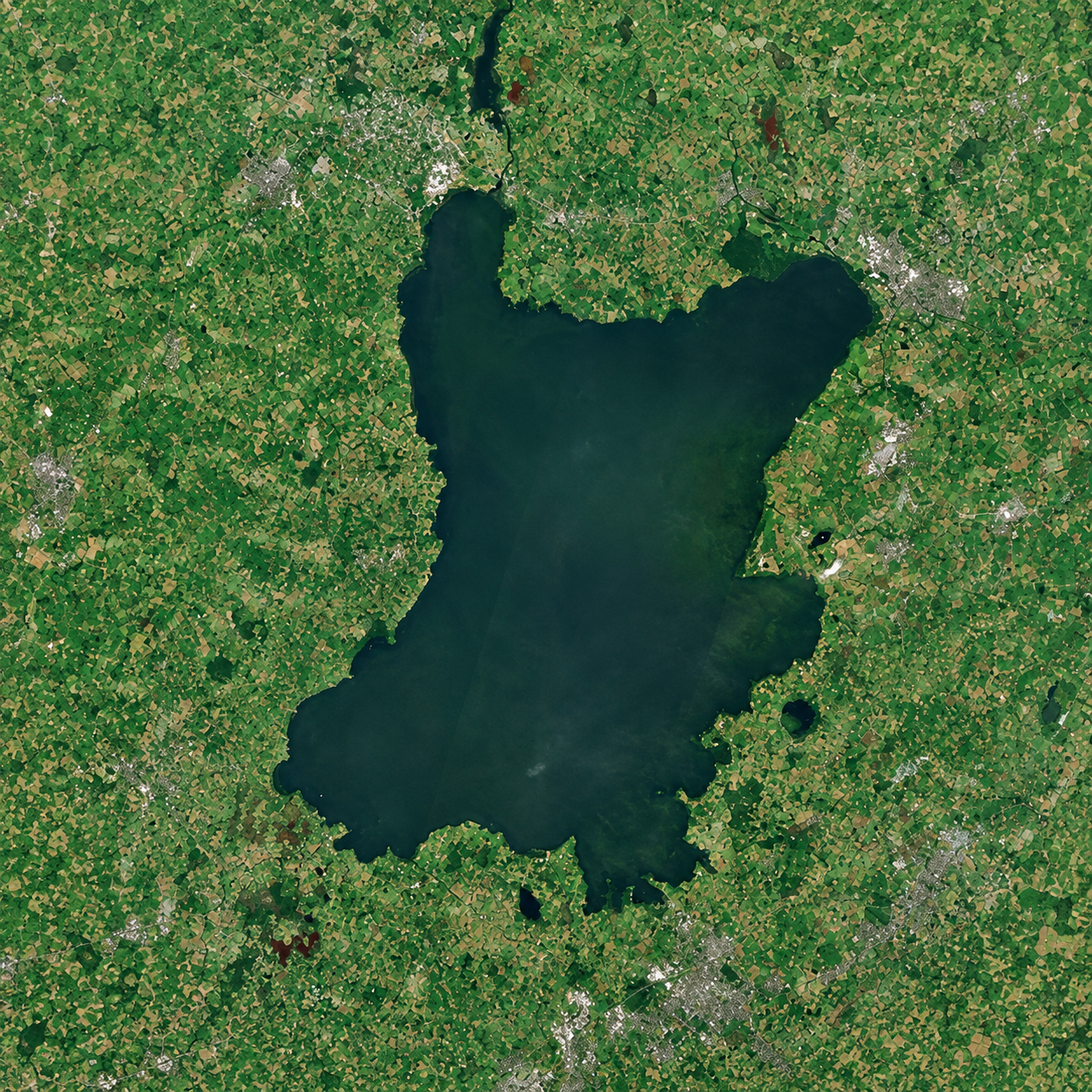
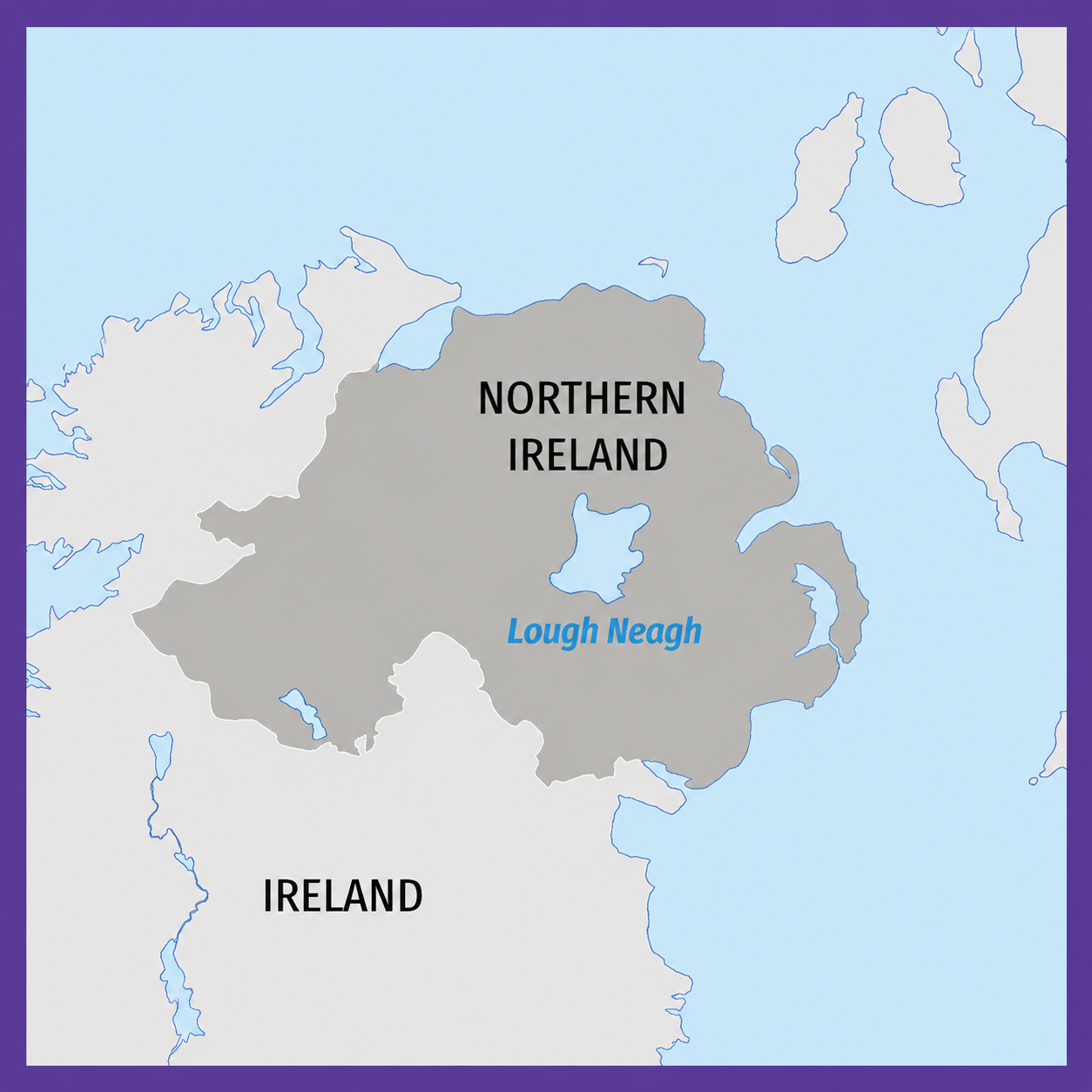
Lough Neagh seen from above Map of Northern Ireland showing the location of Lough Neagh
Lough Neagh is the biggest lake in Ireland. Its name is pronounced /lɒx neɪ/. The lake is very big, and its shape is quite strange. In the old stories, a giant made this lake a long time ago. People say he took a huge piece of earth and threw it into the sea. The piece of earth became an island, and the hole became the lake. Nobody knows for sure how the lake really appeared.

Writing Task: Imagine the legend of Lough Neagh

Now write your own legend to explain how Lough Neagh was made. Use the questions below to plan your story.
Écris maintenant ta propre légende pour expliquer comment le Lough Neagh a été créé. Sers-toi des questions ci-dessous pour préparer ton histoire.
In your legend, who created Lough Neagh? Choose your character.
Dans ta légende, qui a créé le Lough Neagh ? Choisis ton personnage.
Why is the lake so big? What happened?
Pourquoi le lac est-il si grand ? Que s’est-il passé ?
What did the piece of earth become?
Que devint le morceau de terre ?

How to: Write your own legend

Write your own legend

A legend explains something real — a lake, a rock, a coast — with an extraordinary story.

  • Choose your hero and your enemy, and decide what the obstacle is.
  • List the key words you will need: places, actions and time markers.
  • Choose your tense: a legend is normally told in the past.
  • Begin with Once upon a time… and end with the real place your story explains.

Plan your story: the Legend Organiser

The task
Plan your legend before you write it. Note down your hero, the obstacle, the enemy, the adventures, and the real place your legend explains.
Prépare ta légende avant de l'écrire. Note ton héros, l'obstacle, l'ennemi, les aventures et le lieu réel que ta légende explique.
en notes (mots-clés)
Hints
Your hero +
Who is he or she? a giant, a heroine, a wizard, a witch…
The obstacle +
What is the problem? a fight, a mountain, a storm, a promise…
The enemy +
Who is against your hero? another giant, a monster, a witch…
The real place +
What does your legend explain? a lake, an island, a rock, the coast…
Grille d'évaluation — production écrite
Marking guide — written task
… / 20
Content
The organiser names a hero, an obstacle, an enemy, adventures and a real place.
… / 5Contenu
Language
Uses the vocabulary of characters, places, actions and time.
… / 5Langue
Fluency
Notes are clear and the story order makes sense.
… / 5Aisance
Accuracy
Key words are correctly spelled.
… / 5Correction
Your Legend Organiser

Crossword: Story actions

Expression mystère :
→ Across
1.To find something for the first time.
2.To press hard, or to pass through a tight space.
3.To go from one side to the other.
4.To put a question to someone.
5.To make something with stones.
6.To battle against someone.
7.To do something useful for someone.
↓ Down
1.To make a choice.
2.To shout very loudly, like a lion.
3.To break something into pieces.
4.To show you are happy with your mouth.
5.To move very fast on your feet.

Translation Task: Imagine a Legend

Build the sentence in English
Clique sur une flèche pour lancer la roulette.

Séance 2 : Words

  • Objectif : Mobiliser et mémoriser le vocabulaire de la légende : personnages, lieux, actions et marqueurs de temps.
  • Activités : Jeu de catégories à l'oral, épellation des mots-clés, recherche d'intrus dans des listes, phrases à compléter avec le lexique des légendes, mots croisés de révision, tâche de traduction.
  • À retenir : Savoir classer le vocabulaire de la légende en catégories et savoir épeler les mots-clés de la séquence.

Speaking Game: Spin the Wheel

The task
In teams, spin the wheel with your teacher. When you land on a category, say as many words as you can from the legend — one after the other.
En équipes, faites tourner la roue avec votre professeur. Quand vous tombez sur une catégorie, dites le plus de mots possible tirés de la légende, l'un après l'autre.
Play in two teams: a word already said cannot be said again.
Jouez en deux équipes : un mot déjà dit ne peut pas être redit.
en équipes
Hints
Characters +
a giant, a hero, a heroine, a wizard, a witch, an enemy
Places +
a country, an island, the sea, a rock, a stone, the coast
Actions +
run, fight, cross, build, shout, roar, help
Time +
once upon a time, a long time ago, first, then, finally
Grille d'évaluation — présentation orale
Marking guide — oral presentation
… / 20
Content
Says several correct words in the right category.
… / 5Contenu
Language
Uses the vocabulary of the sequence accurately.
… / 5Langue
Fluency
Speaks quickly, without long hesitations.
… / 5Aisance
Accuracy
Clear pronunciation of the key words.
… / 5Correction
Spin the wheel!
Characters Places Actions Time

Speaking Task: Spelling Bee

The task
1
Choose a key word from the legend — for example a giant, a heroine, Ireland, an enemy or an island.
Choisis un mot-clé de la légende — par exemple a giant, a heroine, Ireland, an enemy ou an island.
2
Spell it out loud in English, letter by letter: I – R – E – L – A – N – D.
Épelle-le à voix haute en anglais, lettre par lettre : I – R – E – L – A – N – D.
3
Your classmates listen and write the word.
Tes camarades écoutent et écrivent le mot.
4
Check the spelling together, then swap roles and try a new word.
Vérifiez l’orthographe ensemble, puis échangez les rôles et essayez un nouveau mot.
Say the letters clearly, and say “double” for two identical letters in a row.
Dis les lettres clairement, et dis « double » pour deux lettres identiques qui se suivent.
à l’oral
Hints
Words to spell +
giant – heroine – Ireland – country
More words +
enemy – lake – island – break – smile
Tricky letters +
Take care with G, J, I, E and Y.
Useful phrase +
It is spelled… / double E
Grille d'évaluation — le Spelling Bee
Marking guide — le Spelling Bee
… / 20
Content
Spells the words correctly, letter by letter.
… / 5Contenu
Language
Names the letters of the alphabet accurately.
… / 5Langue
Fluency
Spells at a steady pace without stopping.
… / 5Aisance
Accuracy
Clear pronunciation of each letter.
… / 5Correction
Mes notes de préparation

Find the intruder

Find the intruder in each list. Say the word that does not belong.
Trouve l’intrus dans chaque liste. Dis le mot qui ne va pas avec les autres.
  • a hero/a lake/a heroine/a witch
  • a rock/a stone/intelligent/a lake/the coast
  • an island/run/fight/build
  • once upon a time/a long time ago/a giant/finally
  • brave/a causeway/strong/clever

Crossword: Legend vocabulary

Expression mystère :
→ Across
1.A very big person in legends.
2.A road of stones across the water.
3.A small piece of rock.
4.To find something for the first time.
5.The female hero of a story.
6.The opposite of a friend.
7.Went from one side to the other (past).
↓ Down
1.Land with water all around it.
2.A man with magic powers.
3.A big fight.
4.Not afraid of danger.
5.Made a choice (past).

Translation Task: Words of the Legend

Build the sentence in English
Clique sur une flèche pour lancer la roulette.

Séance 3 : Grammar: the past simple

  • Objectif : Comprendre et employer le prétérit à la forme affirmative, négative et interrogative.
  • Activités : Leçon sur le prétérit affirmatif, écoute de phrases au passé, choix entre was et were, phrases à compléter, reconstitution d'une légende au passé, leçon sur les formes négative et interrogative, questions et corrections, tâche de traduction.
  • À retenir : Savoir raconter au passé : verbes réguliers en -ed, irréguliers, was/were, et savoir poser une question ou faire une phrase négative avec did.

Grammar Kit: Le prétérit (affirmatif)

L'idée générale

Le prétérit raconte des actions terminées dans le passé.

  • On l'emploie pour raconter une histoire ou une légende : Finn built a causeway.
  • Il s'accompagne souvent d'un marqueur de temps : a long time ago, once upon a time.
  • La forme est la même à toutes les personnes — sauf avec BE.
La forme
  • Verbes réguliers : base verbale + -ed
  • Verbes irréguliers : une forme à apprendre par cœur
  • BE : was (I / he / she / it) · were (you / we / they)

Finn crossed the Irish Sea.

Finn traversa la mer d'Irlande.

Benandonner was huge.

Benandonner était énorme.

Utilisation

Dans une légende, le prétérit sert à enchaîner les actions.

  • Actions successives : First he ran, then he shouted.
  • Description au passé : Oonagh was small but clever.

They were giants.

C'étaient des géants.

Astuce
  • Irréguliers utiles : go → went, have → had, take → took, run → ran, come → came.
  • Le -ed ne se prononce pas toujours de la même façon.

Document: Finn McCool in the past

Five short sentences about the young Finn McCool and the wise man he lived with.

Cinq courtes phrases sur le jeune Finn McCool et le sage avec qui il vivait.

Script
_____ _____ _____ _____
_____ _____ _____ _____
_____ _____ _____
_____ _____ _____
_____ _____
Narrator
Long ago, there was a great warrior named Finn McCool.
He lived with Finnegas, the wisest man in Ireland.
He liked to listen to the old man's stories.
He helped Finnegas with the chores around the house.
He asked Finnegas a lot of questions.

Choose the right form: was or were

Choose the correct form of BE in the past: was or were.
Choisis la forme correcte de BE au passé : was ou were.
  • Finn McCool (were/was).
  • Benandonner (were/was).
  • They (was/were).
  • Oonagh (were/was).
  • She (were/was).

Choose the correct sentence: was or were

Choose the sentences where BE is correct in the past.
Choisis les phrases où BE est correct au passé.

    Complete the legend: the Selkie

    Put the verbs in brackets into the past to complete the legend.
    Mets les verbes entre parenthèses au passé pour compléter la légende.

    Once upon a time, there a (be) was a beautiful Selkie. She b (live) lived in the Irish Sea. One day, she c (fall) fell in love with a young man and d (choose) chose to live on land. So she e (change) changed her skin and f (become) became human. Unfortunately she g (feel) felt sad and h (decide) decided to return to the sea.

    Grammar Kit: Le prétérit (négatif et interrogatif)

    L'idée générale

    À la forme négative et interrogative, c'est did qui porte le passé — sauf avec BE.

    • Après did, le verbe revient à la base verbale.
    • Avec BE, pas de did : on utilise was / were.
    • Le mot interrogatif se place devant : where, what, who, why.
    La forme
    • Affirmatif : sujet + verbe-ed (ou irrégulier)
    • Négatif : sujet + did not / didn't + base verbale
    • Interrogatif : (WH-) + did + sujet + base verbale ?

    He did not live in Ireland.

    Il ne vivait pas en Irlande.

    Did he cross the Giant's Causeway?

    A-t-il traversé la Chaussée des Géants ?

    Le cas de BE

    BE se conjugue seul, sans did.

    • Négatif : was not / wasn't · were not / weren't
    • Interrogatif : (WH-) + was / were + sujet ?

    Was she clever?

    Était-elle intelligente ?

    Astuce
    • Jamais deux marques du passé : He didn't live (et non didn't lived).
    • Who was Finn's wife? · Where did Finn live?

    Choose the right word: did, was or were

    Choose the missing word to complete each past-simple question.
    Choisis le mot manquant pour compléter chaque question au prétérit.
    • (Did/Was) Finn a giant?
    • Where (was/did) Finn live?
    • (Were/Did) Oonagh and Finn clever?
    • What (did/was) Finn build?
    • (Was/Did) Benandonner cross the sea?
    • (Was/Did) the baby real?
    • Why (did/was) Benandonner run away?
    • (Did/Were) the two giants friends?

    Negatives: the legend

    Put each sentence into the negative in the past simple.
    Mets chaque phrase à la forme négative au prétérit.
    “He lived near the coast.”
    « Il vivait près de la côte. »
    “The wizard wanted to fight.”
    « Le sorcier voulait se battre. »
    “Finn was afraid of Benandonner.”
    « Finn avait peur de Benandonner. »
    “Oonagh told the truth.”
    « Oonagh a dit la vérité. »
    “The giants became friends.”
    « Les géants sont devenus amis. »

    Correct the false statements: Finn McCool

    Correct these false statements about the legend. Rewrite each sentence so it is true.
    Corrige ces affirmations fausses sur la légende. Réécris chaque phrase pour qu'elle soit vraie.
    “Benandonner created the Giant’s Causeway.”
    « Benandonner a créé la Chaussée des Géants. »
    “Benandonner lived in Ireland.”
    « Benandonner vivait en Irlande. »
    “Benandonner was very clever.”
    « Benandonner était très malin. »
    “Oonagh was Benandonner’s wife.”
    « Oonagh était la femme de Benandonner. »
    “Finn fought Benandonner.”
    « Finn a combattu Benandonner. »

    Grammar Kit: Les pronoms personnels compléments

    L'idée générale

    Un pronom complément remplace un nom déjà cité, pour éviter de le répéter.

    • Il se place après le verbe ou après une préposition.
    • Il remplace une personne, un animal ou une chose.
    • Il évite les répétitions : I like Finn. → I like him.
    Les formes
    SujetComplément
    Ime
    youyou
    hehim
    sheher
    itit
    weus
    theythem

    Attention : you et it ne changent pas.

    Finn didn’t like Benandonner, so he wanted to fight him.

    Finn n'aimait pas Benandonner, alors il voulait le combattre.

    Oonagh was Finn’s wife, so he lived with her.

    Oonagh était la femme de Finn, alors il vivait avec elle.

    Utilisation

    Dans un récit, le pronom complément évite de répéter le nom des personnages.

    • Après le verbe : I discovered them in the legend.
    • Après une préposition : She was jealous of them.

    The story of Finn McCool is very interesting. I liked it.

    L'histoire de Finn McCool est très intéressante. Je l'ai aimée.

    Astuce
    • Demande-toi : le mot est-il sujet (avant le verbe) ou complément (après) ?
    • My parents are here, I can ask them.

    Match the pronouns: subject and complement

    Match each subject pronoun with its complement pronoun.
    Associe chaque pronom sujet à son pronom complément.

      Object pronouns: the legend of Finn McCool

      Complete each sentence with the correct object pronoun.
      Complète chaque phrase avec le bon pronom complément.

      a Finn picked up huge stones and dropped them into the sea.

      b Oonagh was very clever, so Finn asked her for help.

      c Benandonner was Finn’s enemy, but Finn did not want to fight him.

      d Finn made a huge stone causeway, and later Benandonner smashed it.

      e Oonagh said: “Benandonner is coming — he will find us!”

      Translation Task: The Past Simple

      Build the sentence in English
      Clique sur une flèche pour lancer la roulette.

      Séance 4 : -ed endings and emphasis

      • Objectif : Prononcer correctement la terminaison -ed et marquer l'insistance à l'oral.
      • Activités : Leçon sur les trois prononciations de -ed, leçon sur l'accent d'insistance, écoute et classement de verbes au prétérit, recherche d'intrus sonores, entraînement à la compréhension orale, tâche de traduction.
      • À retenir : Savoir distinguer /d/, /t/ et /ɪd/ à la fin d'un verbe au prétérit, et savoir mettre un mot en valeur avec la voix.

      Grammar Kit: La terminaison -ed

      L'idée générale

      La terminaison -ed s'écrit toujours pareil, mais se prononce de trois façons.

      • Le son dépend du son qui précède la terminaison.
      • On n'ajoute pas de syllabe — sauf pour le son /ɪd/.
      • C'est un repère utile pour lire une légende à voix haute.
      Les trois sons
      • /d/ après un son sonore : discovered, lived, smiled
      • /t/ après un son sourd : crossed, helped, smashed
      • /ɪd/ après /t/ ou /d/ : wanted, decided, needed

      He crossed the sea and decided to run.

      Il traversa la mer et décida de courir.

      She smiled and helped him.

      Elle sourit et l'aida.

      Utilisation

      Classe chaque verbe selon le son de sa terminaison.

      • /d/ : arrived, followed, killed
      • /t/ : kissed, liked, crossed

      He wanted to fight.

      Il voulait se battre.

      Astuce
      • Seuls /t/ et /d/ avant -ed ajoutent une syllabe.
      • Dis le verbe à voix haute : si tu entends une syllabe en plus, c'est /ɪd/.

      Document: Verbs with -ed

      A list of past-tense verbs, read one after the other.

      Une liste de verbes au prétérit, lus l'un après l'autre.

      Script
      _____
      _____
      _____
      _____
      _____
      _____
      _____
      _____
      _____
      _____
      Verbs
      created
      lived
      smiled
      smashed
      followed
      kissed
      helped
      wanted
      arrived
      needed

      Sort the verbs: -ed sounds

      Listen to the recording, then sort each verb into the column for its -ed sound.
      Écoute l'enregistrement, puis classe chaque verbe dans la colonne du son de sa terminaison -ed.
      /d/
      /t/
      /ɪd/

      Find the intruder: -ed sounds

      Say all the words in each list and find the intruder: the verb whose -ed ending does not sound like the others.
      Dis tous les mots de chaque liste et trouve l'intrus : le verbe dont la terminaison -ed ne sonne pas comme les autres.
      • smiled/smashed/arrived/lived
      • wanted/decided/created/killed
      • invented/crossed/liked/helped
      • discovered/kissed/followed/smiled
      • needed/decided/lived/wanted

      Document: Listening practice

      Three short sentences to listen to carefully.

      Trois courtes phrases à écouter attentivement.

      Script
      _____ _____
      _____ _____
      _____ _____ _____
      Dictation
      He cried.
      She went to Ireland.
      A long time ago, there was a giant.

      Dictation: listen and write

      Listen carefully. Write the three sentences you hear — they are all in the past.
      Écoute attentivement. Écris les trois phrases que tu entends — elles sont toutes au passé.
      Write the first sentence.
      Écris la première phrase.
      Write the second sentence.
      Écris la deuxième phrase.
      Write the third sentence.
      Écris la troisième phrase.

      Grammar Kit: Marquer l'insistance

      L'idée générale

      En anglais, on met un mot en valeur avec la voix pour insister.

      • Le mot accentué est dit plus fort et plus long.
      • On peut ajouter un intensifieur : very, so, really, extremely.
      • À l'écrit, les MAJUSCULES marquent cette insistance.
      La forme
      • Intensifieur + adjectif : very big, so angry
      • Répétition : So big. HUGE, frankly.
      • Majuscules : A TERRIBLE IDEA

      Finn was extremely big.

      Finn était extrêmement grand.

      Oonagh was very smart.

      Oonagh était très maligne.

      Utilisation

      Dans un récit, l'insistance rend l'histoire vivante.

      • Pour la peur : Benandonner was terribly scared.
      • Pour l'amusement : Oonagh was really amused.

      Finn and Benandonner were very angry. So angry. Extremely angry!

      Finn et Benandonner étaient très en colère. Si en colère. Extrêmement en colère !

      Astuce
      • Écoute où tombe la voix : le mot accentué ressort nettement.
      • Quand tu lis une légende à voix haute, insiste sur les mots importants.

      Pronunciation Task: Emphasis

      Click the arrow to generate a sentence.

      Translation Task: Sounds and Emphasis

      Build the sentence in English
      Clique sur une flèche pour lancer la roulette.

      Séance 5 : Final Task: Write your legend!

      • Objectif : Écrire une légende personnelle expliquant l'origine d'un lieu réel, en utilisant le prétérit.
      • Activités : Reprise de l'organiseur de légende, rédaction de la légende au passé avec marqueurs de temps, illustration du récit, relecture à l'aide de la grille, bilan personnel des acquis de la séquence.
      • À retenir : Savoir écrire un court récit au passé, structuré par des marqueurs de temps, qui explique l'origine d'un lieu.

      Final Task: Write your legend!

      The task
      Using your Legend Organiser, write your own legend. Tell how a real place appeared — a lake, an island, a rock or a coast — and illustrate your story.
      À l'aide de ton organiseur de légende, écris ta propre légende. Raconte comment un lieu réel est apparu — un lac, une île, un rocher ou une côte — et illustre ton récit.
      60 – 80 mots
      Hints
      Structure +
      Begin with Once upon a time…, tell what happened, and end with the place your legend explains.
      Tense +
      Tell your story in the past: was, were, lived, built, ran, decided…
      Time markers +
      first — then — so — finally
      Make it lively +
      Insist with very, so, really, extremely: He was SO big!
      Grille d'évaluation — production écrite
      Marking guide — written task
      … / 20
      Content
      Tells a complete legend and explains how a real place appeared.
      … / 5Contenu
      Language
      Uses the past simple and the vocabulary of characters, places and actions.
      … / 5Langue
      Fluency
      60–80 words; the story flows with time markers.
      … / 5Aisance
      Accuracy
      Past forms (was/were, -ed, irregular verbs) and spelling are correct.
      … / 5Correction
      Your legend
      Bilan : Once Upon a Time in Ireland

      Colour the circle that matches how you feel about each goal.Colorie le cercle qui correspond à ce que tu sais faire pour chaque objectif.

      I can… / Je sais…
      Acquis
      En cours
      À travailler
      …tell the legend of Finn McCool in my own words.…raconter la légende de Finn McCool avec mes propres mots.
      …use the past simple to tell a story (was/were, -ed, irregular verbs).…utiliser le prétérit pour raconter une histoire (was/were, -ed, verbes irréguliers).
      …ask questions and make negative sentences in the past.…poser des questions et faire des phrases négatives au passé.
      …pronounce the -ed ending correctly (/d/, /t/, /ɪd/).…prononcer correctement la terminaison -ed (/d/, /t/, /ɪd/).
      …imagine and write my own legend (final task).…imaginer et écrire ma propre légende (tâche finale).

      Évaluation : Quiz: the past simple

      • Type d'évaluation : QCM
      • Axe : Axe 4 — Imaginaire, contes et légendes
      • Compétences : A1-A2 — Le prétérit : affirmatif, négatif et interrogatif ; la terminaison -ed
      • Coefficient : 1
      Nom, Prénom :
      Classe :
      Date :
      Note :
      Axe : Imaginaire, contes et légendes
      CECRL : A1-A2
      Activité langagière : Grammaire + phonologie
      Compétence : Le prétérit, les pronoms compléments et la terminaison -ed
      ÉVALUATION — Grammar: the past simple Questions à choix unique
      Rappel : mets tous les verbes au prétérit (past simple). — Put every verb in the past simple.
      1.
      “There ___ a giant.”
      2.
      “His enemy ___ Benandonner, another giant.”
      3.
      “Finn and Benandonner ___ very big… and very angry!”
      4.
      “The giant ___ (live) with his wife in Ireland.”
      5.
      “He ___ (want) to fight another giant.”
      6.
      “So he ___ (cross) the sea to go to Scotland.”
      7.
      “But he ___ (change) his mind and returned to Ireland.”
      8.
      What is the past simple of GO?
      9.
      What is the past simple of RUN?
      10.
      What is the past simple of COME?
      11.
      Put into the negative: “Finn McCool went to England.”
      12.
      Put into the negative: “He was very small.”
      13.
      Put into the negative: “Oonagh and Finn were stupid.”
      14.
      Ask the question: “___ ?” — He lived in Scotland.
      15.
      Ask the question: “___ ?” — Yes! VERY big!
      16.
      “Finn made the causeway with big stones and dropped ___ in the sea.”
      17.
      “Oonagh was very clever, so Finn trusted ___.”
      18.
      Read the sentence aloud: “Benandonner was TERRIBLY angry.” Which word do you say more strongly?
      19.
      How is the -ed pronounced in crossed?
      20.
      How is the -ed pronounced in decided?