Séance 1 : A Book You Couldn't Put Down

  • Objectif : Comprendre une interview d'auteur, construire la notion de cliffhanger et en écrire une définition.
  • Activités : Lexique du suspense et du cliffhanger ; photo d'ouverture ; nuage de mots sur ce qu'on ressent ; interview Flash sur un livre qu'on n'a pas pu lâcher ; questions de compréhension ; fiche culture sur Chris d'Lacey ; vidéo partie 1 et la question de l'enseignant ; vidéo partie 2 et l'anecdote ; le sens du mot cliffhanger ; photo d'un enfant qui lit sous la couette ; rédaction d'une définition ; devinettes à écouter et à résoudre ; enregistrer ses propres devinettes ; atelier de traduction.
  • À retenir : Savoir dire ce qu'est un cliffhanger (an ending so suspenseful that the reader wants to keep reading) et parler d'un livre que l'on n'a pas pu lâcher (I couldn't put it down).

Vocabulary Kit: Creating Suspense & Hooking the Reader

Cliffhanger
  • a cliffhanger / a cliffhanger ending = un cliffhanger / une fin à suspense
  • conclude with a cliffhanger = se terminer par un cliffhanger
  • end on a cliffhanger = finir sur un cliffhanger
  • keep readers / viewers coming back = donner envie aux lecteurs / aux spectateurs de revenir
  • keep the reader / viewer interested = garder l'intérêt du lecteur / du spectateur
  • interest the reader / the viewer in the next episode = donner au lecteur / au spectateur envie de voir l'épisode suivant
  • tease the reader / the viewer = faire languir le lecteur / le spectateur
Suspense
  • create suspense = créer du suspense
  • be about to = être sur le point de
  • expect something to happen = s'attendre à ce que quelque chose arrive
  • a life-threatening situation = une situation où la vie est en danger
  • a shocking revelation = une révélation choquante
  • a suspenseful situation = une situation pleine de suspense
  • an unresolved ending = une fin ouverte
  • spoil the ending = gâcher la fin
  • give the ending away = dévoiler la fin
  • ruin the ending = gâcher la fin
  • a spoiler = un spoiler (un « divulgâcheur »)

Document: Hanging Over the City

A photo from an action film for teenagers. Look at it closely.

Une photo tirée d'un film d'action pour adolescents. Regarde-la bien.
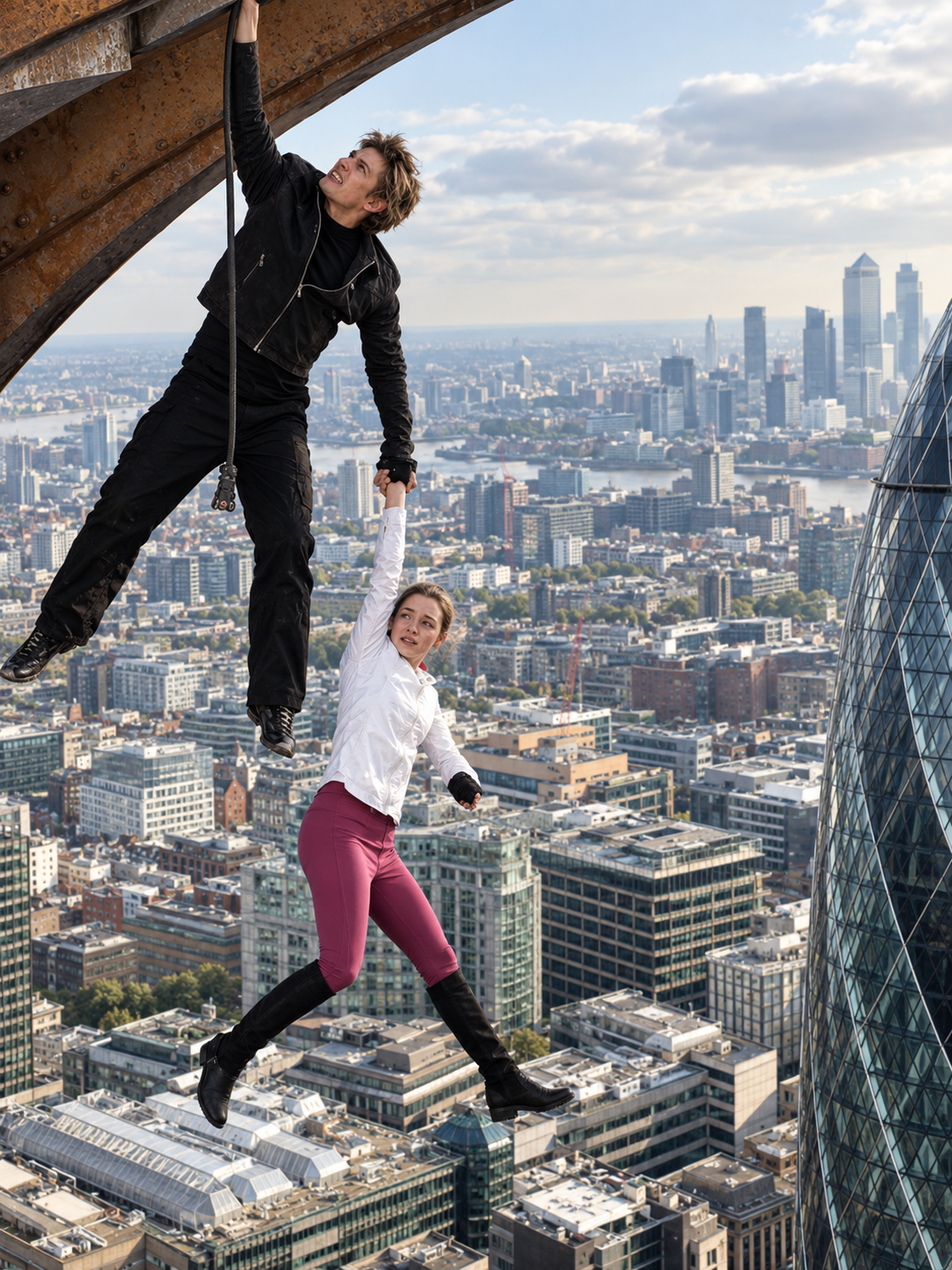
Two people hanging in mid-air high above a city

Alex Rider: Stormbreaker — a still from the film

Word Cloud: How Does This Photo Make You Feel?

Look at the photo. How does it make you feel? Say the words that come to your mind.
Regarde la photo. Qu'est-ce qu'elle te fait ressentir ? Dis les mots qui te viennent à l'esprit.
Your words will appear here.

Document: Do You Remember a Book You Couldn't Put Down?

Three young British people answer one question: do you remember a book you couldn't put down?

Trois jeunes Britanniques répondent à une question : te souviens-tu d'un livre que tu n'arrivais pas à lâcher ?

Script
_____ _____ _____ _____
Interviewer
Do you remember a book you couldn't put down?
_____ _____ _____
_____ _____ _____ _____ _____
_____ _____ _____ _____ _____
_____ _____ _____
Student
A book called 22/11/63 by Stephen King
which is about an English teacher who gets in a time machine
and tries to prevent the assassination of John F. Kennedy.
It's 700 pages; I read it in two days.
_____ _____ _____ _____
_____ _____ _____ _____
_____ _____ _____ _____ _____ _____ _____ _____
_____ _____ _____ _____ _____ _____ _____ _____
_____
_____ _____ _____ _____ _____
_____ _____ _____ _____ _____
Annie
The book that I couldn't put down was Harry Potter
because when I started reading it I became a bit obsessed
and the only time I ever missed school was because the new Harry Potter book came out…
and I loved it so much just because it was, you know, kind of the magical world
of Harry Potter
and it was just, I suppose it was pure escapism
but I loved it so much when I was younger.
_____ _____ _____ _____ _____ _____
_____ _____ _____ _____ _____ _____
_____ _____ _____ _____ _____ _____ _____
_____ _____ _____ _____ _____
_____ _____ _____ _____ _____ _____
Mark
Yeah, my favourite book is escapism also but it's The Hobbit.
Loved The Hobbit growing up – and now – and I find myself now…
I read it before bed and it kind of empties all of the worries of the day
and all of the magical allegories and good versus evil and everything.
You could read it as a youngster and you could read it as an adult.

Comprehension: Three Books They Couldn't Put Down

Before you listen: do you remember a book you couldn't put down? Why?
Avant d'écouter : te souviens-tu d'un livre que tu n'arrivais pas à lâcher ? Pourquoi ?
Listen. Which book does each speaker name?
Écoute. Quel livre chaque personne cite-t-elle ?
The first student
Annie
Mark
Listen again. Why couldn't they put their book down?
Écoute à nouveau. Pourquoi n'arrivaient-ils pas à lâcher leur livre ?
The first student
Annie
Mark
Look at the photo at the top of the page again. What is the link between the interview question and the photo?
Regarde à nouveau la photo en haut de la page. Quel est le lien entre la question de l'interview et la photo ?

Culture Box: Chris d'Lacey

Discover the secret to suspenseful stories with a British writer: Chris d'Lacey.
Découvre le secret des histoires à suspense avec un écrivain britannique : Chris d'Lacey.
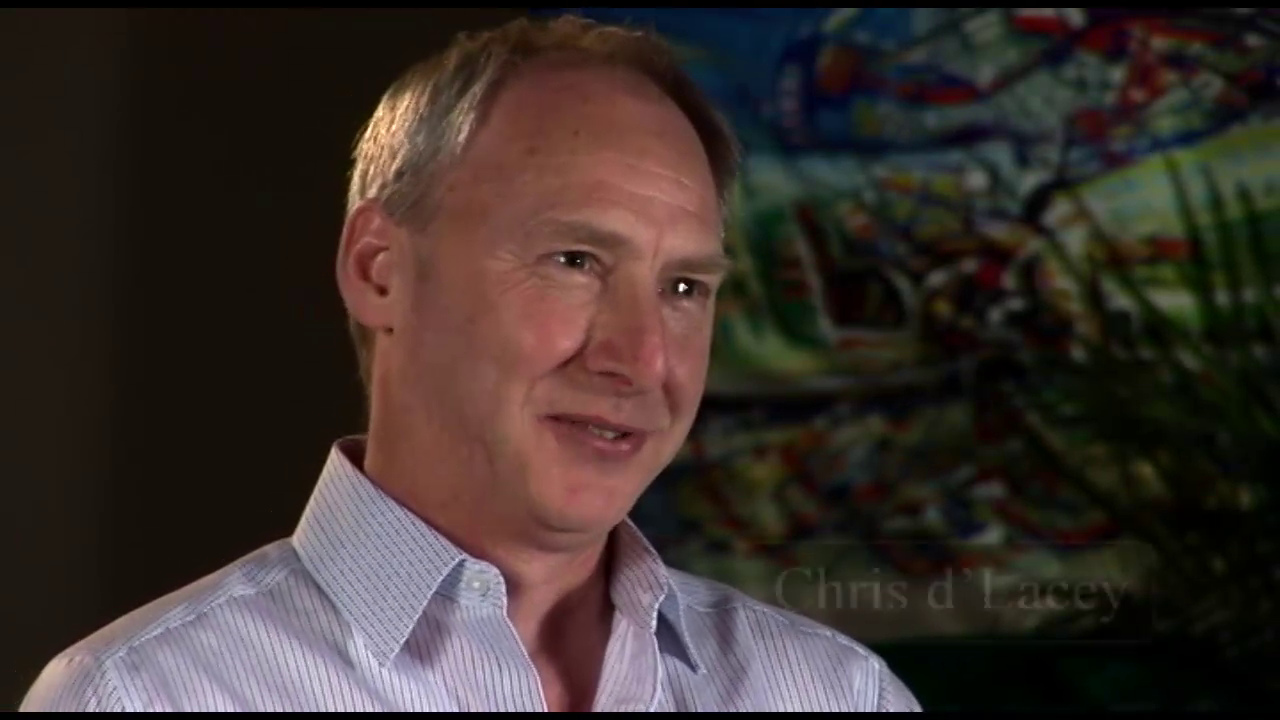
Chris d'Lacey during an interview
Chris d'Lacey during the interview
Who is he?

Chris d'Lacey is a British writer. He writes fantasy novels for young readers. His successful series is called The Last Dragon Chronicles.

In the interview

He talks about his job as a writer. He explains how he writes his books, and what young readers tell him about them.

Document: I Leave a Little Cliffhanger… (Part 1)

British writer Chris d'Lacey talks about writing books. In this first part, he tells a story about a visit to a library.

L'écrivain britannique Chris d'Lacey parle de l'écriture de ses livres. Dans cette première partie, il raconte une visite dans une bibliothèque.

An interview with Chris d'Lacey — Part 1 · 1'29

Script
_____ _____ _____ _____
_____ _____ _____ _____
_____ _____ _____ _____ _____
_____ _____ _____ _____ _____
_____ _____ _____ _____
_____ _____ _____ _____ _____
Chris d'Lacey
Let me say something about planning books first of all.
I actually told this story on the way here.
I was talking to a group of children once, in a library,
and the children were asking me questions after I'd given a presentation,
and their teacher put his hand up and he said,
“can I ask you a question?” and I said, “yes”.
_____ _____ _____ _____ _____ _____
_____ _____ _____ _____ _____ _____ _____
_____ _____ _____
_____ _____ _____ _____ _____
He said “can you tell these children how much time you spend planning a book?”
And I said to him, “do you want the truthful answer, or do you want the diplomatic answer?”
And he said, “I want the truthful answer”.
And I said, “I spend no time at all planning a book”.
_____ _____ _____
_____ _____ _____ _____ _____ _____
_____ _____ _____ _____ _____ _____ _____ _____
_____
_____ _____ _____
_____ _____ _____ _____
_____ _____ _____ _____
_____ _____ _____ _____ _____ _____
And all the kids went “yes!”
because of course they had been told that they have to plan their stories.
And I sort of qualified that and I turned to the kids and said “ah, but you do need
to plan them.
At your age you have to do this.
You should pay attention to what he says.
When you get to my age, if you've read enough books –
and they all went… – then you will understand the structure of the stories”.
_____ _____ _____
_____ _____ _____ _____ _____ _____ _____ _____
_____ _____ _____ _____ _____ _____
_____ _____ _____ _____ _____
_____ _____ _____ _____ _____
_____ _____ _____ _____ _____
_____ _____ _____ _____ _____
_____ _____ _____ _____
_____ _____ _____ _____ _____
The books are written very organically.
I usually know the beginning of the story and I have a vague idea of where I'm going to end up.
It doesn't always necessarily follow but the rest of it is a journey of adventure
and the way I write like that is because I think
if I'm discovering it spontaneously as I go along
and it's exciting me to write it down on a page,
then hopefully it will be just... be just as exciting
for anybody who is reading it off the page.
It's a dangerous way to do it because, you know…

Comprehension: A Teacher's Question

A teacher asked Chris d'Lacey a question. What was it?
Un professeur a posé une question à Chris d'Lacey. Laquelle ?
What was Chris d'Lacey's answer?
Quelle a été la réponse de Chris d'Lacey ?

Document: I Leave a Little Cliffhanger… (Part 2)

In the second part, Chris d'Lacey talks about the letters children send him.

Dans la deuxième partie, Chris d'Lacey parle des lettres que lui envoient les enfants.

An interview with Chris d'Lacey — Part 2 · 0'36

Script
_____ _____ _____ _____ _____ _____
_____ _____ _____ _____ _____ _____
_____ _____ _____ _____ _____ _____
_____ _____ _____ _____ _____
_____ _____ _____ _____ _____ _____
Chris d'Lacey
What I try to do is leave a little cliffhanger at the end of every chapter.
Many boys and girls write to me about the cliffhangers and say, you know,
“I got into trouble the other night because I was reading the book in bed
and my mum came up and told me to switch the light off
and half an hour later I'd put the light back on again”, you know.
_____ _____ _____ _____ _____ _____ _____
_____ _____ _____ _____ _____ _____ _____
_____ _____ _____ _____ _____ _____ _____ _____
_____ _____ _____ _____ _____
I find that very flattering when children write to me and say that kind of thing
and I always write back and say “well, OK, you should do what your mum and dad say
but I like to think your parents would be happy you are at least doing something like reading,
you know, rather than playing on an Xbox or something.”

Comprehension: What Does Cliffhanger Mean?

Cut the word into three parts. What does each part mean?
Découpe le mot en trois parties. Que veut dire chaque partie ?
cliff
hang
-er
Now use the anecdote to say what a cliffhanger is.
Utilise maintenant l'anecdote pour dire ce qu'est un cliffhanger.

Document: Reading Under the Covers

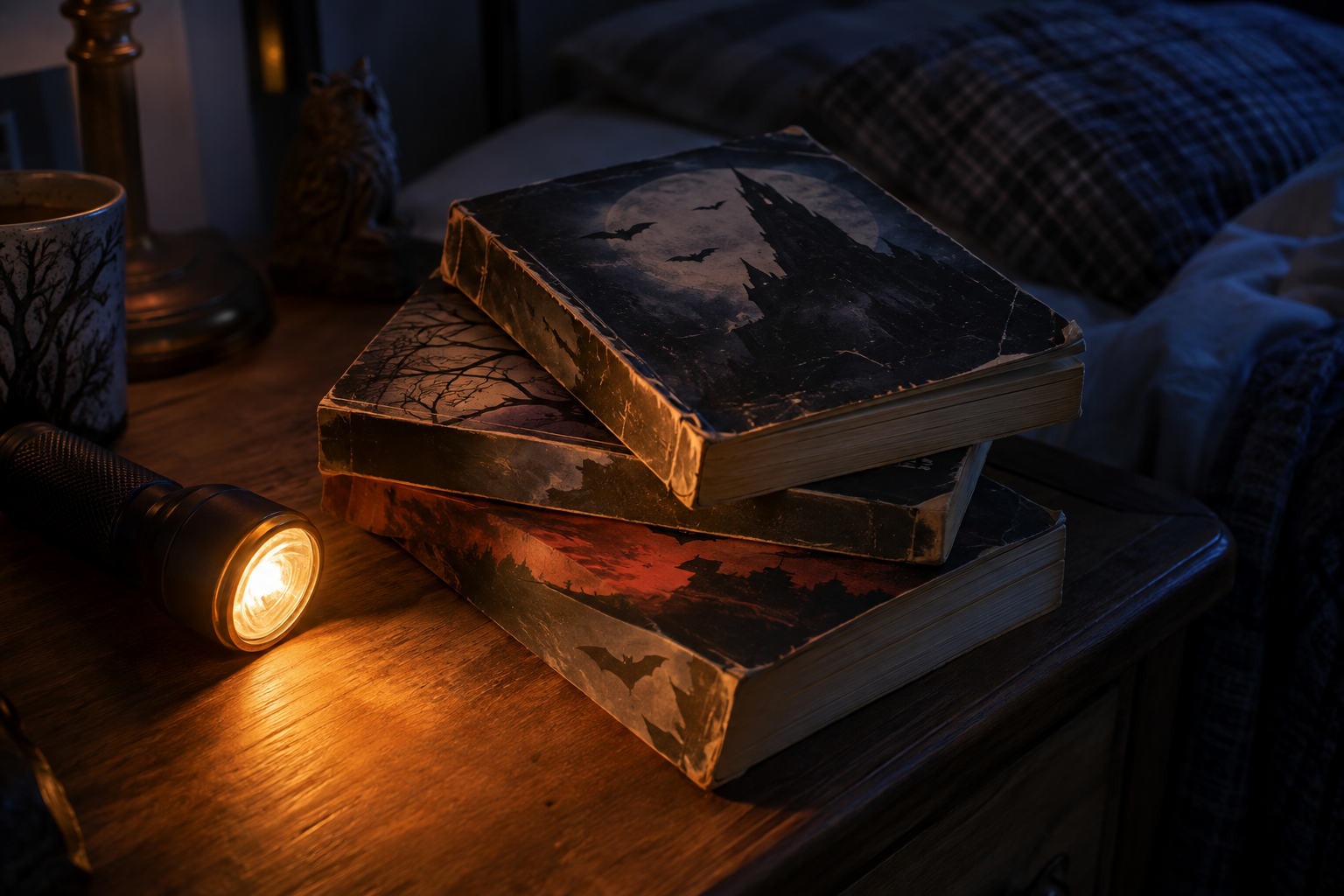
Look at this boy. Where is he, and what is he doing?

Regarde ce garçon. Où est-il, et que fait-il ?

A boy reading a book under his duvet with a torch

Comprehension: Has This Ever Happened to You?

Look at the photo of the boy again. What is he doing, and why?
Regarde à nouveau la photo du garçon. Que fait-il, et pourquoi ?
Has this ever happened to you? Tell the class.
Est-ce que ça t'est déjà arrivé ? Raconte à la classe.

Writing Task: Your Definition of a Cliffhanger

NOM, Prénom :
Classe :
Date :
Note :
The task
1. Think about the anecdote and the opening photo.
2. Write your own definition of the word cliffhanger in one or two sentences.
1. Pense à l'anecdote et à la photo du début.
2. Écris ta propre définition du mot cliffhanger en une ou deux phrases.
1 – 2 phrases
Hints
Mots clés +
Tu peux utiliser : ending, suspense, keep reading, suspenseful.
Une structure +
A cliffhanger is a … ending: it is so … that the reader wants to … reading.
Example: · Exemple : +
A cliffhanger is a suspenseful ending: it is so exciting that the reader wants to keep reading.
Grille d'évaluation — production écrite
Marking guide — written task
… / 5
Content
La définition dit que c'est une fin, qu'elle crée du suspense et qu'on veut connaître la suite.
… / 3Contenu
Language
Lexique du suspense (ending, suspense, keep reading) et phrase correcte.
… / 2Langue
Your definition

Document: Riddles

Four riddles. Listen: what is it? The answers come at the end of the recording.

Quatre devinettes. Écoute : qu'est-ce que c'est ? Les réponses sont données à la fin de l'enregistrement.

Script
_____ _____ _____ _____ _____
_____ _____ _____ _____ _____
Riddle 1
It is bigger than a rabbit and it jumps higher.
It lives in Australia and carries its babies in a pouch.
_____ _____
_____ _____ _____ _____
_____ _____ _____
_____ _____ _____
Riddle 2
It is very, very big.
It has got four legs and two big ears.
It eats peanuts and hay.
Its long nose is called a trunk.
_____ _____ _____ _____
_____ _____ _____ _____
_____ _____
Riddle 3
A girl was ten on her last birthday,
and will be twelve on her next birthday.
How is this possible?
_____ _____ _____ _____ _____
Riddle 4
What can travel around the world while staying in a corner?
_____ _____ _____ _____ _____
Answers
1. A kangaroo 2. An elephant 3. Today is her 11th birthday 4. A stamp

Comprehension: Solve the Riddles

Listen to the riddles. What is it?
Écoute les devinettes. Qu'est-ce que c'est ?
Riddle 1
Riddle 2
Riddle 3
Riddle 4

Speaking Task: Your Own Riddles

NOM, Prénom :
Classe :
Date :
Note :
The task
1. Choose an animal or an object.
2. Write a riddle about it: three or four short clues.
3. Read your riddle to the class, or record it. Your classmates guess.
1. Choisis un animal ou un objet.
2. Écris une devinette sur ce thème : trois ou quatre indices courts.
3. Lis ta devinette à la classe, ou enregistre-la. Tes camarades devinent.
Do not say the name of your animal or object!
Ne dis pas le nom de ton animal ou de ton objet !
2 devinettes
Hints
Pour décrire +
It is bigger than… · It is very… · It has got…
Pour dire où il vit, ce qu'il fait +
It lives in… · It eats… · It can…
Pour poser la question +
What is it? · What can…?
Grille d'évaluation — présentation orale
Marking guide — oral presentation
… / 5
Content
Trois ou quatre indices qui permettent de deviner.
… / 3Contenu
Language
It is / It has got / It lives / It eats, comparatif simple.
… / 2Langue
My riddles

Translation Task: A Book You Couldn't Put Down

Build the sentence in English
Construis la phrase en anglais.

Séance 2 : A Night in Terror Tower

  • Objectif : Inférer le sens des mots nouveaux, comprendre un extrait de roman et formuler des hypothèses sur la suite.
  • Activités : Stratégie pour inférer le sens des mots nouveaux ; texte d'entraînement A Taste of My Family ; deviner les mots inconnus ; photo de la Tour de Londres ; fiche culture Terror Tower et R. L. Stine ; extrait de The Keep at Ravensgate ; ce que j'imagine ; tableau de vérification ; dessin de la dernière photo d'Eddie ; hypothèses dans l'enveloppe scellée ; prédictions de Mark et Annie ; tableau des deux prédictions ; conversation : qui a raison ? ; écoute de la suite ; ouverture des enveloppes ; définition complétée par un exemple ; atelier de traduction.
  • À retenir : Savoir s'appuyer sur le contexte, la formation des mots et les mots transparents pour comprendre, et savoir faire une hypothèse sur la suite (I think… is going to…, maybe…) en la justifiant (because…).

Tips: Guess the Meaning of New Words

Pour deviner le sens d'un mot nouveau, appuie-toi sur…
  • 1. le contexte : les mots autour du mot inconnu, et le thème du texte.
  • 2. la formation du mot : south → southern.
  • 3. les connecteurs logiques : when, then, now disent comment les idées s'enchaînent.
  • 4. la ressemblance avec le français : education, observe, ingredient.
  • 5. et si rien ne marche : fais abstraction du mot qui te gêne et continue ta lecture.

Document: A Taste of My Family

A Taste of My Family

_____ _____ _____ _____ _____
_____ _____ _____ _____ _____ _____ _____
_____ _____ _____
_____ _____ _____
_____ _____ _____ _____ _____ _____ _____
_____ _____ _____
_____ _____ _____ _____
Pad thai is a big part of my family's history. From the scorching hot southern parts of Thailand to here, in the Windy City. Life was rough for my grandparents. They didn't have much of anything. When they grew older, they sought out an education, and moved to the United States. Here, they met and got married. Then came my mother, aunt, and uncle.
_____ _____ _____ _____ _____ _____
_____ _____ _____ _____ _____ _____ _____
_____ _____ _____ _____
When my mom was about my age, she would sit by my grandma whenever she cooked. My mom would observe every single spice and ingredient my grandma put into her recipes. Now that my mom's older, I do the same.

Comprehension: Guess the Words You Don't Know

Line 2: "the scorching hot southern parts of Thailand". What can scorching mean here?
Ligne 2 : « the scorching hot southern parts of Thailand ». Que peut vouloir dire scorching ici ?
Line 3: is rough positive or negative? What helped you? Give one or two translations.
Ligne 3 : rough a-t-il un sens positif ou négatif ? Sur quoi t'es-tu appuyé(e) ? Propose une ou plusieurs traductions.
The text is about food. What could spice and recipes mean? What helped you?
Le texte parle de cuisine. Que pourraient vouloir dire spice et recipes ? Qu'est-ce qui t'a aidé(e) ?

Document: The Tower of London

A famous old building in London.

Un célèbre bâtiment ancien de Londres.
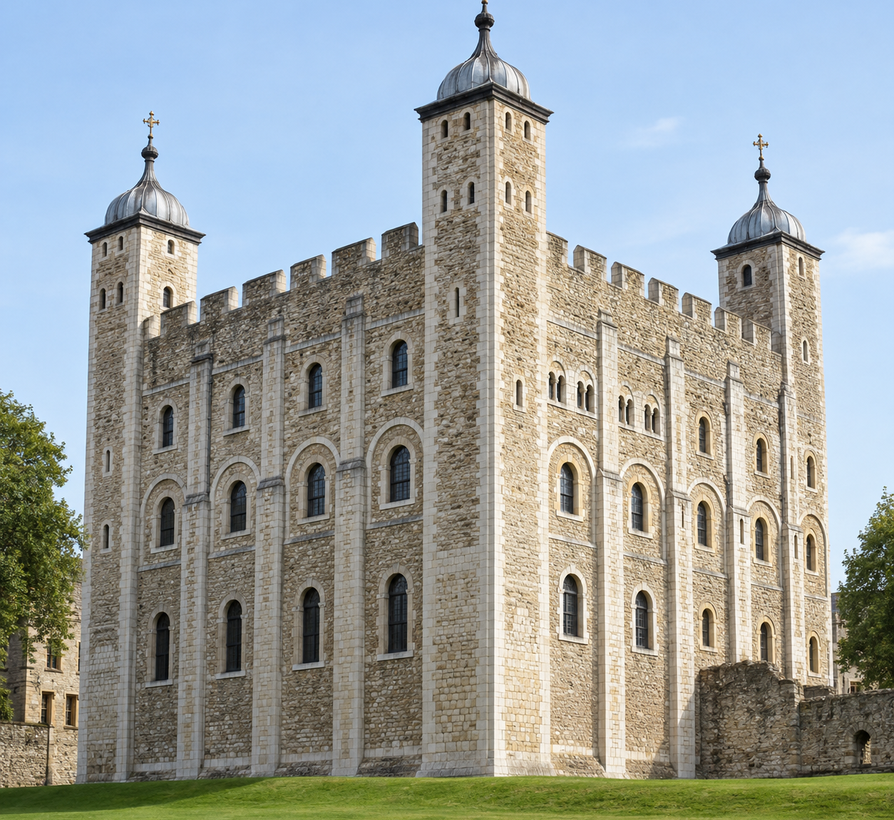
The White Tower of the Tower of London

The Tower of London

Culture Box: Terror Tower and the Real Tower of London
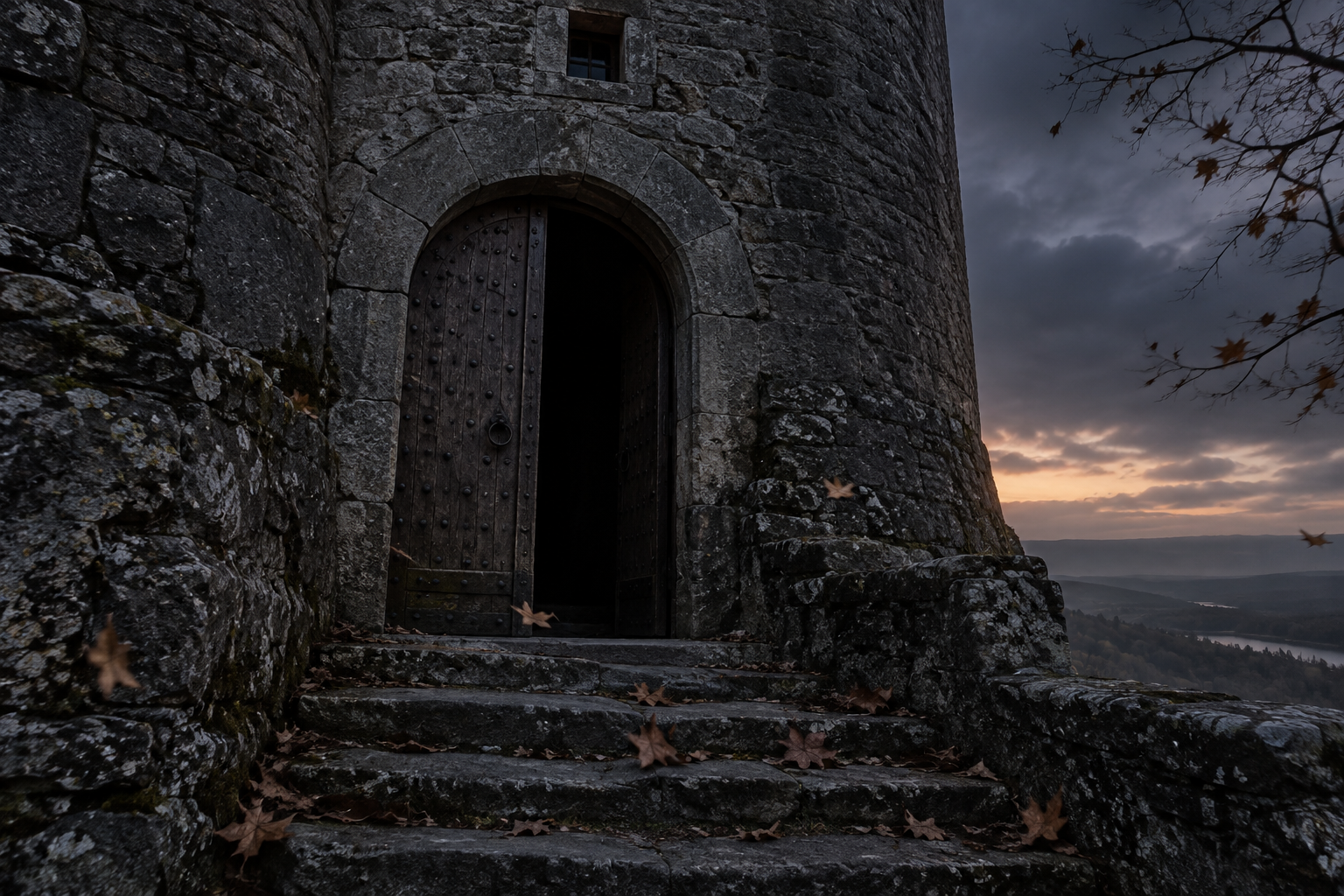
Terror Tower is not a real place — but it is based on one: the Tower of London.
Terror Tower n'existe pas — mais la tour s'inspire d'un lieu bien réel : la Tour de Londres.
The dark stone entrance of an old tower
An old stone tower: a perfect place for a scary story.
A pile of scary books and a torch on a bedside table
Goosebumps: scary stories for young readers.
The Tower of London

The Tower of London is a very old castle in London. For hundreds of years it was also a prison, and many famous prisoners were locked up there.

Find out more

On the Historic Royal Palaces website, you can discover the famous prisoners of the Tower.

R. L. Stine

R. L. Stine is the writer of Goosebumps (Chair de poule in French). He has written more than 330 books. Unlike Chris d'Lacey, he plans everything before he starts writing!

Goosebumps

Goosebumps is a famous series of scary stories for young readers. It became a TV series, and a Goosebumps film came out in 2015.

Document: Something’s Wrong Up There…!

“Something’s wrong up there…!”

Marla PrenticeThe Keep at Ravensgate
_____ _____ _____ _____ _____ _____ _____
_____ _____ _____ _____
Sue, the narrator, and her brother Eddie are spending their holidays in London. Today, their tour group is visiting Ravensgate Keep.
l. 1–9
_____ _____ _____ _____
_____ _____ _____
_____ _____ _____
_____ _____ _____ _____ _____
_____ _____ _____
_____ _____ _____
_____ _____ _____
_____ _____
_____ _____ _____
The rain had stopped, but the sky was still grey. Eddie stopped at the gate and looked up. “Something’s wrong up there…!” he said. My brother is eleven, with brown eyes and dark brown hair. He always wears the same red cap. “There is nothing up there,” I said. “Only old stones and a few birds.” But Eddie did not move. He was staring at the top of the tower.
l. 10–12
_____ _____ _____ _____ _____
_____ _____ _____
_____ _____ _____ _____
_____ _____ _____ _____ _____
Our guide, Mr Bramble, opened his big black umbrella. “Welcome to Ravensgate Keep,” he said. “For three hundred years, this tower was a prison.” “The prisoners went down those stairs, and they never came back.”
l. 13–18
_____ _____ _____
_____ _____ _____
_____ _____ _____ _____ _____
_____ _____ _____ _____ _____
_____ _____ _____ _____
_____ _____ _____ _____
_____ _____ _____ _____
_____ _____ _____ _____
_____ _____ _____
Our group walked across the wet grass. The Keep was taller than I expected. It was built of solid grey stone, without a single window. Only at the very top, there was a tiny square window. The entrance was a low dark arch with no door. “Some people say the Keep is haunted,” Mr Bramble said. “They hear footsteps on the stairs at night.” I felt cold, and not only because of the rain. I did not want to go inside.
l. 19–24
_____ _____ _____ _____
_____ _____
_____ _____ _____ _____ _____
_____ _____ _____ _____
_____ _____ _____ _____
_____ _____ _____ _____
_____ _____
_____ _____
_____ _____ _____ _____
“Sue, take a photo of me!” Eddie shouted. He ran back towards the entrance. He stood in front of the dark arch and made a dumb face. He crossed his eyes and stuck out his tongue. Behind him, the grey tower rose into the clouds. The tiny window shone at the very top. “Hurry up!” he laughed. “It’s freezing out here.” I lifted my camera and pressed the button.
l. 25
_____ _____ _____ _____ _____ _____
I had no way of knowing that it was the last picture I would ever take of Eddie.

1. a keep: un donjon, une grande tour de pierre · 2. haunted: hanté

Marla Prentice, The Keep at Ravensgate, 1996

Comprehension: What Do You Imagine?

Read the title, the introduction and the first paragraph only. What do you imagine about…
Lis seulement le titre, l'introduction et le premier paragraphe. Qu'imagines-tu à propos…
…the characters?
…des personnages ?
…the type of text?
…du type de texte ?
…the place?
…du lieu ?
…the story?
…de l'histoire ?

Complete the Table: Were You Right?

Read the whole text. Complete the table, then say if you were right.
Lis le texte en entier. Complète le tableau, puis dis si tu avais raison.
The characters
Their feelings
The place
The story
In the text
Sue, her brother Eddie, and Mr Bramble, the tour guide.
Eddie feels something is wrong. Sue feels cold, and not only because of the rain: she does not want to go inside.
Ravensgate Keep, in London: a grey stone tower that was a prison.
A scary story: the Keep might be haunted, and it was the last picture of Eddie.
Were you right?
Your own answer: yes / no.

Writing Task: The Last Picture I Ever Took of Eddie

NOM, Prénom :
Classe :
Date :
Note :
The task
1. Read the end of the text again.
2. In the frame on your sheet, draw the last picture Sue takes of Eddie. Use the text to find: Eddie's physical appearance, his expression in the photo, and the place in the background (shape, colour, height…).
3. Under your drawing, write one sentence to describe it.
1. Relis la fin du texte.
2. Dans le cadre de ta feuille, dessine la dernière photo que Sue prend d'Eddie. Cherche dans le texte : l'apparence physique d'Eddie, son expression sur la photo, et le lieu à l'arrière-plan (forme, couleur, hauteur…).
3. Sous ton dessin, écris une phrase pour le décrire.
1 dessin + 1 phrase
Hints
Où chercher +
L'apparence d'Eddie est décrite au début du texte ; son expression et l'arrière-plan à la fin.
Example: · Exemple : +
Eddie has brown eyes and dark brown hair, and a red cap. He is making a dumb face: he crosses his eyes and sticks out his tongue. Behind him, there is a grey stone tower, a low dark arch and a tiny square window at the very top.
Grille d'évaluation — production écrite
Marking guide — written task
… / 5
Drawing
Au moins trois éléments du texte : l'apparence, l'expression, l'arrière-plan.
… / 3Dessin
Sentence
Une phrase qui décrit le dessin.
… / 2Phrase
The last picture I ever took of Eddie…

Speaking Task: The Sealed Envelope

NOM, Prénom :
Classe :
Date :
Note :
The task
1. In groups, imagine what is going to happen next in the story.
2. Write five hypotheses on a sheet, with your names.
3. Choose your main prediction and write it on the board.
4. Put your sheet in the envelope. It stays closed until you hear the end of the story!
1. En groupes, imaginez ce qui va se passer ensuite dans l'histoire.
2. Écrivez cinq hypothèses sur une feuille, avec vos noms.
3. Choisissez votre prédiction principale et écrivez-la au tableau.
4. Mettez votre feuille dans l'enveloppe. Elle reste fermée jusqu'à ce que vous entendiez la suite de l'histoire !
Tell your classmates about your hypotheses.
Présentez vos hypothèses à vos camarades.
5 hypothèses
Hints
Pour prédire +
I think … is going to … · Maybe … is going to …
Pour varier +
Pense à Eddie, à Sue, à l'appareil photo, à la tour, au guide.
Example: · Exemple : +
I think Eddie is going to get lost.
Grille d'évaluation — présentation orale
Marking guide — oral presentation
… / 5
Content
Cinq hypothèses différentes, en lien avec le texte.
… / 3Contenu
Language
BE going to, I think, maybe.
… / 2Langue
Our five hypotheses

Document: Guess What Happens Next!

Mark and Annie have read the same extract. They say what happens next. Only one of them is right!

Mark et Annie ont lu le même extrait. Ils disent ce qui se passe ensuite. Un seul des deux a raison !

Script
_____ _____ _____ _____ _____
_____ _____ _____ _____
_____ _____ _____ _____ _____ _____
_____ _____ _____ _____ _____ _____ _____
_____ _____ _____ _____
_____ _____ _____ _____
_____ _____ _____ _____ _____
_____ _____ _____ _____ _____ _____ _____
_____ _____ _____
_____ _____ _____ _____ _____ _____ _____ _____
Mark
So I think Sue is going to look at the photo she just took,
and see that there is no-one in the photo.
And I think they're going to go into the old prison anyways,
even though it's haunted, but I don't think they're going to find their group.
I think they're going to be trapped there,
and it may feel like they're in there for days,
but in the end, they're going to find their way out,
and they're going to discover that they've only been in there for a few minutes.
And they may go home and everything's fine,
but every time Sue takes a picture of Eddie, I think that Eddie is never going to appear.
_____ _____ _____ _____
_____ _____ _____ _____
_____ _____ _____
_____ _____ _____ _____ _____
_____ _____ _____ _____ _____ _____
Annie
So I think that because it's quite early in the story,
and because of the style of R. L. Stine,
that it's going to be a fake cliffhanger
and I think that it's not going to be because Eddie dies.
I think that Sue is going to lose her camera or break her camera.

Complete the Table: Two Predictions

Listen. What does each speaker predict? Complete the table.
Écoute. Que prédit chaque personne ? Complète le tableau.
The photos and the camera
Sue, Eddie and the prison
The end of the story
Mark
Sue looks at the photo: there is no-one in it.
They go into the old prison, they don't find their group and they are trapped.
They find their way out after a few minutes, but Eddie never appears in the photos.
Annie
Sue loses her camera or breaks it.
It is a fake cliffhanger: Eddie does not die.

Conversation Task: Who Is Right?

In pairs. Mark or Annie: who is right? Decide together and say why: I think … is right because …
À deux. Mark ou Annie : qui a raison ? Décidez ensemble et dites pourquoi : I think … is right because …
Mark no-one in the photo – trapped in the prison – Eddie never appears
Annie a fake cliffhanger – Eddie does not die – the camera is lost or broken
Examples

I think Mark is right because it is a scary story.

I think Mark is right because even if Sue loses the camera she can buy another one!

I think Annie is right because she knows R. L. Stine's style.

I think Annie is right because it is very early in the story.

Document: Listen to Find Out!

The next lines of the story, read aloud. Who was right: Mark or Annie?

La suite de l'histoire, lue à voix haute. Qui avait raison : Mark ou Annie ?

Script
_____ _____ _____ _____ _____
_____ _____ _____
Sue
I've got to get a picture of this thing, I decided.
My friends will really think it's cool.
_____ _____ _____ _____
I reached into my coat pocket for my camera.
_____ _____ _____
“Hey!” I cried out in surprise.
_____ _____
_____ _____
I searched the other pocket.
Then I searched my jeans pocket.
_____ _____ _____
“I don't believe this!” I cried.
_____ _____
The camera was gone.

Comprehension: Open the Envelopes

Who was right: Mark or Annie? How do you know?
Qui avait raison : Mark ou Annie ? Comment le sais-tu ?
Open your envelope. Read your five hypotheses: were you right?
Ouvrez votre enveloppe. Relisez vos cinq hypothèses : aviez-vous raison ?

Writing Task: Complete Your Definition with an Example

NOM, Prénom :
Classe :
Date :
Note :
The task
1. Read your definition of a cliffhanger again.
2. Find the sentence in the text that leaves you in suspense.
3. Copy it under your definition as an example.
1. Relis ta définition d'un cliffhanger.
2. Trouve la phrase du texte qui te laisse en plein suspense.
3. Recopie-la sous ta définition, comme exemple.
1 exemple
Hints
Où chercher +
Un cliffhanger est souvent à la fin : regarde la phrase qui est seule, séparée du reste.
Example: · Exemple : +
For example: “I had no way of knowing that it was the last picture I would ever take of Eddie.”
Grille d'évaluation — production écrite
Marking guide — written task
… / 3
Example
La phrase choisie crée bien du suspense et est recopiée sans erreur.
… / 2Exemple
Link
La phrase est présentée comme un exemple de la définition.
… / 1Lien
My definition and my example

Translation Task: A Night in Terror Tower

Build the sentence in English
Construis la phrase en anglais.

Évaluation : Compréhension de l'écrit

  • Type d'évaluation : Compréhension de l'écrit
  • Axe : Axe 5 — Langages et messages artistiques
  • Compétences : CE — A2 / A2+ — comprendre un extrait de roman, relever les détails d'un personnage et identifier l'effet d'un cliffhanger
  • Coefficient : 1
NOM, Prénom :
Classe :
Date :
Note :
Axe : Axe 5 — Langages et messages artistiques
CECRL : A2 / A2+
Activité langagière : Compréhension de l'écrit
Compétence : Comprendre un extrait de roman et l’effet d’un cliffhanger
ÉVALUATION — A New Extract from The Keep at Ravensgate Compréhension de l'écrit
THE KEEP AT RAVENSGATE — MARLA PRENTICE
A NEW EXTRACT
1Ten minutes earlier I had been with Eddie and the
2rest of the group, on the stairs of Ravensgate Keep, in London.
3Mr Bramble had gone ahead with his umbrella, counting us
4at every door. Then a school party pushed past me
5on the narrow steps, and when I looked up again
6I was alone. “Eddie?” I called. My voice came back
7to me off the cold walls. I climbed three more
8steps and stopped. Someone was waiting at the top.
9He was enormous. He wore a long grey coat that
10reached his boots, and the collar was turned up so
11high that I could see almost nothing of his face.
12A grey scarf was wound across his mouth and nose.
13Only his eyes were visible, and they were the colour
14of dirty ice. On his left hand he wore a
15white glove. The right hand was bare, and far too
16large. He did not move. He did not speak. He
17simply filled the stairway, so that nobody could pass him.
18“Susan,” he said at last. He knew my name. “You
19will come with me now. Quietly.” I stepped back and
20my shoe slipped on the cold wet stone. “I do
21not want to hurt you,” he said. “But if you
22run, I will have no choice.” Behind me, far below
23in the dark, I heard a door close, and then a
24key turn in the lock. Nobody was coming up those stairs.
Lis l’extrait, puis réponds aux questions en anglais sur la feuille.
1.
Where is the heroine? 1 pt
Correction :
  • In Ravensgate Keep, in London — inside the tower, on the stairs. (1 pt)
2.
Lines 1–8: who is Sue with at the beginning? Who is she with now? Who is she not with any more? 3 pts
Correction :
  • At the beginning she is with her brother (Eddie) and the group. (1 pt)
  • Now she is with an unknown character. (1 pt)
  • She is no longer with the guide, Mr Bramble. (1 pt)
3 a.
The unknown character: find five details about his appearance. 5 pts
Help: was wound — the passive of wind (enrouler) · a collar = un col · bare = nu, sans gant
Correction :
  • he was enormous
  • a long grey coat down to his boots
  • the collar turned up, hiding almost all of his face
  • a grey scarf wound across his mouth and nose
  • his eyes were the colour of dirty ice
  • a white glove on his left hand
  • his right hand was bare and far too large
1 pt per detail, 5 pts maximum.
3 b.
Find two details about his attitude. 2 pts
Correction :
  • he did not move and he did not speak
  • he filled the stairway so nobody could pass
  • he knew her name
  • he threatens her: if she runs, he will have no choice
1 pt per detail, 2 pts maximum.
3 c.
What does he want? 2 pts
Correction :
  • He wants Sue to come with him now, quietly. (1 pt)
  • He does not want to hurt her, but if she runs he will have no choice. (1 pt)
3 d.
Draw the character. Use at least three details from the text. 3 pts
Correction :
  • At least three text details visible: the long grey coat, the collar turned up, the grey scarf across the mouth and nose, the pale eyes, the white glove on the left hand, the bare right hand, far too large.
1 pt per detail from the text, 3 pts maximum.
4 a.
Which technique does the writer use at the end of the extract? What effect does it have on the reader? 3 pts
Correction :
  • A cliffhanger. (1 pt)
  • It keeps the reader in suspense: he wants to keep reading to find out what happens. (2 pts)
4 b.
What do you think is going to happen next? 1 pt
Correction :
  • Free answer, in English. (1 pt)
Any answer that fits the extract.