In the Gallery
Information
- Œuvre : Going and Coming (Norman Rockwell, 1947)
- Audio : Audioguide — Going and Coming
- Œuvre : Day in the Life of a Girl (Norman Rockwell, 1952)
- Audio : Mary Whalen Leonard, le modèle du tableau
- Œuvre : Day in the Life of a Girl (Mark Lund, 2014)
- Séance 1 : In Room 1 — Norman Rockwell
- Séance 2 : In Room 2 — Day in the Life of a Girl
- Évaluation : Compréhension orale
Séance 1 : In Room 1: Norman Rockwell
- Objectif : Observer une œuvre de Norman Rockwell et découvrir une stratégie pour décrire un tableau : composition, personnages, décor et expressions.
- Activités : vocabulaire des œuvres d’art et de la composition, nuage de mots, stratégie « observer un tableau », découverte du tableau Going and Coming, questions de compréhension, écoute d’un audioguide, tâche de traduction.
- À retenir : Savoir situer les éléments d’un tableau (in the middle, on the left, in the background) et savoir décrire ce que l’on voit : les personnages, les actions et les couleurs.
Vocabulary Kit: Artworks & Composition
- a painting = un tableau
- a portrait = un portrait
- an artwork = une œuvre d’art
- an artist = un(e) artiste
- a painter = un peintre
- a photographer = un(e) photographe
- a photograph = une photographie
- in the middle = au milieu
- on the left = à gauche
- on the right = à droite
- in front of = devant
- behind = derrière
- at the top = en haut
- at the bottom = en bas
- in the background = à l’arrière-plan
- dark colours = des couleurs sombres
- bright colours = des couleurs vives
- light = clair, lumineux
How to: Look at an Artwork
Before you describe a painting, take a moment to look at everything in it. Ask yourself these questions:
- Composition — What can you see in the middle, on the left and on the right? What is at the top and at the bottom?
- Characters — Who are the people? What are they wearing?
- Place — Where are they? What can you see in the background?
- Colours — Are the colours dark, light or bright?
- Feelings & actions — How do the people look? What are they doing? What is happening?
Culture Box: Norman Rockwell
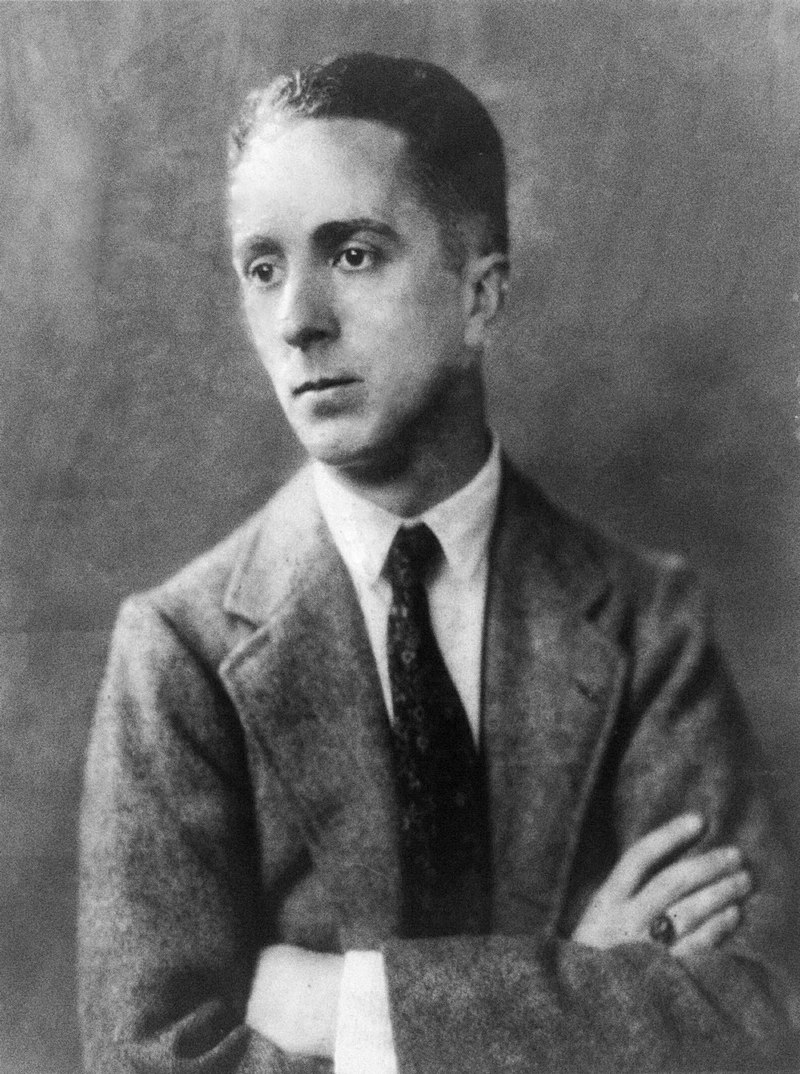
Norman Rockwell (1894–1978) was a famous American illustrator and painter. For nearly fifty years, he made the covers of a very popular magazine, The Saturday Evening Post.
He loved to paint ordinary people in ordinary life: families, children and small towns. His scenes are realistic, warm and often funny.
Each painting tells a little story. Rockwell added many small details so you can imagine what is happening and how the people feel.
Today you can see his work at the Norman Rockwell Museum in Stockbridge, Massachusetts, in the USA.
Word cloud: Going and Coming
Document: Going and Coming
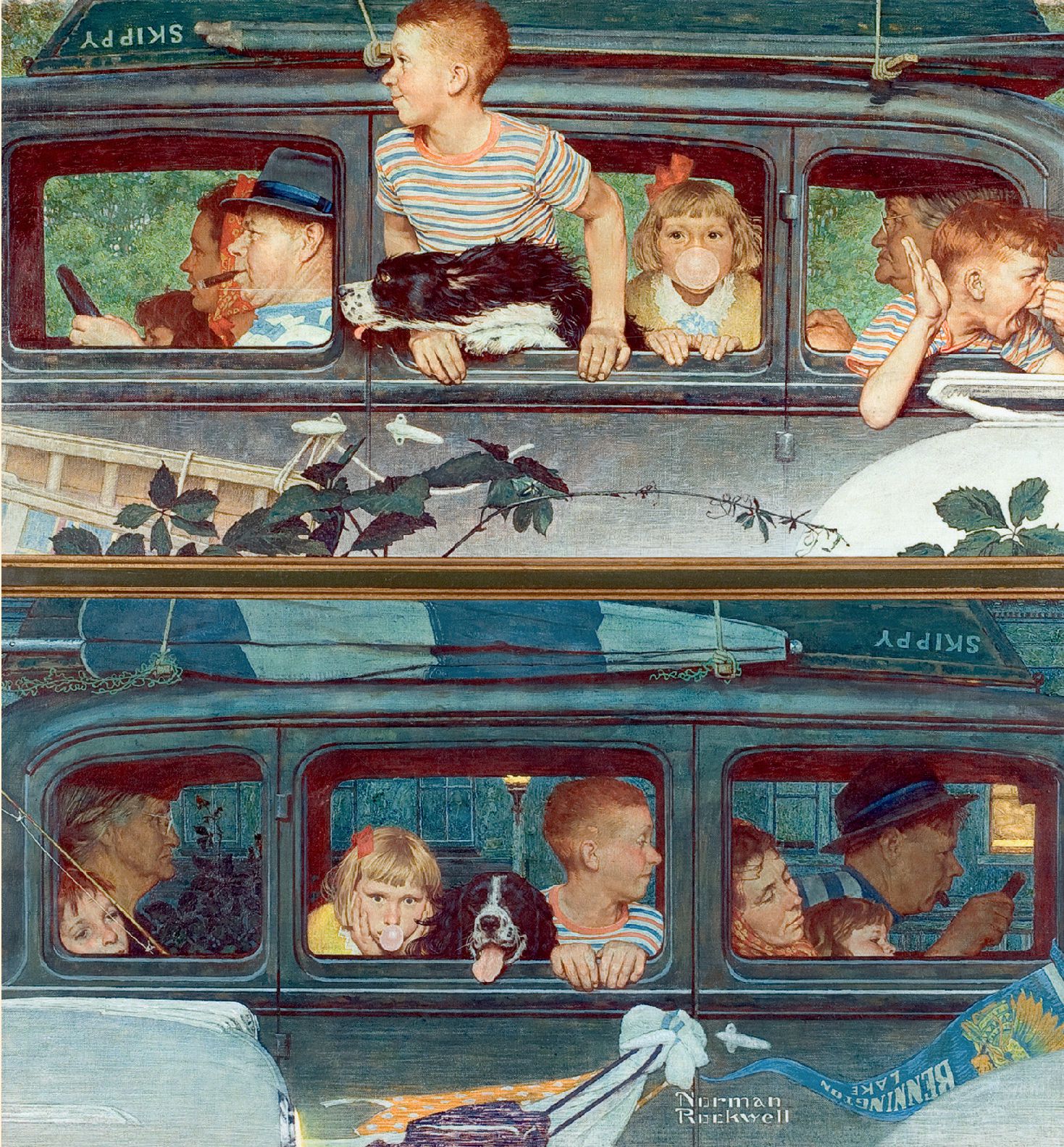
Going and Coming (1947) is one of Norman Rockwell’s most famous paintings. It tells its story in two panels — one at the top, one at the bottom.
Going and Coming (1947) est l’un des tableaux les plus célèbres de Norman Rockwell. Il raconte son histoire en deux parties — une en haut, une en bas.
Norman Rockwell, Going and Coming, 1947.
Observe: Going and Coming
Audioguide: Going and Coming
A museum guide, Mrs. Beth, describes Norman Rockwell’s painting Going and Coming.
Une guide du musée, Mrs. Beth, décrit le tableau Going and Coming de Norman Rockwell.
Museum audioguide — 0’57
Comprehension: Going and Coming
Translation Task: Looking at a Painting
Séance 2 : In Room 2: Day in the Life of a Girl
- Objectif : Décrire des personnages et leurs actions avec le présent en BE + V-ing, et comparer une œuvre de Rockwell à sa réinterprétation moderne.
- Activités : nuage de mots sur la journée d’une fille, découverte du tableau Day in the Life of a Girl, description des actions en BE + V-ing, écoute de Mary Whalen, bulles à compléter, version moderne de Mark Lund, jeu des différences, kit de grammaire, exercices, tâche de traduction.
- À retenir : Savoir décrire ce qu’une personne est en train de faire avec BE + V-ing (she is eating, they are playing) et savoir comparer deux œuvres avec whereas.
A girl’s day
Document: Day in the Life of a Girl
Day in the Life of a Girl (1952) shows one whole day of a young girl called Mary, from morning to night.
Day in the Life of a Girl (1952) montre une journée entière d’une jeune fille appelée Mary, du matin au soir.
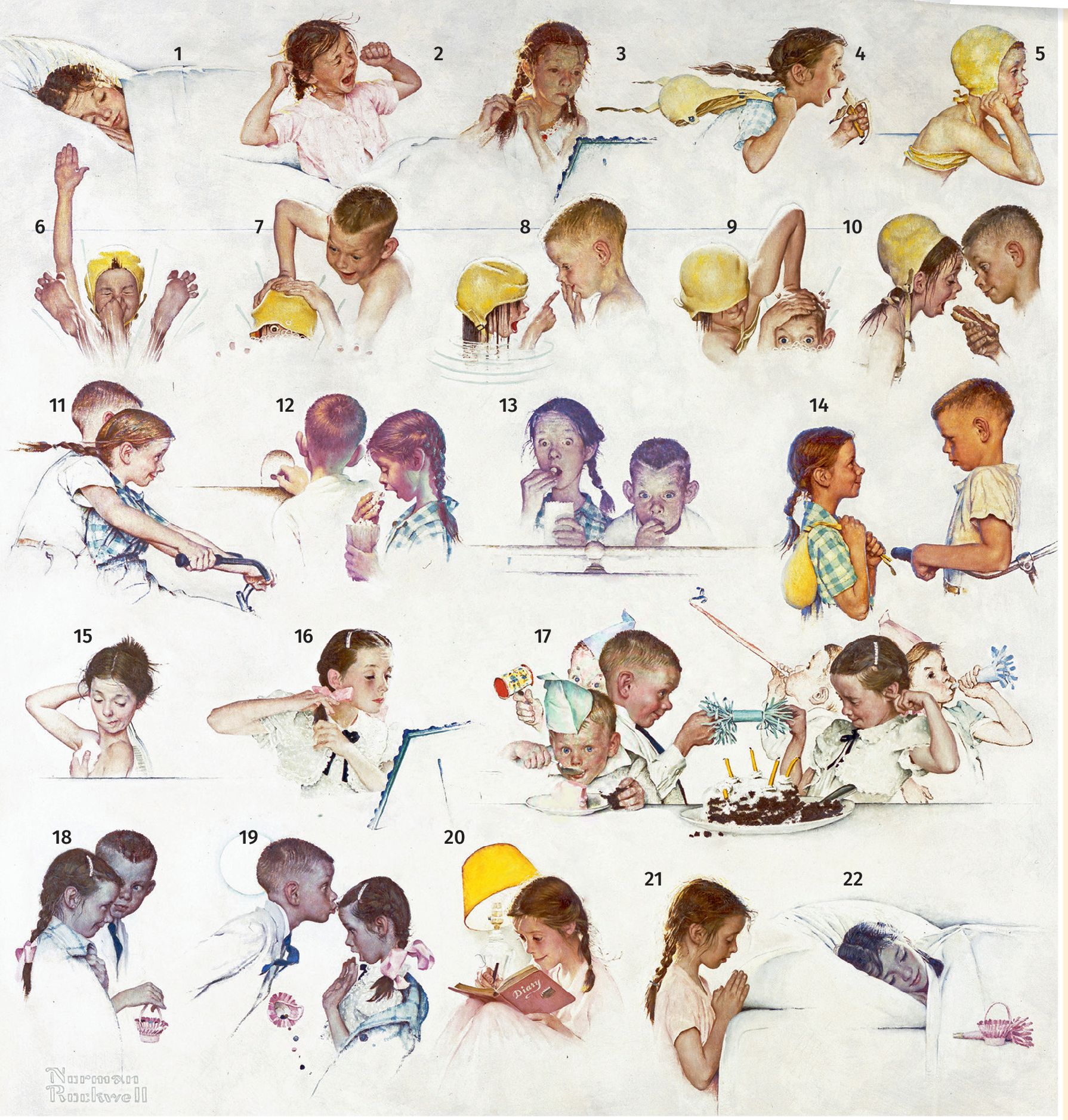
Norman Rockwell, Day in the Life of a Girl, 1952.
What is the girl doing?
Audioguide: Day in the Life of a Girl
Mary Whalen Leonard, the girl who posed for the painting, describes the scenes of her day.
Mary Whalen Leonard, la fille qui a posé pour le tableau, décrit les scènes de sa journée.
Museum audioguide — 1’06
Writing Task: Mary’s Speech Balloons
Document: Day in the Life of a (Modern) Girl
This is a modern version of Rockwell’s painting, made by the artist Mark Lund in 2014. It is a photograph, not a painting.
Voici une version moderne du tableau de Rockwell, réalisée par l’artiste Mark Lund en 2014. C’est une photographie, et non une peinture.
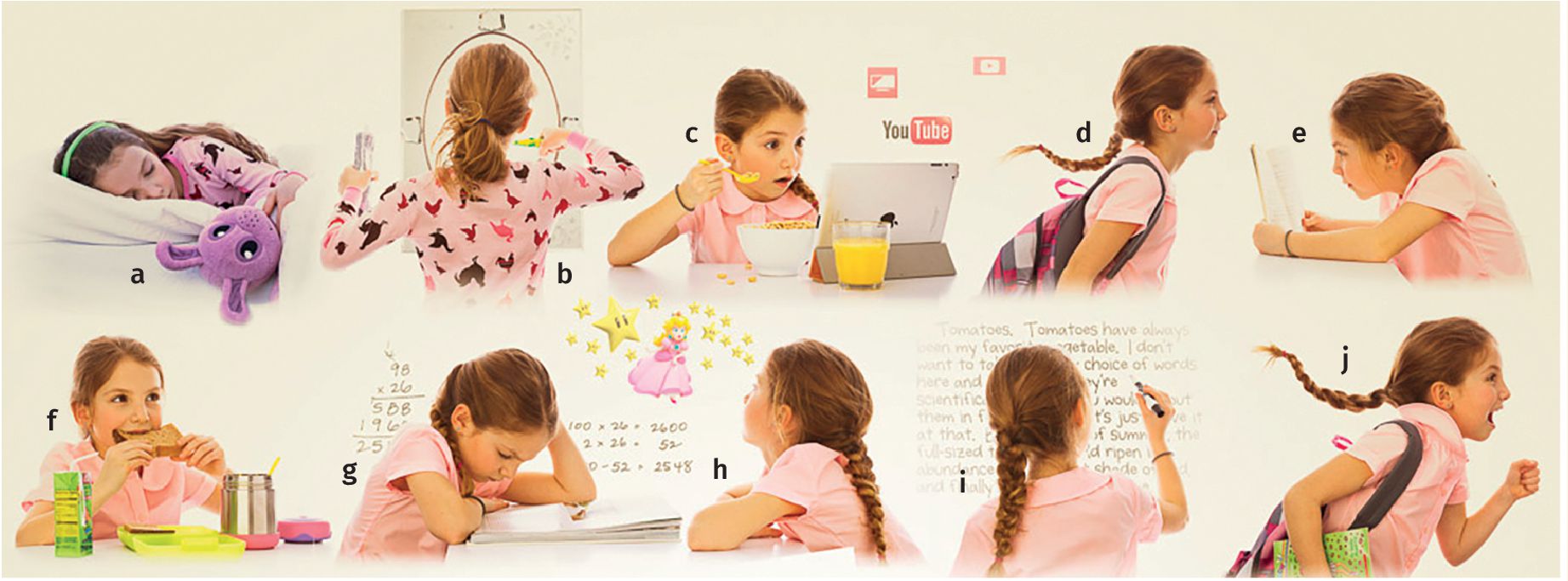
Mark Lund, Day in the Life of a (Modern) Girl, 2014.
Spot the differences
Grammar Kit: Le présent en BE + V-ing
Le présent en BE + V-ing décrit une action en train de se passer maintenant.
- On l’utilise pour dire ce qu’une personne est en train de faire.
- C’est parfait pour décrire un tableau ou une photo.
- En français, on dit souvent « être en train de… ».
- Affirmatif : sujet + am / is / are + verbe-ing
- I am playing — he / she / it is playing
- we / you / they are playing
The girl is smiling.
La fille sourit.
The children are riding a bike.
Les enfants font du vélo.
On l’emploie pour parler d’une action en cours.
- Décrire une image : He is driving. She is blowing a bubble.
- Dire ce qui se passe en ce moment.
Look! The father is driving the car.
Regarde ! Le père conduit la voiture.
- verbe + -ing : play → playing
- verbe en -e : on enlève le e : ride → riding, smile → smiling
- consonne courte : on double : run → running, sit → sitting
Correct or incorrect?
Choose the correct form of BE
- a. The father (are driving/is driving).
- b. The children (are playing/is playing).
- c. I (are looking/am looking).
Translation Task: Actions in the Painting
Évaluation : Compréhension orale
- Type d'évaluation : Compréhension de l’oral — écouter et dessiner
- Axe : Axe 5 — Arts et expression des sentiments
- Compétences : A1 → A1+ — Compréhension de l’oral (repérer et identifier des informations dans la description d’une œuvre)
- Coefficient : 1
- A little girl and her black dog 1 pt
- They are having a picnic 1 pt
- The girl: on the right, at the bottom 1 pt
- She is sitting on green grass 1 pt
- She is eating a sandwich 1 pt
- She is drinking orange juice 1 pt
- Green T-shirt, yellow shorts, black shoes 1 pt
- The dog: in the middle, playing with a ball 1 pt
- A big white house (bottom, left) 1 pt
- Blue sky and two birds flying (top) 1 pt